Luxury Travel Magazine

Thursday, February 27, 2014

Yogyakarta, among NY Times recommended "52 Places to Go in 2014"


Yogyakarta, among NY Times recommended "52 Places to Go in 2014"

The city of Yogyakarta in the cultural heartland of Java was chosen at no. 20 by The New York Times among the paper's recommended "52 Places to Go in 2014".

Embellished with a large panoramic photograph of the mighty Borobudur temple, The New York Times had this to say:

"A volcano, a temple, a shrine and now a place to stay."

This central Javan sultanate draws crowds for its proximity to bewitching attractions: the monumental, wedding cake-esque Buddhist temple Borobudur, the soft-serve-ice-cream-shaped Hindu shrines of Prambanan, and pre-sunrise hikes to summit Indonesia's friskiest volcano, Mount Merapi (which most recently erupted in 2013). But finding a decent room has never been easy, until now. Thanks to tax breaks for hotel development, 20 new starred hotels, to complement the city's existing 30, will open through 2015. Among them are Zest Hotel (a Swiss-Belhotel brand) in 2014 and, according to a director of the Tourism Promotion Agency of Yogyakarta, three new properties from Accor, whose brands include Sofitel and Ibis.— SANJAY SURANA"

Located in the shadows of the active Merapi Volcano, Yogyakarta is a pleasant city, seat of the Sultan of Yogya. Imbued with Javanese cultural traditions, Yogya's royal palace carries a visitor back to a past era of refined behaviour, of deep philosophical thoughts, grace and serenity.

Today surrounding the palace, Yogya is a bustling university town and also a popular tourist destination, great for its culinary dishes and shopping for hand-drawn Batiks and fine silverwork.  A few hours ride from here is the wonderful Buddhist Borobudur temple on a hill that was a site for pilgrimage.  And a little further away are the elegant Hindu Prambanan temples built in the 9th century. Here, the magnificent Ramayana epic is re-enacted on a giant stage every dry season, with as background the full moon slowly rising above the slender temple structures.      

Mount Merapi which erupted violently in 2010 has now also become a favorite adventure destination where tourists can witness first hand lava flows and the devastation wrought by one of nature's most awesome powers.

More info: http://indonesia.travel/en/destination/457/yogyakarta

©Photo Courtesy Justin Mott for The New York Times

   Visit Indonesia Tourism Office AU | www.indonesia.travel


Monday, February 24, 2014

TripAdvisor - 150 million posts in the past year.

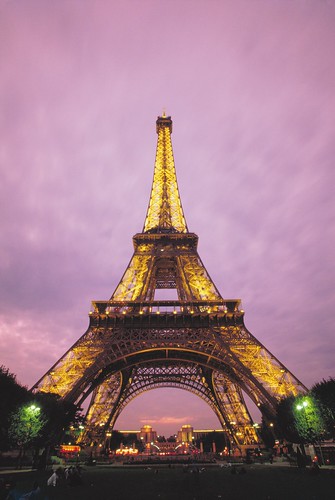
The most photographed attraction by TripAdvisor
reviewers is the Eiffel Tower with 9,181 photos

More Than 500 Million People Can View TripAdvisor Content on Third Party Sites Each Month

TripAdvisor®, the world’s largest travel site*, today announced it has reached a new user-generated content milestone making it the first travel site to offer consumers 150 million reviews and opinions – a 50 percent increase year-over-year.

TripAdvisor collects more than 90 user contributions a minute that allow travellers worldwide to make informed decisions based on the personal experiences of other travellers. More than two billion unique worldwide visitors a year** visit TripAdvisor to research, plan, and book their travel at more than 3.7 million accommodation, restaurants, and attractions.

More than 500 million people worldwide are also able to find TripAdvisor ratings, reviews, and opinions on the websites of almost 1,000 brands every month. Partners include hotel groups such as Wyndham and other leading online travel suppliers.

The review celebrated as the 150 millionth piece of content posted on TripAdvisor was written by TripAdvisor member Erin S. after a Valentine’s Day weekend retreat with her husband. It's the first review she has written on TripAdvisor. The review titled “A warm and inviting retreat...you'll want to return!” is of the Cameron House Inn, a bed and breakfast in the Outer Banks of North Carolina, USA.

"Fourteen years ago, TripAdvisor saw an opportunity to help travellers help each other make informed travel decisions by sharing their first-hand experiences, reviews, and photos," said Steve Kaufer, co-founder and CEO of TripAdvisor. "Now, the internet and user-generated content have completely changed the way we plan, book, and share our trips."

The power of a review

According to a recently commissioned report conducted by PhoCusWright*** on behalf of TripAdvisor, more than half of global respondents do not want to make a booking commitment until they read reviews and find out what other travellers think about a property.

More than 80 percent say the site’s reviews help them feel more confident in their travel decisions, and help them to have a better trip.

The survey also reveals some interesting findings about why travellers write reviews and how they use them when planning a trip.


Why do travellers write reviews?

The majority of respondents write reviews for positive reasons, with 74 percent of travellers stating that they ‘feel good about sharing useful information with other travellers’ and 70 percent of respondents stating that they wanted to share a good experience with others.

How to use reviews

When researching places to stay on TripAdvisor, 80 percent of respondents read at least 6-12 reviews before making their decision, and they are most interested in recent reviews that will give them the freshest feedback.

“Travellers keep coming back to TripAdvisor because they find the user-generated content useful,” said Kaufer. “It’s so helpful that hundreds of other travel and lifestyle brands see the value in integrating our content onto their sites. We thank our passionate community for sharing their travel experiences on TripAdvisor and helping other travellers plan their perfect trip.”

FUN FACTS

· 24,710 TripAdvisor members have contributed more than 100 reviews.
· For a hotel in the top 500 most searched destinations on TripAdvisor, the average number of reviews is 174.
· The most reviewed hotel is the Luxor Las Vegas with 13,677 reviews.
· The most photographed hotel is the Majestic Colonial Punta Cana with 16,274 photos.
· The most reviewed restaurant is Mon Ami Gabi in Las Vegas with 4,729 reviews.
· The most photographed restaurant is Mama's Fish House in Hawaii with 1,196 photos.
· The most reviewed attraction on TripAdvisor is the Eiffel Tower with 24,413 reviews.
· The most photographed attraction is the Eiffel Tower with 9,181 photos.

Friday, January 3, 2014

Savannah - the atomic cruise ship

SAVANNAH – beautiful lines for a cargo-passenger ship, but dysfunctional.

STATEROOMS were luxurious for
the time and included full-size baths
THE dining room inexplicably had seating for 100, even
though Savannah carried just sixty guests.
THE pool verandah was another innovation.
PLAQUE honouring Savannah as a National Historic Landmark
where she is tied up at Baltimore still awaiting her ultimate future.
SAVANNAH – THE FUTURE SHIP LOST IN TIME

David Ellis

A SHIP that's seemed lost in the passage of time is America's NS Savannah, the world's first and only nuclear-powered vessel designed to revolutionise shipping by carrying both cruise passengers and freight world-wide, but in fact doing neither with much success.

While the Russians were already taking passengers on their converted nuclear-powered ice-breaker Lenin to the North Pole as the world's first nuclear-powered "cruise ship," and there were three atomic cargo vessels operating around the same time, Savannah was conceived in the late 1950s by US President Eisenhower as a combination of both cruise and passenger vessel to showcase his so-called "Atoms for Peace" program.

Eisenhower trumpeted his concept as "a platform for sharing the nuclear knowledge-bank." His opponents labelled it Cold War propaganda.

Whatever, Savannah had her admirers to whom she was "a beautifully-lined luxury cruise ship," and her detractors who wrote her off as "a pretty and highly dysfunctional cargo ship."

Marrying her two roles did not come with the success Eisenhower and Savannah's designers had hoped. For starters, she wasn't really a cruise ship because she could carry just sixty passengers in thirty staterooms. And then she wasn't a conventional cargo ship either, because her streamlined design meant she could carry a mere 8,500 tonnes of freight, and required much manual labour at a time when ports were dumping workers and automising.

But from a technical point of view she was brilliantly innovative, her 20,000 hp nuclear engine fed by low-enriched uranium giving her a top speed of 23 knots, and a capability to circle the earth an extraordinary 14 times without refuelling.

Costing nearly US$50m which came from the US Atomic Energy Commission, the Maritime Administration and the Department of Commerce, Savannah quickly ran into trouble over the size of her crew – and their pay.

To begin, she needed 33% more technical and engineering crew than conventional ships of her size, and as these crew had to be specially trained to handle their nuclear responsibilities, they demanded and received higher than normal wages.

But this irked Savannah's deck officers who cited a tradition that ensured they received higher pay than engineering officers, and after an arbitrator ruled in their favour, the three government departments cancelled their agreement with Savannah's contracted operating company and appointed another. This meant Savannah was laid-up for a whole year while a complete new crew was trained – and a new pay scale sorted out that meant it would cost US$2m a year more to run Savannah that a similar-sized oil-fired ship.

But despite all this, there were no complaints from the few passengers that Savannah carried: their luxury facilities included air-conditioned staterooms with private facilities (including full-size bathtubs,) the dining-room could seat 100-guests (for some strange reason, forty more than the number of passengers she could carry,) there was a swimming pool, library, and lounge that converted into a cinema.

But her passenger carrying days came to an abrupt end after just three years when it was decided that to cut costs, Savannah would become a purely cargo vessel. Yet even this proved economically disastrous, with one shipping industry newspaper at the time summing up: "She required $2m a year in government subsidies, she had vast unused passenger spaces, and by contrast her cargo capacity was insufficient…"

Finally in 1970, just eight years and 725,000km from her first sailing, Savannah was pulled out of service and laid-up.

Ironically bunker fuel for conventionally-powered ships was just $20/ton at the time – but within a few months this had spiralled 400% to $80 with the world Energy Crisis.

Had somebody had a crystal ball, maybe it could have been a different story for Savannah – and indeed the future of nuclear shipping.

For 40-odd years its been proposed that Savannah become a museum ship for the inquisitive to explore what was another world of luxury for passengers in the 1950s and '60s, and to peer into her-once nuclear heart.

With this in mind she was declared a National Historic Landmark in 1991, and her nuclear fuel removed at a cost of over US$1m. She now sits at the Canton Marine Terminal in Baltimore waiting for someone to adopt and convert her into that museum ship.

Visit her at www.nssavannah.net or see www.adventurecruiseguide.com


(Photos: Courtesy N/S Savannah Association and US Historical Naval Ships Association.)


Shongololo train through Africa - a moving safari


TRAIN YOURSELF INTO TAKING ON BIG GAME
David Ellis

WHEN we told mates we were off to Africa for game viewing and a safari-like adventure, and that we were going to do it over a near-fortnight by train, our announcement was met with much mirth and hilarity by those supposedly in the know.

"Send us pictures of the blurred fur you flash by," one chuckled. "Hope you've a long lens, a LONG lens," chortled another, while a third wished us well – and expressed the hope that "all the animals are deaf as you sneak up on them in your 500 tonne train…"

It was great fun at our expense, but it was we who in fact had the laugh on them. Because they'd not taken into account that our train was the Shongololo Express, a cosy re-vamp of yesteryear rail indulgence that has been carrying adventurers and animal-spotters for a near-20 years across a vast sprawl from Cape Town in South Africa's south to Durban in its east, Tanzania's Dar es Salaam in the north, and Swakopmund in Namibia in southern Africa's far west.

And that rather than our train trying to sneak up on unsuspecting animals in the wild, it actually parked at stations or sidings, with guests taken daily by a fleet of air-conditioned Mercedes-Benz mini-vans carried in flat-cars hooked on the back, for totally up-close animal-spotting in the wild, city and village sightseeing, and visits to museums and other highlights.

And with these mini-vans driven by the train's own on-board professional guides, and who were often joined along the way by game reserve and national park Rangers, or other professional local guides.

Better still, the Shongololo was our travelling hotel, with the need to unpack and re-pack just once in 12-nights as we indulged a reminisce back to a time when train travel was leisurely, unhurried and genteel, and amid restored yesteryear Rhodesian (now Zimbabwe) Railways' polished teak-wood carriages offering dining, lounge, bar and sleeping accommodation that was all somehow cleverly shoe-horned into the confines of narrow-gauge rail.

Also the train travelled mostly at night, making every day available for organised touring in those mini-vans – with a choice of at least two options daily that were included in the train's price, and which began after a hearty Continental and full-cooked English breakfast, and which ended with us being brought back late afternoon to find the bar open and dinner about to be served.

What surprises awaited in lounge/bar and dining cars too: local South African beers cost as little as 16 rand (AU$1.70) a can, and excellent local South African wines from just 95 rand a bottle (AU$10)… great accompaniments to nightly 4-course dinners that ranged from European to Cape Dutch, Malay, Indian and traditional African dishes embracing soup, entrĂ©e, main courses, and desserts or biscuits and cheese.

Amongst his many delights Chef offered-up roast lamb one night with a bevvy of baked vegetables, a tangy curry with numerous side-dishes another, a traditional African bobotie (baked mince with raisins and an egg-based topping) yet another, and on others pork fillet with caramelised pear sauce, chicken breast with a honey-mustard sauce, a beef pinotage, and one night good ol' English-style fish and chips… with menus never repeated during our 12-nights.

Shongololo offers four itineraries, with our Good Hope Tour taking us from Cape Town through the famed Winelands and Overberg, Kimberley and Bloemfontein, the Midlands, Southern Drakensberg, Durban, Zululand, Swaziland, Hluhluwe-Umfolozi and Kruger National Parks, Pretoria and Johannesburg where we were also given a guided tour of Soweto.

This gave us the opportunity with the train's own mini-vans to sightsee Cape Town and surrounds, taste local wines, visit the Big Hole former diamond mine and museum, tour Anglo-Boer War battlefields, go into tribal villages, communities and markets, game drive to within an almost couple of arm's length of wild animals including The Big Five (lion, leopard, rhino, elephant and Cape buffalo,) take-in Durban's picturesque beaches, parks and gardens, visit museums, and see tribal dances and other performances.

And at night retreat to our own ensuited and air-conditioned cabin – nodding-off to the haunting clicketty-clack of Shongololo heading off to its next day's destinations.

We booked air, Shongololo and necessary hotels through Bench International that's specialised in Africa holidays for almost 45 years. Phone them toll-free 1300AFRICA or see www.benchinternational.com.au

                                                              ………………….

PHOTO CAPTIONS:


1.A MEDICINE man welcomes Shongololo Express's passengers to his Zulu village.    (David Ellis)
2. THE train's owner, Leon Plutsick with one of the mini-vans carried aboard for daily sightseeing. (David Ellis)
3. THIS lion not the least concerned as we trail and photograph him at Sabi Sabi Game Reserve. (David Ellis)
4. SHONGOLOLO's guests are invited to visit Soweto township in Johannesburg. (David Ellis)
5. DINING car aboard Shongololo Express: Chef doesn't repeat any dishes in 12-nights of travel. (Shongololo Express)
6. BABOONS (centre and right) hitch a lift on the Shongololo Express. (Shongolo Express)

Tuesday, December 17, 2013

Strategic and smart – that’s Brisbane


Brisbane Aerial


Brisbane has been ranked as having the 2nd best foreign direct investment strategy in the Asia Pacific and a Top 10 Asia Pacific leader for ‘labour environment’ in fDi’s Asia-Pacific Cities of the Future 2013/14.


The bi-annual ranking of economic, business and financial strengths is produced by fDi Magazine, a publication of the Financial Times. It grades cities on their economic potential, infrastructure, business-friendliness and education expenditure.


Lord Mayor Graham Quirk said the accolade was another ringing endorsement of Brisbane’s growing appeal to foreign businesses and investors.


In the past year, Brisbane Marketing has aggressively pursued campaigns to strengthen economic growth by targeting key decision-makers across the world through the Choose Brisbane campaign.

The strategy is paying dividends, with Brisbane attracting important investment in key industry sectors such as mining and resources, food and agribusiness, tourism infrastructure and civil infrastructure.


Brisbane Marketing’s hotel investment strategy has contributed to the 572 new hotel rooms currently under construction in Brisbane, including the conversion of the former Chifley Hotel into a 300-room NEXT Hotel by Singapore-based SilverNeedle Hospitality.


fDi’s Asia-Pacific Cities of the Future 2013/14 rankings assess a range of data to classify the cities which make business expansion, economic development and inward investment a priority.


The fDi labour environment category methodology assessed Brisbane on education expenditure, literacy rate, number of tertiary education centres and the percentage of the population identifying as students.


A panel of influential experts from the FDI industry assess cities based on their growth potential and opportunities for investment, initiatives taken to promote FDI as well as high growth industry sectors and the growth in large infrastructure and urban planning projects that create a city for the future.

Sunday, December 15, 2013

Toronto's Casa Lomo: Home is a Castle


ENSURING THAT YOUR HOME IS YOUR CASTLE
David Ellis

IT'S anyone's guess what members of Canada's Toronto City Council thought when they met one day back in 1903.

Because amongst the usual applications for alterations to city buildings, changes to trading hours, requests for better street lighting and all the other regular humdrum, was one from a wealthy local businessman, Sir Henry Pellatt.

He wanted approval to build a new home. In town, on a hill and in the belief that every man's home is his castle, one that would be exactly that.

A castle.

And across a whopping 25 building blocks he'd bought just for the job.

Not having been confronted with a request for a castle before, the Council took some time to mull it over, and it wasn't until 1911 work got underway on the new home of Sir Henry and Lady Mary Pellett.

And some home, sorry castle, it would be, with 98 rooms, a banquet hall with 18m ceiling, a library with 10,000 volumes, a three-lane bowling alley( that was never quite completed,) a kitchen with an oven big enough to roast a whole ox, and a wine cellar with enough bottles to last a good drinker a couple of lifetimes.

Sir Henry and Lady Mary also had separate suites incorporating private bathrooms, Lady Mary's alone covering 278 square metres – over a quarter of a normal suburban building block – while Sir Henry's had a secret tunnel leading to an outside garage in the event he had to slip away without disturbing Lady Mary.

And to keep in touch with each other amid all this, with their staff, Sir Henry's many businesses and the outside world generally, a private 59-line telephone exchange handled more calls in its first years than the entire surrounding city.

In the grounds were 2ha (5 acres) of landscaped gardens, a winter ice-curling rink, 2-storey hunting lodge, stables (whose horse's names were in gold leaf,) carriage room, heated conservatory/potting room and, in the event of rain or snow, an official 250m long tunnel 6m underground from these into the castle – as opposed to Sir Henry's own secret one from his suite.

All this cost C$3,500,000 (around $50m in today's terms,) and took 300 workers three years to complete, with the walls being built of imitation stone blocks from Sir Henry's own Roman Stone Company. And when completed, Sir Henry had to find 40 butlers, maids, cooks, cleaners, gardeners and stable-hands to run it all.

Although born into a wealthy family, Sir Henry was also an astute businessman in his own right, investing in everything from real estate to mining, insurance, the Canadian Pacific Railroad, sitting as chairman of 21 company boards  – and earning his knighthood for bringing electricity to the city of Toronto from Niagara Falls.

And he found time to also be highly active in the volunteer Canadian Queen's Own Rifles, while Lady Mary was a tireless worker for the Canadian Girl Guides.

The Pellatt's called their castle Casa Loma, Spanish for House on the Hill, but sadly WWI and subsequent stock crashes hit them hard, and in 1924, just ten years after moving into their castle, they were forced to auction-off C$1.5m worth of art works and $250,000 of furnishings, and retreat to their farm a little outside town.

Lady Mary died there that same year, and Sir Henry in 1939.

Casa Loma fell into disrepair, and with over $27,000 owned in back taxes, the Toronto City Council seized the property in 1933. Because of its dilapidated condition, first plans were to raze it and sell the land, but the Kiwanis Club of Toronto could see the value of a real, live castle as a tourist attraction, obtained a long-term lease, and refurbished and opened it to the paying public in 1937.

They ran it until last year when the Toronto City Council established the Casa Loma Corporation to take it over.

Casa Loma is open year round except December 24 and Christmas Day, and the gardens open from May through October. For entry costs and about tours covering its Gardens, History, Architecture and sites where over 130 TV shows, movies and commercials have been made there, go to www.casaloma.org

For help with visiting Canada and Casa Loma, contact Canada & Alaska Specialist Holidays 1300 79 49 59 or www.canada-alaska.com.au
…………………..

PHOTO CAPTIONS:

1.CASA Loma: Sir Henry and Lady Mary ensured their home was their castle. (Central
   Toronto Realty)
2. CONSERVATORY Potting Room simply for looking after the pot plants. (Casa Loma
    Corporation)
3. OAK Room, one of the many sitting rooms throughout the 98-room Casa Loma.
    (Steven V. Rose)
4. SECTION of the Rose Garden, open May through October. (Toronto Tourism)
5. TUNNEL 250m from hunting lodge and stables in event of bad weather. (Casa Loma
    Corporation)
6. SIR Henry Pellatt, visionary extraordinaire. (Casa Loma Corporation)


Friday, December 6, 2013

Monaco prepares for EVER 2014


Monaco – a Principality dedicated to Responsible Tourism. The Principality of Monaco, a tourist destination par excellence, is aiming to become irreproachable in environmental protection. In this spirit, the Monegasque State and key tourism professionals are becoming more and more active every day in all aspects of sustainable development.  Monaco is currently preparing for EVER 2014, the International fair promoting sustainable development.

EVER 2014

From March 25th to 27th 2014, the Grimaldi Forum in Monaco will welcome one of the most important green events in Europe: 'EVER'. Created in 2006, EVER aims to promote two key aspects of sustainable development: energy and mobility. The first aim of "EVER 2014" is to promote the use of renewable energy and energy efficiency; the second is to promote cleaner mobility for private transport, using more powerful electric and hybrid vehicles. Like every year, the event will take place at the Grimaldi Forum* and is supported by the Prince's Government, the Prince Albert II Foundation and the Monegasque Electricity and Gas Company.  In addition to themed scientific lectures, bringing together researchers, university staff, students and business heads, there will be workshops and round tables, which will be open to the public. The topics addressed will include energy transition and its impact, energy efficiency issues and future solutions for storing electricity. With regard to mobility, the increased use and the future of clean vehicles will be discussed.  As last year, there will be a "Ladies in Mobility" round table – this year, it will be devoted to electric mobility in "Smart Cities."  A meeting of the Paris ecological vehicles club will also be held. EVER is a real melting pot for innovation and for raising awareness of good practice.  As usual, it will host the "Youth and Sustainable Development" meetings. This year, EVER 2014 will also offer a "Sustainable Village," which will showcase renewable forms of energy, with uniform, functional stands that are conducive to professional meetings.  It will host the final of the METHA EUROPE 2014 competition, organised by the Écoles des Mines, on the theme of energy efficiency for transport and in the home. Finally, EVER will be an opportunity to display and test drive the automotive industry's latest electric vehicles. For further information, see:  www.ever-monaco.com

Monaco's international commitment to the Environmental and Sustainable Development

H.S.H. Prince Albert II of Monaco

The Prince Albert II of Monaco Foundation acts to protect the environment and promote sustainable development at a global level. The Foundation's activities are concentrated on three main areas: climate change and renewable energies, biodiversity, and water and desertification. The Foundation supports projects in three main geographical regions: the Mediterranean basin, the polar regions and the least-developed countries. The Monaco Government Tourist and Convention Authority is working in cooperation with the Prince Albert II of Monaco Foundation, notably in the "Monaco Carbon Offsetting" programme, to offer partners and clients the opportunity of offsetting greenhouse gas emissions related to their activities. http://www.fpa2.com/home.html

MONACO GREEN – A new discovery

The Monaco Government Tourist and Convention Authority, in collaboration with his partners in the tourism sector, propose to discover Monaco's commitment to sustainability and for environmental protection due to concrete actions. Each month, the Monaco Government Tourist and Convention Authority releases a programme with proposed actions for a stay in Monaco demonstrating a commitment to the planet without any waste. In the framework of the 'MONACO GREEN – A new discovery' initiative, the Monaco Government Tourist and Convention Authority works with their main partners such as the Hotel Metropole, Monte-Carlo SBM, Fairmont Monte-Carlo, Le Meridien, Columbus Monte-Carlo, Novotel, Grimaldi Forum who, in early December 2007, signed an agreement on the adoption of an environmental Charter.
http://www.visitmonaco.com/en/Responsible-Tourism/Useful-Information

*The Grimaldi Forum

Ideally located in the heart of Monaco, the Grimaldi Forum Monaco is situated within walking distance of hotels and restaurants. With 35,000 sqm. of modular premises and state-of-the art technologies, the Grimaldi Forum Monaco is a wonderful tool to build-up events. Since its opening in 2000, many events management and international corporate companies are attracted by the glass and steel structure as well as its tailor made services. Conventions, congresses, trade shows, product launches, all find here another dimension… The staff and visitors are actively encouraged to follow its "Act Green" policy. The Grimaldi Forum Monaco proposes tailor-made solutions for events' organizers wishing to limit their environmental footprint. http://www.grimaldiforum.com/
 

Last 30 Days' Most Popular Posts