


In 1844, toward the end of the Australian winter, the barque Taglioni anchored at Largs Bay in South Australia. The vessel, of about 350 tons, had been built four years earlier at Ramsey on the Isle of Man. It was classed A1 at Lloyd’s and was owned and commanded by Captain V. Black. Despite being well equipped for its time, a voyage of more than 13,000 miles by small sailing ship in the mid-nineteenth century was demanding.
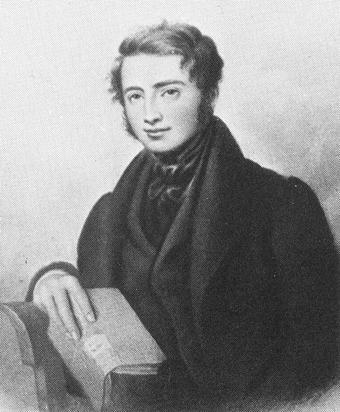 |
| Christopher Rawson Penfold (1811-1870) |
Dr Penfold, the son of the Reverend John Penfold, vicar of Steyning in Sussex, was 24 years old when he married Mary Holt in 1835. By 1838 he was practising medicine in Brighton. His decision to emigrate followed several years of professional experience and formal medical training at St Bartholomew’s Hospital in London. South Australia, established only eight years earlier, offered scope for trained professionals, and Penfold had already arranged the purchase of land at Magill near Adelaide before leaving England.
The South Australian Register of 8 August 1844 reported Dr Penfold’s arrival, noting that he had purchased the estate of Makgill for £1,200. The property was named after Sir Maitland Makgill, though the spelling evolved over time to its present form, Magill. The Penfold family initially lived in temporary accommodation before building a stone cottage known as “The Grange.” The house, with its verandah and cedar fittings, became their permanent residence.
Dr Penfold established a medical practice, travelling on horseback to visit patients. Through regular contact and professional conduct, he developed a reputation within the local community. During this period, reports of mineral discoveries circulated through the colony, though Penfold remained focused on his farm and medical work. Like several settlers, he had brought vine cuttings from established wine regions in southern France. The vines were planted at Magill and produced wine that he used for medicinal purposes. The land had previously been cultivated for wheat, and contemporary reports noted its productivity.
Mary Penfold managed domestic and agricultural operations, assisted by a servant, Ellen Timbrell, who remained with the family until her death in 1858. Together they cared for livestock, maintained the garden, and participated in winemaking activities. Over time, the vineyard expanded, and wine production increased.
 |
| Mary Penfold c. 1885 |
By the mid-1860s, Mary Penfold had assumed a central role in managing vineyard operations. Following the death of her parents in England in 1864, her remaining family ties were based in Australia. With her daughter living in Victoria, she concentrated on supporting her husband and overseeing the growing business. Additional vines were planted to meet demand, requiring significant investment.
In 1870, during a period of financial pressure, Dr Penfold died at the age of 59. During his 26 years in South Australia he had established both a medical practice and a vineyard enterprise, and had served as the first mayor of Burnside. His death was widely noted in the local community, and he was buried at St George’s churchyard in Magill.
 |
| Magill vineyard c.1958 |
By 1880, Hyland resigned from the Victorian Civil Service and relocated to Melbourne to focus fully on the enterprise. Vineyard management at Magill was later transferred to Joseph Gillard, though Mary Penfold remained closely involved. Correspondence from the late 1880s indicates ongoing oversight and planning, including proposals for a Melbourne office.
Mary Penfold died in 1895 and was buried beside her husband at Magill. Before her death, Alfred E. Vesey joined the vineyard workforce and later recalled her continued presence and involvement. The original cottage at Magill has been retained by the family, and the surrounding gardens and early cellars remain part of the site. The property subsequently developed into a large-scale winery, incorporating the original buildings within its expanded operations.
 |
| Penfold winery today (Flickr) |
Adapted from 'The Penfold Story' by Eve Keane (1955)


