Thursday, July 27, 2006

In Pursuit of Adventure

Kapitan Khlebnikov

Adventure cruising, and its almost seamlessly interchangeable appellation, “expedition cruising”, has its roots deep in the human psyche. It stems from our innate desire to inquire, explore and expand the boundaries of our environment whilst deriving intellectual rewards from the experience. Expanding on this, one could name great navigators like Magellan, Cook, La Perouse and Pytheas as some of the best known “adventure cruisers”. Often travelling under the veil of commerce, military expansionism, geography or science, these iconic sailors were driven by a desire to expand their own personal knowledge quite apart from obligations to their respective bankrolling empires.

The 21st Century adventure cruiser is transported in vastly different vessels. Complete with state-of-the-art satellite navigation, first rate medical facilities, gourmet cuisine and comfy bunks, gone are the days of deprivation, scurvy and mythical sea monsters.

Just as cruise travel is enjoying a very healthy resurgence despite the woes of the planet, adventure cruising, as a significant sub-set of the segment, is booming. This assertion is backed up by figures and concurs with findings from studies such as the Cendant Corporation's 'The World of Travel in 2020' where their findings indicate travellers are more and more in search of "experience-driven travel".

But how do you tell an adventure or expedition cruise from the regular fun-afloat type?

That which separates adventure cruising from the regular, big ship, variety is a number of factors, namely;

  • Flexible and adjustable itineraries to take account of changing conditions and opportunities.
  • Products driven by destination and experience rather than the allure or cachet of a particular vessel.
  • Destinations often have little or no tourism infrastructure and focus on natural, cultural and ecological attractions.
  • Smaller, more manoeuvrable vessels able to navigate narrow and shallow waterways inaccessible to regular cruise ships.
  • Fewer passengers, enabling operators to better deliver a more personal and fulfilling experience. Typically less than 500, but often as few as just a dozen or so.
  • Extensive shore excursion programme, often with several disembarkations per day.
  • Cruise staff includes lecturers drawn from academia and science able to impart enriching interpretation during a voyage or shore time.
  • Premium pricing.

See: Adventure Associates

Monday, May 1, 2006

The Blue Tarp Resort


Consider the portable canvas option for your next road trip.

After Mum and Dad told me their camping stories from the ‘50s, pitching a tent somewhere in the great Aussie outback was about the last thing I ever wanted to. But on a 4WD trip to Cape York recently, I rediscovered the primal joys of sleeping under canvas miles from the nearest streetlight or flush toilet.

As you flick through the pages of your favourite travel magazine (yes, this one!) gazing longingly at the golden, palm lined beaches and the lush forest destinations, you might be thinking these exotic locations are the exclusive realm of the rich and famous. Maybe, not! Camping has long been a favourite Australian pastime and an accepted means of visiting places a long way from home without running up exorbitant hotel and resort bills.

I’ll confess that on our tour to the “tip”, we mixed and matched our digs. From the glamour of swish Bloomfield Lodge, to a humpy on the beach at Munbah we truly experienced the extremes of accommodation options. Yet, it was the camping experience that defined our journey.

Sure, camping isn’t for everyone, but you might find it makes an enriching and cost effective alternative for that dreamed-of road trip across the country. By alternating tent, cabin, motel and resort, you can spoil yourself occasionally while keeping a lid on expenses.

My mum, now well into her seventies, rediscovered the joys of camping when she and a friend spent two years exploring the far corners of the continent in a station wagon packed with camping gear.

“Well, darling,” Mum recalls, “we really enjoyed ourselves. It was a relaxing, fun holiday. But we didn’t go without our comforts.”

In those two years, Mum covered the length and breadth of the country, ticking off favourite locations like Charters Towers, Alice Springs, Hughenden, Arkaroola and Kings Canyon.

“We only pitched the tents when we intended to stay more than a couple of nights. It’s a bit of a pest putting them up and down every day, so we’d get a cabin if we were just passing through.”

“Come on Mum,” I implored, “there must have been something you didn’t like.”

“Not really love. We were pretty well prepared and we chose our locations and weather very carefully.”

Knowing your destination and its climate is a key to enjoyable camping. Do your homework and visit locations during their most agreeable weather. For example, the Outback is gorgeous mid-year when the weather is mild and rainfall at its lowest.

Mum rattled off her list of camping must-haves and I compared it with mine.

Tent (one per person); fully-floored with insect netting. Blow-up mattresses. Doona, sheets and pillow (I took a sleeping bag and camp stretcher). Long extension cord, power board with appliances; Jug, toaster, electric skillet, hot plate (or gas primus), portable telly, fan heater. Other useful inclusions; Cut down occasional table for inside tent, hair dryer, reading lamp and/or torch.

Exterior accessories were kept to a minimum, but included folding chairs and table, kitchenware and washing up kit.

Take your pick with food. Alternate eating out at pubs and cafés with cooking yourself. Fresh meat, fish and vegetables where available and tins of soup and stew for the remote spots.

“What about, you know, ones and twos?” I delicately enquired.

“Well we had that sorted too. Let’s just say we had the modern equivalent of a chamber pot when I didn’t feel like going outside.”

Around the country there are serviced campgrounds (showers, electricity, pool, cabins etc) and caravan parks or, for the more adventurous, unserviced grounds deep within National Parks and Reserves with perhaps a “long drop” and a rainwater tank.

Some parks create an instant community, complete with social nights, sausage sizzles and happy hours while others are simply quiet retreats. Or choose somewhere on your own and enjoy the solace and seclusion of a night under the stars with just the sound of a breeze in the trees and birds as your alarm clock.

“After my experiences in the ‘50s, I never thought I’d camp again, but the gear is just so much better now and the caravan parks and campgrounds are almost like resorts now with restaurants, games rooms and activities,” says Mum, “Boy, we did it rough back then!”

A road trip doesn’t mean a remake of “The Long Long Trailer”, instead travel light and lean and consider the camping option to extend your trip and keep costs down.

Monday, April 3, 2006

Ferntree Rainforest Lodge


CROWN JEWEL

Imagine a place where thousands of square miles of untouched tropical rainforest spread to the horizon, rising up to blanket solemn mountains capped by taffeta cloud crowns. Wildlife rustles through the undergrowth, occasionally emerging to give the casual observer a fleeting glimpse of brightly-coloured plumage and the prehistoric.

Ancient trees dip down onto deserted beaches, invitingly brushing fine white sands strewn with conch shells and palm fronds, and the opalescent gateway to the reef sparkles under the gaze of the sun just a coconuts throw away…

No, this isn’t the pitch for a Bounty commercial, but is Cape Tribulation as I found it – a destination gem that has to be the jewel in Australia’s crown.

Beneath the lush canopy and looped lianas the city hustle melts to a distant memory, and the sounds of car engines, tooting horns and shouted conversations are replaced by intermittent birdsong and bush turkeys scratching through the scrub.

Cape Trib is unique in that it is one of the few places in the world where two World Heritage listed sites – the rainforest and the reef – are found together, and a visit to the area isn’t complete without a day trip to meet some of the more colourful locals.

Everyone - but everyone - goes to the tropical north to see the Great Barrier Reef, but unlike other big tours where I’d had to scramble for ancient fins and a leaking snorkel, there were just 24 people on board the Odyssey H2O as it sped out to sea.

The commanding figure of Mount Sorrow dwindled to nothing in the distance, and when we anchored after just 45 minutes I could see nothing except cool blue water shimmering up to the horizon. With so few people sharing the open ocean, as I pulled on my mask and flippers and plunged into the vibrant world beneath the waves I really felt like I had the whole reef to myself. Sheer magic.

And enjoying such natural beauty doesn’t mean you have to sacrifice little luxuries. After backpacking for two months I would’ve been happy to find a serviceable toilet in this unfettered land-before-time, but was amazed by the opulent and affordable accommodation cocooned in the canopy. Ferntree Rainforest Lodge had all the modern comforts the discerning traveler comes to appreciate (and which until then I had sacrificed). After sleeping bags, 12 bed dorms and mad bathroom dashes along chilly corridors, the sheltered pool oasis, plump downy pillows and en suite bathrooms immersed deep in the jungle were almost too good to be true.

The only difficulty in this hedonistic haven of relaxation is trying to fit everything in – eco-tours, 4WD expeditions and beach horse rides are just some of the many activities on offer if you make it away from the beach. With so much to see and do it is impossible to fully appreciate the breathtaking beauty of Cape Trib on a day tour, and I feel sorry for anyone that tries. Eight hours just isn’t enough, and despite what Captain Cook christened this slice of paradise, the only tribulation of a trip to the Cape is having to leave.

Just go.

Sunday, December 25, 2005

Shackleton's Forgotton Men

Shackleton’s Forgotten Men

Sir Ernest Shackleton, despite the loss of Endurance, is revered as one of the most capable and heroic of all polar explorers. It’s true, the men under his direct command returned to England without loss. But what of the patient, dedicated men who waited in vain for his arrival on the other side of the Antarctic continent?

Tuesday, December 20, 2005

Kakadu or Kakadon't?

The glittering jewel of Australia's Top End is suffering an identity crisis. After starring in box office hits, top-rating TV shows and glitzy commercials, Kakadu has fallen on hard times. Visitor numbers (especially internationals) began to decline between 1999 and 2000, even before the tourism trauma caused by 9/11. The graph looks like a ski-jump now that some recovery from airborne terror is occurring globally, but the scars remain. Kakadu and the NT generally continue to lag.

Sunday, December 18, 2005

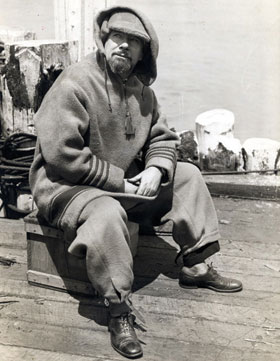
In Search of Sir Hubert


Australia’s “other” polar hero still remains something of a mystery to his hero-worshipping countrymen.

While his Australian contemporaries, Sir Douglas Mawson and Captain Frank Hurley enjoy the modern notoriety of their achievements during the “heroic age” of polar exploration, the equally breath-taking exploits of the adventurous boy from Adelaide, Sir Hubert Wilkins, are often overlooked.

Read More:

World Adventurer December 2005 In Search of Sir Hubert

Galapagos Islands in Peril


International tourism association issues warning about the survival of the Galapagos Islands.

ITHACA, New York -- The fight to preserve the Galapagos Islands is being lost, according to the nonprofit International Galapagos Tour Operators Association (IGTOA).

In a report issued Jan. 21, The State of the Galapagos, IGTOA warns, “Slowly but surely, we’re losing the fight to preserve the Galapagos Islands. Yes, tourism is doing fine, and travelers are arriving in record numbers. But look a little deeper; the news is not good. At the peak of their popularity, the Galapagos are in trouble.”
The report states that even under the best of circumstances, protecting the Galapagos is an enormous task. Invasive species of plants and animals require millions of dollars for scientific studies and eradication programs. The surrounding marine reserve, which supports all terrestrial life, is under attack from over fishing.

“The Galapagos Islands belong to Ecuador, which has historically been supportive of conservation, but that has changed,” says Dave Blanton, Executive Director of IGTOA. “Without that support, the task of conservation is insurmountable. “

He adds that narrow interests seek to exploit the islands’ rich marine reserve. At the same time, elements within the Ecuadorian government have weakened the role of the Galapagos National Park, which has had responsibility for monitoring and controlling the archipelago.

“Eight park directors have come and gone in the last two years,” Blanton says. “A strike last September by park staff over political meddling and mismanagement
turned violent when fishermen attacked park headquarters. The staff that participated in the strike now finds themselves on the outside.”

According to the report, contracts for 150 of the 226 park rangers have not been renewed, leaving the Galapagos National Park critically understaffed. Former employees report that the activities of the park have been paralyzed, especially the monitoring and control of the Marine Reserve.

The report also states that technical studies and regulatory mechanisms are being ignored. The government has stopped education for National Park Guides, (A guides’ course has not been held for the past eight years.) Only one patrol boat is currently operating, and in a new development, the government of Ecuador proposes that the patrol of the Galapagos Marine Reserve, carried out under statute by the Galapagos National Park, be turned over to the Ecuadorian Navy.

“Equally threatening is the practice of long-line fishing, which may soon be introduced,” says Blanton. “Long-line fishing was recently denounced by world scientists for its destructive “by-catch,” resulting in the death of sea birds, sharks, turtles, and other species.”

A recent article in Science magazine reports that long-lining kills 300,000 albatross each year. Nineteen of the 21 world species of albatross are in danger of extinction.

In a recent letter to the director of the UNESCO World Heritage Centre, IGTOA requested an investigation that may ultimately place the Galapagos on the list of World Heritage Sites in danger.

The Galapagos Islands, which Charles Darwin visited on a voyage as a young man, were declared a World Heritage Site in 1978. The Marine Reserve was added in 2001. The islands are home to plants and animals found nowhere else on earth, including giant tortoises, from which the islands get their name. They lie about 600 miles off the Ecuadorian coast in the Pacific Ocean. Tourism contributes $150 million to the Ecuadorian economy. Fishing in the Galapagos accounts for roughly $6 million.

IGTOA is a nonprofit association of travel companies, conservation organizations, and other groups that are dedicated to the complete and lasting protection of the Galapagos Islands and the surrounding Marine Reserve. It has thirty-five members worldwide in the US, Canada, UK, France, and Ecuador.

Its mission is to preserve the Galapagos Islands as a unique and priceless world heritage that will provide enjoyment, education, adventure and inspiration to present and future generations of travelers. Membership is open to commercial and nonprofit organizations.

For a list of IGTOA members click here: http://www.igtoa.org/our_members/index.php

Last 30 Days' Most Popular Posts