Thursday, August 7, 2008

The Dangers of Travel

Since that fateful day in September 2001, our attention has been drawn to all manner of travel dangers. Our lives are limited by our fears, and we all know someone who’s too scared to fly. Some people, of course, are mortified at the thought of even walking out the door. All of life's a risk, but what are the real odds of meeting your maker while taking a holiday or business trip?

In The Air
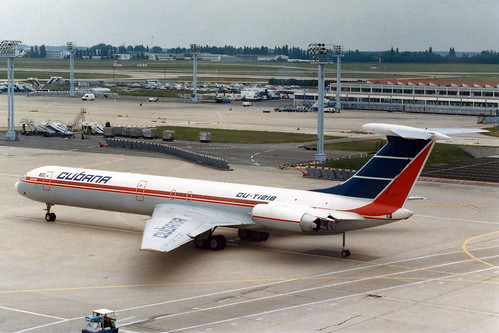
Cubana Ilyushin Il-62M CU-T1218

Your chances of surviving an airline crash are, at best, 50/50. On the flip side, the odds of your being the victim of one are reassuringly slim. According to a US study, in any 12-month period you have a 1 in 200,000 chance of death by falling down the stairs (ie of every 200,000 deaths, one is a stairway accident) compared with 1 in 300,000 of dying in an “air or space accident”, taking into account all types of flying things. That same study cites the most dangerous transport act as “car occupant”, with a sobering mortality probability of just 1 in 20,000.

By restricting your air travel to large airliners on the world’s best airlines, your safety is significantly enhanced. Qantas, for example, has never lost a passenger despite nearly 60 years of continuous service. Statistics vary wildly, as do the methods and data used, but according to another US study, commercial airline travel presents a slightly higher risk than death by lightning strike – about 1 in 5 million.

A rule of thumb: as the size of the plane decreases, so the risk increases. Similarly, your choice of airline can significantly increase the chance of a catastrophic end to your holiday. For the safety obsessed, here’s a list of the safest airlines in their respective regions. (The numbers refer to the “fatal events rate” – ie deaths per million flights.)

Asia: Qantas (0.00)
Africa: South African (0.63)
North America: South West/America West/Hawaiian (0.00)
Latin America: Mexicana (0.53)
Europe: British Airways (0.27)

The safest aircraft: the Boeing 777 and Airbus A340 are accident-free. So far.

Some planes are clearly past their expiry date. Older 737s, 727s, DC-9s and A300 series aircraft are finally being retired, but those still flying present a higher than average risk. Of more recent flying machines, Fokker’s F-28 and the McDonnell Douglas MD11 have more than their share of mishaps. As for older Russian and Chinese aircraft … hitch-hiking would be a less hazardous option.

Air travel in the former Soviet Union, Central Africa, China, PNG and Colombia is the most hazardous, although accurate data, understandably, is hard to get.

Airlines you can safely avoid (based on frequency of losses in recent times): Cubana, TAM (Brazil), Egypt Air, Iran Air, Royal Jordanian, India Airlines, China Airlines (Taiwan), Korean Air and Turkish Airlines.

On The Road

IMG_8979

Since the unbridled carnage of the mid-1970s, Australia has reduced its road traffic fatalities every year - to the point where we are now equal to, or better than, OECD standards. Seatbelts, road upgrades, safety awareness, driving culture and improved vehicle standards have all contributed. However, in the Northern Territory, road fatalities run at three times the national average.

When comparing Australia to the rest of the world, you have to be careful to compare like with like. There are the so-called “mechanised” countries and, conversely, “non-mechanised” countries. Australia, of course, falls into the former category, whereas a country like the Central African Republic does not.

As you’d expect, the mechanically challenged lands enjoy far fewer fatalities and lower risks than the automobile-bound ones. However, the fewer cars in such places often create carnage as they try to share roads with clumsy ox-carts and bicycles. The concept of mechanisation is clearly catching some developing countries by surprise. China, where the WHO claim 600 die each day have, you’ll be refreshed to learn, passed their first road safety legislation last year.

To differentiate the various states-of-affair, the two commonly employed methods for measuring traffic accident statistics are the ‘rate’ and the ‘risk’.

The Rate: road deaths per 100,000 of population.
The Risk: road deaths for every 100 million vehicle kilometres travelled.

A recent report by UK travel journalist Simon Calder stated: “Statistically, Australia is a much more dangerous place to drive than Britain; the fatality rate is nearly three times higher.” Sorry Simon, but that’s rubbish.

Australia and Britain are both “mechanised” OECD-standard countries with respectable accident records. Given that English drivers spend most of their time in traffic jams, it’s surprising they even get the chance to have fatal accidents. But for the record:

The Rate: Australia: 8.8. UK: 6.0. OECD Median: 10.3
The Risk: Australia: 0.9. UK: 0.7. OECD Median: 1.1

… and Australia’s figures include that wild variation in the Northern Territory.

Risky mechanised countries to be aware of: Turkey (7.3), Malaysia (2.6), Greece (1.9), Portugal (1.6), Korea (1.5), Poland (1.5) and USA (1.5).

Other Figures To Chew On:

Highest Death Toll: China (with a bullet) – heading for 250,000 per year
Highest Fatality Rate: Armenia (277) Lowest: Madagascar (0.2)
Highest Fatality Risk: Turkey (7.3) Lowest: Bhutan (0.08)

Safest Australian State (or Territory): ACT Risk: 0.3 Rate: 3.1
Least Safe Australian State (or Territory): NT Risk: 3.2 Rate: 27.7

Wednesday, August 6, 2008

SILVERSEA'S PRINCE ALBERT II SET TO EXPLORE FRENCH POLYNESIA FROM MARCH TO OCTOBER 2009

Ultra-luxury Silversea Cruises has revealed details of its 2009 schedule of expeditions for the Prince Albert II, calling for the 132-guest luxury expedition ship's deployment in French Polynesia from mid-March to late October 2009.

The ship's positioning in Tahiti is the result of numerous efforts and successful meetings between Silversea and the French Polynesian government.
An exciting collection of new itineraries will feature the less-travelled regions of Polynesia ranging from the southernmost Austral Islands to the sprawling Tuamotu Archipelago and the northernmost Marquesas Islands. Highlights of the 2009 French Polynesia program include:

AUSTRAL ISLAND ADVENTURES
Nestled in the Tropic of Capricorn, the remote Austral Islands lie hundreds of miles south of Tahiti and enjoy a slightly cooler climate. Tubuai, largest of these volcanic islands, is probably best known for the failed landing attempts of the H.M.S. Bounty. (The island's villagers assaulted the unwelcome ship with a barrage of stones, and ultimately the mutineers sailed off to Pitcairn.) Prince Albert II and her fleet of 8 Zodiac boats will explore the unique culture, flora and fauna of Rapa, Raivavae, Tubuai, Rurutu and Rimatara on five 11-day, roundtrip journeys from Papeete. Silver Sailing fares start at US$3,897 per person, double occupancy.

JOURNEYS TO THE MARQUESAS
The mountainous islands of the Marquesas are located nearly 900 miles northeast of Tahiti and just south of the equator. With a lush, vibrant terrain bursting with myriad exotic flowers and fruit trees, it's easy to understand how this tropical paradise captivated the artist Paul Gauguin, who made the Marquesas his adopted home. On four roundtrip journeys of 14 days from Papeete, Prince Albert II's expedition team will lead in-depth explorations of Fatu Hiva, Pua Mau, Hiva Oa, Atuona, Ua Pou, Nuku Hiva and Tahuata, as well as Manihi and Fakarava Island in the Tuamotu Archipelago and the Society Islands of Bora Bora and Tahaa. Silver Sailing fares start at US$4,917 per person, double occupancy.

TUAMOTU EXPEDITIONS
The isolated Tuamotu Islands, northeast of Tahiti, comprise the world's largest chain of atolls. Its 78 sparsely populated coral islands span over 900 miles of aquamarine waters. Dotted with quaint villages, coral churches and an abundance of wildlife - from bottlenose dolphins and coconut crabs to the rarest of birds - this remote archipelago offers endless possibilities for real Robinson Crusoe-style adventures. Departing from Papeete, Prince Albert II will embark on five 10-day expeditions to the Tuamotu islands of Tikihau, Rangiroa, Apataki, Arutua and Fakarava, as well as Raiatea, Maupihaa and Huahine in the Society Islands. Silver Sailing fares start at US$3,597 per person, double occupancy.

In the spirit of true adventure, all itineraries are unstructured by design. Following only a tentative schedule that allows for moment-by-moment flexibility, expeditions stay longer at sites of particular interest, or make slight detours whenever weather, nature or mere curiosity dictate.

The Prince Albert II offers full-scale exploring from an ultra-luxury base at sea, in true Silversea style. With the largest average size accommodation of any expedition ship, guests will enjoy spacious, ocean-view suites (many with French balconies or large private verandas), sumptuous gourmet cuisine, warm hospitality and personalised service (with a crew-to-guest ratio of nearly 1 to 1), and Silversea's generous selection of all-inclusive shipboard amenities, including complimentary beverages, bottled water, wines and spirits served throughout the ship, 24-hour room service, stocked in-suite beverage cabinet and all gratuities. Plus, complimentary Butler Service is provided in the Grand and Owner's Suites.

"We are delighted to base the Prince Albert IIin beautiful Tahiti for a series of explorations next year," said Amerigo Perasso, Silversea's president and CEO. "The South Pacific is home to magnificent natural vistas and some of the world's most intriguing cultures, offering our guests the perfect setting for mind-enriching, authentic adventures."

"We are pleased to welcome the prestigious Prince Albert II to French Polynesia," said the President of French Polynesia, Gaston Tong Sang. "Since taking office, it has been my goal and intention to take all necessary steps to enable Silversea to visit the region. The Prince Albert II is a true luxury vessel with a privileged clientele that is attracted by cultural and authentic travel experiences."

Mr. Tong Sang added, "The itineraries and land programs designed by Silversea are in sync with our tourism positioning as well as our aims for the islands and remote archipelagoes development. The unique voyages developed by Silversea will enable travellers to discover the unknown beauties and treasures of our five archipelagoes in exceptional luxury."

For the balance of the year, the Prince Albert II will offer a series of Antarctic explorations with convenient roundtrip departures from Ushuaia.

For more information please contact Silversea Cruises on +61 2 9255 0600 or toll free 1300 306 872 (Australia) or 0800 701 427 (New Zealand), or visit www.silversea.com

Tuesday, August 5, 2008

Cruise Weekly Comment: Top End


Cruise Weekly – Comment by Roderick Eime

Historically, modern expedition cruising goes back to Lindblad’s Antarctic cruises of the 1960s, while in our region, Coral Princess Cruises founder, Tony Briggs was one of the first to offer extended cruises on the Great Barrier Reef with a converted, Fairmile class, WWII-era submarine chaser in the early 1980s.

Today, small ship, adventure-themed cruises abound and many new operators are capitalising on the abundant scenic and natural wealth of our coastline from the Kimberley to Tasmania. But while WA’s Kimberley enjoys solid capacities, some of our other regions do not.

Initially the repositioning sector from Cairns to Kimberley was developed to incorporate Arnhem Land and Cape York expeditions, but these cruises have sometimes struggled to attract viable numbers.

Kimberley region stalwarts, North Star Cruises, have deleted their “Over the Top” itinerary in favour of an ambitious West Papuan itinerary for 2009. Their first exploration is fully booked with loyal past passengers, leaving just Orion and Coral Princess to operate this region.

“This (11-night voyage) is one of the most underrated itineraries we have,” says Briggs, “Arnhem Land presents some of the best indigenous experiences anywhere and along with World Heritage-listed Great Barrier Reef and Cape York, it’s a spectacular voyage.”

Orion offers similar expeditions, instead split into two products; the 7-night “Art of Arnhem Land” and the 5-night “Tropical Reefs and Culture” from Thursday Island to Cairns.

Orions’ fares begin at about $700pp per night, while Coral Princess are slightly cheaper.

Monday, August 4, 2008

Leaving a Carbon Footprint


Everywhere you turn lately, it seems, people are talking about climate change, global warming, carbon offsets and lower emissions. Is it just hype and bluster, as some would have us believe, or is it the end of the world as we know it? Roderick Eime looks at the arguments.

It would appear that even our most recalcitrant politicians have bent to the notion that the burning of fossil fuels is at least contributing to the climate change sweeping our planet. The jury is divided on whether it is the primary contributing cause or just part of an overall planet-wide cycle. Either way, pouring carbon dioxide from burning fossil fuels like oil and coal and other greenhouse gases like methane and carbon monoxide is accelerating the process.

In a quick reassessment of the public mood, our government has launched their own website, www.greenhouse.gov.au, driven by the Department of the Environment and Water Resources and its vociferous leader, the Hon Malcolm Turnbull MP.

He recently lauded the move by Virgin Blue to offer carbon offset packages to passengers concerned about their own “carbon footprint”.

“Virgin Blue customers can now go online and choose to make each leg of their air journey carbon neutral for an average of a dollar a trip,” the minister said.

“Australian air passengers have never before been able to directly offset emissions from their flights. This is a first for the Australian aviation industry and an important step for the transport sector.

“Air commuters choosing to offset their emissions will be able to make a difference to Australia’s greenhouse gas emissions of which the total domestic air aviation transport sector currently contributes almost five megatonnes.”

When we travel, whether it is by road, rail, sea or air, our desire for sightseeing and leisure is adding to the problem, especially when it involves long distance travel.

Environmentally responsible and sensitive travel is not a new phenomenon, but has certainly become a more widely recognised alternative in the last few years. Apart from travellers seeking out new and exciting destinations with an emphasis on nature and culture, operators are now enticing environmentally conscious travellers with taglines extolling their low carbon emissions and offset policies.

One of that rapidly growing number of tourism businesses claiming “carbon neutral” is Ecoventura, who operate a small fleet of expedition yachts in the Galápagos. This iconic group of islands west of Ecuador is one of the most precarious eco-systems anywhere on the planet and has attracted all sorts of attention over the decades, including poaching, over-fishing and habit degradation from human intervention.

The CarbonNeutral Company, a climate monitoring company, has calculated the amount of carbon dioxide that Ecoventura emits and has come up with a number of projects to counteract those effects including funding for reforestation in Chiapas, sustainable energy projects in Sri Lanka and India, and methane recapture in the US.

Kerry Lorimer, an avid eco-conscious traveller and author of the Lonely Planet guidebook, “Code Green” offers this advice:

“Since virtually any type of motorised transport emits greenhouse gases, the obvious thing is to go for non-motorised transport such as walking, riding a bike or catching a train. Using public transport is another obvious way to lessen your personal emissions.

“Jet travel has had a bad rap for its high levels of greenhouse emissions. Look to the shorthaul and stay local where practical. If all you want to do on holiday is lie on a beach, do you really need to fly to the other side of the world to do it? For business, do you really need to have a face-to-face meeting? Could a video conference get the job done?

“And when you do fly, consider off-setting your emissions via organisations such as climatefriendly.com. Their websites (as well as some airlines such as Virgin Blue) have carbon calculators, which allow you to compute the amount of emissions for the kilometres travelled. You can then pay to 'offset' these through projects such as tree planting and community development projects.”

When it comes to destinations, Kerry adds:

“Do your bit for domestic tourism - choose a holiday destination close to home! We have some of the most amazing travel experiences in the world, right in our own backyard, yet many Australians think first of an overseas destination when planning a holiday.

“Walking or trekking holidays are one of the best ways to keep your carbon emissions to a minimum. Peregrine, for example, offers a range of trekking holidays around the world - close to home there are treks in Borneo, PNG and the Himalaya. The company is currently assessing all of its operations and has pledged that all its tours will be carbon neutral by 2009. Trekking is also a great way to get to know the locals and to reach views and villages that are otherwise inaccessible. There's only one way to the top of a Himalayan peak!”

Kris Madden, a consultant to government and industry on eco- and sustainable tourism, offers some balance.

“Although I acknowledge the contribution to global warming that mechanised travel can make, I’m still a little suspicious of all these carbon offset schemes popping up,“ warns Kris, “there is no framework of operation, no benchmarks and no real checks and balances under which these schemes operate. One has to wonder whether there is a real environmental benefit from some of them, or whether it’s just ‘greenwash’.”

The ‘greenwash’ to which Kris refers is the sceptics’ appraisal of these efforts to create a greener environment. In the competition for consumer sentiment, true carbon consciousness and fake green window dressing will be difficult to isolate as more and more businesses fly the “carbon neutral” flag.

“Sure, it’s better than doing nothing and it certainly raises awareness of the problem, but I fear it is more important for some of the worst offenders to be seen to be reacting to the climate change issue than actually making a real difference.”

Tree planting is one example. Although reforestation is a critical activity in many areas, trees planted today will take at least twenty years to reach maturity. The critics will argue that attention needs to be directed at “now” schemes. What can we do to offset emissions today?

Kris reminds us that it is perhaps the catch phrase “think globally, act locally” is just as important if not more so.

“People can really make a big difference if they modify their own behaviour on a micro scale. Walk when they don’t need to drive, change lightglobes to low power and generally use less energy than they have been. It’s like earning your own offset credits and you can feel less guilty when you decide to travel.”

Responsible and sustainable travel is not just about how much fuel you burn, it’s about how you treat the locals and how much cultural damage you do without even realising it. Genuine travel experiences are quickly vanishing in the rapidly globalising world and some of the lowest emission travel like walking, canoeing and cycling will enable us to maximise the few remaining truly enriching experiences.

Many experts believe our Great Barrier Reef will only exist for the next generation or two. Already it’s showing signs of decay from the small rise in water temperature and it’s one destination you should see soon.

The Arctic and Antarctic is thawing. Vast glaciers are collapsing at a frightening rate and they will soon be a past feature of the pre-climate change planet unless we turn the tide. These are certainly the predictions of the scare mongers, and can we really challenge these gloomy forecasts?

Clearly there will be a lot of “smoke and mirrors” in this climate and carbon debate with some entrepreneurs seeing an opportunity to be the new emissions trading millionaires. If you feel inclined to contribute or invest in these schemes, then do so carefully. The ultimate responsibility, however, falls with the individual. Do you really need to run a computer simulation of your intended journey to visualise your own part in the planet’s demise? Or can it be boiled down to simple common sense and more considerate and simple day-to-day living? You make the call. It’s your planet.

Some quick calculations by The CarbonNeutral Company [www.carbonneutral.com]:

Approximately one tonne of emissions is produced by 5000 kilometres of driving in an over 2.0 litre car.

The same amount of travel on commuter trains produces just 200kg.

A direct flight from Perth to London (14500km) produces 1.6 tonnes of emissions per person.

So, if you took the train every day to work instead of driving, you could earn enough carbon credits to offset your flight. For those who can’t do without their car, the company offers “offset packages” up to A$50 that come in a ribbon bound folder complete with certificate. The money is channelled to community projects and energy-efficient technology development.

NEW SHIP FOR THOSE WITH A QUEST FOR ADVENTURE


A spectacular first year in out-of-the-ordinary, out-of-the-way cruising with their boutique 352-passenger Spirit of Adventure, has prompted her owners to acquire a second ship for high-quality, intimate-style discovery cruising.

The slightly larger 450-passenger Quest for Adventure is undergoing a multi-million pound refit before her inaugural cruise from Harwich in the UK to the Baltic on July 1 2009.

Cruiseco, a consortium of 150 cruise-specialist travel agencies across Australia, represents the Spirit of Adventure company here and says Quest for Adventure will offer a friendly yacht-like atmosphere, coupled with the ability to visit small and lesser known ports that larger ships cannot access.

Expert onboard lecturers will conduct original shore excursions that will be included in the cruise price, and Quest for Adventure will feature formal and informal dining, a selection of bars, stylish public areas and quiet retreats, a 3000-book library, state of the art spa, and regular deck activities

Following her inaugural cruise to the Baltic, Quest for Adventure's itineraries will feature the Aegean and Black Seas, the Greek Isles, North Africa, the Red Sea and Arabian Gulf, and the Far East including the Philippines, Vietnam, Malaysia, Borneo, Indonesia and Singapore.

For full details phone 1800 225 656 for the name of the nearest of Cruiseco's 150-cruise specialist agencies Australia-wide, or visit www.cruising.com.au


Cruise Weekly Comment: Top End Expedition Cruising


Historically, modern expedition cruising goes back to Lindblad’s Antarctic cruises of the 1960s, while in our region, Coral Princess Cruises founder, Tony Briggs was one of the first to offer extended cruises on the Great Barrier Reef with a converted, Fairmile class, WWII-era submarine chaser in the early 1980s.

Today, small ship, adventure-themed cruises abound and many new operators are capitalising on the abundant scenic and natural wealth of our coastline from the Kimberley to Tasmania. But while WA’s Kimberley enjoys solid capacities, some of our other regions do not.

Initially the repositioning sector from Cairns to Kimberley was developed to incorporate Arnhem Land and Cape York expeditions, but these cruises have sometimes struggled to attract viable numbers.

Kimberley region stalwarts, North Star Cruises, have deleted their “Over the Top” itinerary in favour of an ambitious West Papuan itinerary for 2009. Their first exploration is fully booked with loyal past passengers, leaving just Orion and Coral Princess to operate this region.

“This (11-night voyage) is one of the most underrated itineraries we have,” says Briggs, “Arnhem Land presents some of the best indigenous experiences anywhere and along with World Heritage-listed Great Barrier Reef and Cape York, it’s a spectacular voyage.”

Orion offers similar expeditions, instead split into two products; the 7-night “Art of Arnhem Land” and the 5-night “Tropical Reefs and Culture” from Thursday Island to Cairns.

Orions’ fares begin at about $700pp per night, while Coral Princess are slightly cheaper.

Sunday, August 3, 2008

Sail To The Arctic Circle With Voyages Of Discovery In 2009

 
Cruise specialist Voyages of Discovery this week launches its 2009 Europe brochure, featuring a unique range of destination-led voyages aboard the spacious and elegant MV Discovery.

New for Europe 2009 is a rare visit to Russian Murmansk, the largest city north of the Arctic Circle, on a fascinating 15-night North Cape, Arctic Circle and Russia voyage that begins 18 July 2009 and costs from just Aud$4,279pp*.

As ever, distinguished guest lecturers will be onboard to enrich the experience with new speakers including auctioneer and TV presenter David Barby, who has appeared regularly on Antiques Roadshow and Bargain Hunt.

There will also be a long-awaited return to the British Isles, with an exciting round-Britain voyage that includes stops at the Isles of Scilly, Dublin, Belfast, Oban and Dundee. Departing 1 August 2009, the 12-night British Isles Discovery costs from Aud$3,298pp*.

Managing Director, David Yellow, says: "Our Europe 2009 programme offers an eclectic range of destinations, from ancient Alexandria to the spectacular city of St. Petersburg, from high up in the Arctic Circle to Islands of the Aegean. All of our unique voyages are packed full of natural beauty, history and culture.

"We are especially pleased to re-introduce a round-Britain voyage that showcases the best of the British Isles and predict that this will book up early", he adds.

The new programme also features five 'Grand Voyages' that combine two or more summer cruises, offering excellent value for money for those who have more time to spare. Prices start at £6,998pp* for the Grand Mediterranean Odyssey, departing 2 September 2009 and combining Portugal, Spain, the French and Italian Rivieras, the Croatian Coast and Greek Isles.

To celebrate the launch of its Europe 2009 programme, Voyages of Discovery is offering a discount of Aud$200 pp in addition to early booking savings of up to 50% off full brochure prices. Special rates for single travellers are also available.

The lead-in price is from Aud$1,444 pp* for the eight-day Cruise to the Riviera voyage departing 2 September 2009.

*Prices are per person based on two sharing an inside, twin-bedded cabin and include all meals, on-board entertainment, on-board gratuities, port taxes and luggage handling plus a 1 night London hotel stay with transfers on cruises that begin in the UK.

To book or to request a brochure, contact your travel agent or visit www.voyagesofdiscovery.net.au or call Discovery Cruises on +61 (0)2 9959 1380.

Last 30 Days' Most Popular Posts