Sunday, July 27, 2008

HAVE A HOOT – HIRE A HOMESTEAD


john crook & david ellis
 

NEXT time you're thinking about that special-occasion family shindig or a knees-up with all the mates, forget about worrying how you'll fit 'em all into the sunroom and the backyard – head to NSW's Central Tablelands and hire yourself a homestead.

Not only will it come complete with enough rooms and loos, and with a whopping 4000ha around it to cater to every whimsy of the grandkids to the grans, there'll be no need to die of thirst: it's even got its own winery.

Anything from a handful to sixty of you will be able to sit around the tables indoors or under the stars and muse over the glorious past of this circa-1836 property, and its history through the Gold Rush, bushranger-era (Ben Hall was a frequent uninvited visitor,) Cobb & Co, the wool boom, the Great Depression… and how its brash Colonial owners had the audacity in 1937 to take a pot-shot at England's most-esteemed polo event, and to the Pom's consternation, win.

Millamolong Estate & Winery is just four hours drive from Sydney and centred in a triangle bounded by Bathurst, Cowra and Orange.

Its latter-day history goes back to the 1920s when James Ashton Snr, who rose from humble beginnings to become Minister for Lands in the NSW Administrative Assembly in 1895, bought his four sons James Hay, Bob, Geoff and Philip a property called Markdale on the Southern Tablelands.

The boys became keen horsemen and hearing of a new sport called polo being played at Goulburn, went there to investigate; back home on Markdale they played the game with vigour with their workers, and began breeding special ponies with the speed and dexterity to suit the sport.

And on Fridays they'd trot these ponies 90km to Goulburn, play a couple of games of polo over the weekend, and trot their horses the 90km back home.

Then to the bemusement of the Brits, and on a shoestring budget, they took twenty-six of their ponies to England in 1930 to challenge for the world's premier Champions Cup at Hurlington; they were beaten by a margin and subsequently invited to the USA by the newly-formed Long Island Pony Club.

They took the Americans by storm and played against teams that included the likes of Walt Disney and the Peabodys, then sold their polo horses for US$76,000, a $30,000,000 fortune in today's terms, and came home

Being cashed-up, they each bought a grazing property – James Hay Ashton choosing the 4000ha Millamolong, which is still run today by his descendants.

(In 1937, the Ashton boys returned to England, and to the horror of the Poms came home with the cherished Champions Cup.)

As well as remaining one of Australia's most famous polo-playing families, the present-day Ashtons also run one of the largest polo clubs and polo pony breeding programs in NSW from Millamolong.

City-slickers can take themselves for a holiday here and enjoy an extraordinary diversity of country activities from playing pretend-farmers by day to indulging the good life of the "squattocracy" over a grand dinner and a bottle or three of Millamolong's own wines at night.

There're kilometres of horse-riding trails amongst rolling hills, deep gullies and 16km along the picturesque Belubula River, walking tracks, mountain biking, tennis, a pool in the warmer months, a BBQ next to the tennis court, bird-watching for many rare species, and the circa-1930s Edna Walling Garden that attracts garden-lovers from around the world.

For kids there're calves and lambs to feed (in season,) working sheep dogs, and pony rides.

The 28ha vineyard provides fruit for the Millamolong Winery's cool-climate Chardonnay, Shiraz, Riesling, Cabernet Shiraz and Merlot wines.

STAYING THERE:  The Homestead sleeps up to 18 and costs $1200 per night; The Farmhouse 28 and costs $800 per night; Wattle Cottage 7-guests $280 per night; Primrose Cottage 4-guests $220 per night. The captivating 1840s Post Office – once Australia's smallest – has bunkhouse overflow accommodation.

Buildings can be booked individually and prices negotiated for smaller groups for each; catering is available if you want a kitchen-free break. Phone (02) 6367 5241 or check-out www.millamolong.com

(FOOTNOTE: Millamolong means "Sick Man's Creek;" in days of yore Aboriginal tribes would walk vast distances to drink its healing waters that are rich in calcium, magnesium and other minerals.)


PHOTO CAPTIONS:


. TO the homestead born: Millamolong can sleep up to sixty for that next big knees-up – complete with caterers if you want.

. SUNBURNT country: you'll have 4000ha in which to play pretend-farmer or simply ride into the sunset.

.  THE BUNKHOUSE was once Australia's smallest Post Office.

- Photos: John Crook


Cruise The Whitsundays And Stay Free At Hamilton Island

Fantasea Adventure Cruising has added two nights on Hamilton Island at no extra charge to its four night MV Fantasea Ammari cruise of the Whitsunday islands to create a seven day cruise-and-stay package.

The elegant 60 metre cruising catamaran departs Hamilton Island on varying itineraries which include visits to Whitehaven Beach, Blue Pearl Bay off Hayman Island, Whitsunday Island and Fantasea's Reefworld 'floating pontoon' on the outer Great Barrier Reef.

All cabins on the boutique cruise ship, which accommodates 64 passengers and 23 crew, are air conditioned with ensuite bathroom, flat screen TV and bar fridge.

Other Ammari features include a swimming pool, day spa and hair and beauty salon, gymnasium equipment, boutique, Sun Deck Bar, and a DVD and book library. Tariffs include all on-board meals and watersport activities.

Accommodation on Hamilton Island post-cruise is at the recently refurbished four star Reefview Hotel. Cost is Aud$2460 per person. The package is valid for bookings made by October 31 and is valid for travel until December 12.

For more information go to www.fantaseammari.com or book on (Aus only)1800 662 786.


Friday, July 25, 2008

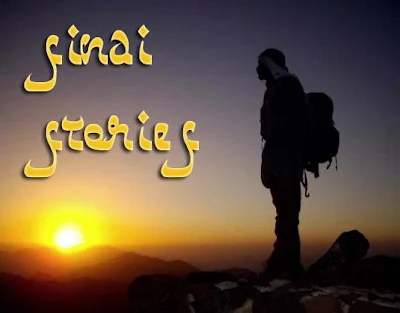
Sinai Stories

Nassir, Bedouin Guide at the top  of Abbas Basha
Nassir, Bedouin Guide at the top of Abbas Basha

By Melanie Horkan

It is almost dark when we get to the top of Gebel Abbas Basha, one of the highest peaks in the ragged Sinai Mountains. The ruined remains of what was once part of a magnificent Ottoman fortress look down over the most incredible view of the mountain ranges. The ruins were once intended to be a palace built by Abbas Hilmi Pasha, an Ottoman monarch, who was dying of bad health and thought that living in the Sinai mountains with its pristine air quality would cure him. He started to build a palace in 1750 at an altitude of 2304 metres, but died before it was finished, without ever having set foot on this mountain and contemplated this incredible view.

This evening, watching as the sun casts a golden glow over folds of pink granite, it’s not hard to imagine why this awe-inspiring landscape has attracted pilgrims, prophets, kings and explorers who have trekked through these lands in search of the divine. Even for the non-believer, there is an incredible urge to get up here and want to believe in something even if it is just the power of the mountains and all that this incredibly rich historical area has seen and experienced. On most days you can see the Gulf of Aqaba and the mountain region of Saudi Arabia although they elude us on this evening.

The air is dry and a thin dust has coated everything. On the other side of the mountain the dying light melts long shadows into the horizon. Most people who venture inland from Egypt's Red Sea coast bypass this magical place. They usually head straight to either Jebel Musa or Mount Sinai, where Moses received the Ten Commandments. Which is a shame as there is another world, far away from the busloads of tourists who crowd around these famous Biblical landmarks in the Sinai.

It is a world far away from the hedonistic delights of resorts like Sharm on the Red Sea. It is a world of silent canyons, ancient mountain peaks dotted with lush Bedouin gardens, oases with date palms and Byzantine Ruins. Trekking through this part of the Sinai will mean that you are treated to the unparalleled warmth and hospitality offered by the local Bedouin people.

We’re in the Sinai Mountains to film a short film about Sheik Sina, a Bedouin run trekking company. We’ve been up since sunrise and my feet are heavy and clumsily knock little rocks over, as we get closer to the top. We’d risen before the dawn to film the sunrise and make sure that we had enough time to trek through the wadis (dried riverbeds) and get here by sunset. The trekking had been quite tough in places and more than once we’d found ourselves scrambling over rocks and pulling ourselves up with our hands to keep up with our Bedouin guide, Nassir. The landscape in the Sinai Peninsula is shaped by wind as well as by water, with bizarre oversized boulders and the deep wadis to negotiate.


Sunset over Abbas Basha

Several hours earlier we’d arrived at what we thought was going to be our camp for the night only to discover that we still had another few hours to go to reach the top of this peak if we were to make it in time to see the sunset. It was now almost ten hours later and Nassir was telling us we still had another couple of hours to go. Even though I had thought that I couldn’t go on physically and part of me had wanted to cry I’d pushed on and the rewards had been a heart-breakingly beautiful sunset over Ottoman Ruins at Abbas Basha.

We sat high up on the crumbling pillars of the Abbas Basha ruins and watched as the light gradually seeped into the folds of mountain skin until there was but the barest band of gold around the edges of the sky. Down below, Nassir, our Bedouin guide was humming softly to himself as he prepared the smoky mint tea, which I had become totally addicted to. We’d clambered down from the ruins as the last of the light had slipped away to sit with Nassir around the fire. We sat around on hunched knees, holding the warm tea close to our lips as the little fire warmed us and listened to him telling us stories about the Bedouin.

Ottoman Ruins of Abbas Basha

The word Bedouin means ‘people of the desert’ or ‘constantly shifting horizon’ or ‘the beginning’ depending on who you talk to here. As he spoke, Nassir’s love and pride for his homeland was obvious and touching. He told us that even though he was married to a Bedouin woman now, a few years previously he’d had a relationship with a Belgian lady. She had come here as a tourist originally and had ended up meeting Nassir and staying. She had wanted him to come and live with her in Europe, but the thought of leaving these mountains to live in somewhere as flat as Belgium was inconceivable to him and so he had stayed.

Traditionally nomadic, the Bedouin rely on their knowledge of the landscape, flora and fauna for survival. As we walk along, Nassir, often stops to crush herbs gently in his fingers and letting us smell the fresh aromatic smells of wild mint (which he later makes the wonderfully smoky mint tea with), wild oregano (which is scattered with creamy fetta and spread on the delicious fresh ‘liba’ (pitta bread) and thyme.

Other times he points out plants which the Bedouin use to make tea with to cure stomach aches, or other plants that are used to cure toothache. Most of these plants are dry and prickly to survive the desert conditions. One day we stop to admire a very beautiful blue and white flowered plant, which looks strikingly luscious in comparison to the other plants. When we ask Nassir whether this plant has any medicinal purposes, he laughs and says that we should avoid this plant.

He tells us a very funny story about his brother and what happened when he sampled this particular plant. Apparently he had started to hallucinate and had reported seeing “many little camels jumping off the mountains”. He had to go to hospital for one month, but survived in the end. Clearly it was all part of his research though as he later went on to become a well-known Bedouin medicine man.

A sense of community and caring for their people is also an important part of Bedouin life, necessities really in the harsh desert landscape. Globalisation and the important strategic political borders in this part of the world means that the Bedouin way of life is increasingly at odds with the demands of the modern world.

However, rather than just sit back and allows their old ways be made redundant, the local Bedouin tribes have learnt to adapt and develop their way of life. Many of the Bedouins that we meet live in the villages and earn a living by either working as trekking guides, making jewellery or working in the local monasteries. All of the Bedouin that we met were keen to share their stories and their love of this landscape with the people who come here.

When I ask them how they feel about the disappearance of their old nomadic ways of life, they tell me that (as with all cultures facing the pressures of modernisation) they must adapt and evolve or perish. I reflect that it is often the tourist who thinks this way and wants to find traditional cultures or the sense of the exotic preserved unchanged forever in amber.

The European Union (EU) has been instrumental in funding projects that enable the local Bedouin tribes to share their culture, their love and knowledge of the desert with tourists. Some of these initiatives include employing Bedouin guides, funding initiatives like the Al-Karm Ecolodge (a beautiful lodge owned and run by a local Bedouin family near St Katherine’s) and promoting an awareness of the local Bedouin culture, which often gets overshadowed by the more obvious historical Biblical attractions in the area.

Sheik Sina, is a Bedouin run trekking company located in the South Sinai region. The company was founded by an EU initiative intended to equip Bedouin guides with hospitality management and language skills. The overall aim of the project is to improve mountain tourism operations in South Sinai by raising the quality of the mountain hikes in the area. Safety is of utmost importance, as is the emphasis placed on lowered environmental impacts. They’ve brought in experienced mountain guides from Europe to train the local Bedouin guides so that the ultimate result is Bedouins who have a fantastic knowledge of the mountains, combined with real safety and group trekking skills.

The empowerment of local guides is taken seriously and there are various education programs that ensure that the guides can continue to secure livelihoods through Sheikh Sina. Most of the guides we meet speak good English and there are plans afoot to give them more formal training in languages as well as mountaineering and guiding experience (above and beyond what their existing knowledge of their traditional mountain homes). Indeed our guide Nassir seems to speak at least three languages (English, German and French with a little Hebrew thrown in for good measure). We often find ourselves in the somewhat surreal predicament of speaking bits of French and German with him (not to mention his impressive command of Jamie Oliver catch phrases).

Up at the top of Abbas Basha, the sky has turned completely black and left the air bitterly cold. Even with two small head torches between us it is difficult to see the way. As we stumble clumsily along the path, Nassir steadily leads the way, lighting the path with a torch. After a few moments he stops and picks up a piece of white quartz.

He tells us he wants to show us a “Bedouin magical trick”. Taking the quartz, he begins to rub it in circles against one of the pink granite rocks, throwing little sparks out into the night. As his movements became faster he built up enough friction so that he creates a beautiful fluid white circle of light. “This is what we call a Bedouin torch”, he tells us and smiles.

We began to head down the mountain. As it had been hours from lunch, we were tired and hungry, and yet so physically exhausted and exhilarated by having made it to the top that we were actually in pretty good spirits. As we began to stumble our way through the darkness and the many loose stones, we quizzed Nassir for stories about any unusual experiences he’d had in the mountains.

An experienced Bedouin mountain guide, he said he had many but there was one that stood out. He started to tell us a story about a lady from New York who’d come over to the Sinai to trek in the mountains and ‘find herself’. Apparently she had ended up in the Sinai through a dream she had had. She’d woken in the middle of the night after a woman’s voice in the dream told her that she would ‘find herself’ in the Sinai Mountains. She’d told Nassir that she was neither religious nor prone to flights of fancy, but for some reason the dream had had a profound and lingering effect on her.

Nassir said, “She was a very strange lady. When she arrived she said hardly anything to me but she just handed me all her money. Three thousand dollars! Can you imagine? I didn’t want to take it but she said I had to that if we were going to spend one month in the desert she needed to be able to trust me fully. So I took her money but I said to her that she was getting every cent back. So we started walking in the mountains and she didn’t speak once. I would try and talk to her but she wouldn’t say anything. Just walking. Eating. Sleeping…Walking. So I thought if she’s paid me to be with her and show her these mountains but she doesn’t want to talk then that is her choice. So we’d just walk in silence. So we continued walking, eating, sleeping. For one month without talking. Then one day towards the end of the trek she suddenly something strange happened. We were coming down a mountain (much like this one) and she suddenly just started to sing. I thought it was totally strange. Not just talking first a little after all these weeks of silence, but singing, loud singing. And she just kept on and on…singing…”

We laugh and ask him whether she was a good singer?

Nassir laughs.

“She was actually….thank god! If she had been bad that would have been bad.”

“So maybe something was released – I mean by being in the mountains? Maybe she felt free finally?” I ask him.

Nassir thinks about this for a moment.

“Maybe. Yes, I think so. But maybe I also think she was not very well in the head. So at the end she still said nothing but she gave me this big hug and told me to keep the money. But of course I could not. And I knew she was not ‘right in the head’ so eventually she took it (all of it) back from me. So when we got back to the camp she decided she was going to stay in St Katherine’s. She didn’t want to go back to New York. So the Sheik said, ok you can stay for a few weeks. A few weeks turned into a few months and she kept doing this singing. Never talking to anyone but just singing.”

“Bit like an Arabic version of ‘The Sound Of Music’ huh?” I quip.

Nassir nods his head and laughs.

“Yes, exactly. Everyone was getting worried (even the Sheik) so we tried to find where her family might be. But the Internet here is not good – we have slow connection and sometimes it breaks so it was difficult. So one day a lady arrives from America. It is her sister and she is looking for her. However, this woman does not want to be found and she begs the Sheik not to tell her sister that she is here.”

“But the Sheik doesn’t think this is right. Family is all you have in this world. And after all, she is family so the Sheik tells the woman where her sister is. This woman runs away into the mountains when her sister arrives but eventually comes back. The sister thanks the Sheik and tells him that this woman had sold everything she had to come to the Sinai. She tells him that her sister had come here because she had a dream and had woken up in the middle of the night and someone in the dream had told her that she had to come here. So she’d sold everything that she’d had to come out here. But the sister had also told him that she was not well in her mind and that it was not the first time she’d done this sort of thing.”

“These mountains”, says Nassir, “They are special and they attract a lot of different people with their energy. Usually good people, but also a lot of strange people looking for something mystical or a religious experience”.

We are silent for a few moments and I feel suddenly sorry for the woman from New York. What has happened to her? Is she back there engulfed once again by the craziness of fast city life? I think of how she must miss the silence of the mountains, which is so different from the silence of a lonely one-bedroom inner city flat. I think about how she might miss the communal nature of the Bedouins with their toothy smiles and twinkling brown eyes. I think of her and hope she is not drowning somewhere.

We walk on a bit further down the mountain. After another thirty minutes or so we can smell wood smoke which I joyfully realise must mean we must be near Omreya’s garden where we have planned on camping for the night. Even better, the smoke also means that our dinner is not far away.

As we get closer, we can hear a donkey braying plaintively. He is tied up in the middle of the rocky path and possibly thinks we have food. We give him a friendly pat and then scramble over the loose rocks that form the wall around Omreya’s garden (strangely, there is no gate anywhere to be seen).

Omreya is sitting by the fire poking the embers occasionally with a stick. A scarf covers her face, and the soft wisps of her greying hair are plaited beautifully into a striking crimson headscarf. Even though her face is covered, her eyes sparkle as she smiles and she greets us by kissing us twice on each cheek and then a big bear hug. Usually the Bedouin women would be much more reserved, but Omreya knows Nassir well and has also met my friend before.

<< Omreya cooking dinner

A spirited Bedouin lady of sixty or so, Omreya lives up in the mountains alone by choice while her husband stays down in the village. Although it is very unusual for a Muslim woman to live alone like this, she loves the mountains and even though she has eight (almost all grown up) children down in the village, she cannot bare to stay in the village as it takes her away from the mountains. As her gardens are on the edge of the main trek up to the top of Abbas Basha, she gets lots of visitors, which she loves. It is clear that Omreya is pretty exceptional and is loved and respected widely in the local Bedouin community.

We crouch around the fire to warm ourselves. There is a large pot of pasta boiling over the fire. Nassir talks to Omreya in Arabic. He translates bits and pieces to us. We learn that her daughter is soon to be married and that the preparations are going well. She invites us to the wedding in a few days time. She continues to stir the big pot of pasta. Sparks from the fire light up her face and catch a twinkle in her eye.

It is funny the things you can tell about a person that transcend language. Even though I didn’t know what she was saying, I can tell by the way that Nassir listens to her and the way that she holds herself, that she is wise and respected by those who know her. After about an hour she stops stirring the pot of pasta and asks us if we would like soup. I am ravenous so I nod yes vigorously but she simply returns to stirring the pasta and makes no moves to serve it. Everything is in her own time and right here and now the conversation with the weary travellers takes precedence. We will have to wait a bit longer for our food.

Eventually at about ten o’clock we eat – a simple tomato pasta with a few vegetables. The soup is served up about another hour later by which time I’ve gone past being hungry and am simply delirious. We eat and talk and watch the embers of the fire as the flames begin to die. Wiped out by the day’s trekking, we decide to turn in. We unzip sleeping bags and pull them out onto the matt in front of the fire. Omreya puts the pots to one side for washing later and pulls out her matt and blankets and sleeps nearby in the garden. Nassir tells us that she always does this when visitors come. She likes the company and wants to be near us. We all say goodnight to each other and even though I am utterly exhausted I find I cannot sleep. Gazing up at the stars above me I can see the outline of a mountain peak lit by the full moon. A shooting star falls across the sky. The air is still, cold and silent. The stars continue to fall gently across the sky as my eyelids get heavier and heavier and I feel a strange and rather lovely sense of peace…


Melanie Horkan is a Sydney-based film-maker and was in the Sinai Mountains to produce a short film about Bedouin-run trekking company, Sheik Sina, that will be released later this year. Melanie is a graduate of the Australian Film Television & Radio School and the Victorian College of the Arts.

For more information she can be contacted via email: melhorkan@hotmail.com

For more information about Sheik Sina Bedouin Trekking Company:

http://www.sheikhsina.com

Orion 2009 brochure features new destinations


Orion's latest 30 page full colour brochure, just released, features expansive colour spreads depicting key 2009 destinations, along with an overview of guest experiences and life onboard.

In addition to spreads on each major region visited, the 2009 brochure contains useful information for potential travellers with a detailed deck plan of the ship and her 5 star facilities, the range of guest accommodation (with floor plans from Staterooms to Owner's Suites) and examples of the onboard comforts such as boutique, massage, elevator and lounges – and Serge Dansereau's award winning cuisine.

For the technically minded there is comprehensive information on Orion's specifications including details on size, speed, tonnage, ice class hull construction, sonar and oversized stabilisers.

Personal insights by members of the onboard Expedition Team make interesting reading, adding another dimension to each itinerary.

Included with this year's brochure is a useful lift-out reference booklet featuring in-depth itinerary details by destination, 2009 pricing and Calendar of Sailings detailing all expeditions throughout 2009 and early 2010.

Landscape format and photography reflect seascapes and vistas typically encountered on Orion expeditions. The Kimberley spread features a dramatic photo of King George River taken from above the falls, then by way of contrast is a photo of the massive falls themselves towering above Orion's Zodiacs on the river.

Arnhem Land is full of bright colours, indigenous interaction and the ancient rock art of the Dreamtime; while the popular voyages to Papua New Guinea and Melanesian islands features photography of World War II relics, idyllic beaches, crystal waters and fascinating village cultures.

New for 2009 are Orion's Spice Islands, Gulf of Siam and Vietnam Explorer voyages to Asia, plus a Forgotten Islands itinerary and expeditions to New Zealand and the remote World Heritage-listed Sub Antarctic islands.

The Antarctic continent remains a strong Orion drawcard for adventurers lured by the once-in-a-lifetime opportunity to visit the historic Antarctic explorer bases of Mawson, Scott and Shackleton.

Those seeking warmer climes can cruise our own Great Barrier Reef – perfect for a short break in one of the most beautiful parts of the world.

The Orion 2009 brochure can be downloaded from www.orionexpeditions.com/brochure/ebrochure or mailed simply by contacting Orion Expedition Cruises: 61-2 9033 8777 (Sydney callers) 1300 361 012 (regional and interstate) or visiting your travel agent.

Email: info@orioncruises.com.au

Ranked #2 expedition cruise ship in the world in the current Berlitz Cruise Guide, Orion is the world's latest purpose-built luxury expedition cruise ship, featuring an unmatched range of onboard facilities.

With 75 crew and a maximum of just 106 passengers Orion offers the highest staff to guest ratio and guest to public space ratio of any ship based in Australian waters.

Further information on Orion Expedition Cruises can be obtained by visiting the website www.orionexpeditions.com

Thursday, July 24, 2008

What Kind of Souvenir Shopper Are You?

Source: Fodors.com

080723_souvenir_Seamus_Murray_flickrF.jpgAny old souvenir can remind us of where we've been, but to qualify as a valuable keepsake it should have the power to transport us to another place and time. Luckily, this sort of sentimental quality isn't reserved for only rare or expensive mementos. After all, an item's real value isn't how much it cost, but the memory attached to it. How we go about deciding which objects are worth holding dear depends on who we are both as shoppers and travelers. Does your souvenir style mesh with any of these shopping profiles?

Talk travel: "Do you have a favorite souvenir from your travels?"
Love to shop? Review top stores around the world

The Conscientious Consumer

Shopper profile: You take the adage "think global, buy local" to heart when searching for a special reminder of a place. Authenticity is key for you and you are keenly interested in the origins of your purchases. You're partial to shopping experiences that allow you to interact with independent artists and vendors, and you make a habit of seeking out local markets and craft fairs.

Souvenir wish list: One-of-a-kind handwoven, handcrafted goods by area artisans; local spirits or food products

Tip: Be sure to inspect items carefully. Always ask questions to ensure that you're not purchasing a mass-produced knock-off shipped in from elsewhere.

Talk travel: What should I buy in... Alaska? | Moscow? | New Orleans?

The Pragmatist

Shopper profile: You love that traveling introduces you to both small and large innovations which haven't yet made it to your corner of the globe. Anything you can use on a daily basis back home, including clever gadgets, makes for a good souvenir. For example, a uniquely designed julienne peeler could hold a special place in your heart and cutlery drawer. Cooking with it at home would instantly remind you of an afternoon spent solo in the housewares section of the Zurich department store Jelmoli.

Souvenir wish list: Unusual (to you) items that fill a practical need

Tip: Research local specialty shops before you go and don't be afraid to ask salespeople where it is they shop.

Talk travel: "Have you used something today that you brought home from a trip?"

080723_souvenir_jim_snapper_flickrF.jpg

The Savvy Bargainer

Shopper profile: Up for a challenge, you make a bee-line for a destination's most bustling souk, bazaar, or marketplace. You feel at home in these often chaotic shopping environments because you relish the chance to negotiate for a good deal. Confident and cool-headed, you often devote an entire day to scoping out what's available before making any large purchases. You have no qualms about walking away if you feel you're not being offered a satisfactory deal.

Souvenir wish list: Unique items purchased for a sum well below the often inflated tourist prices

Tip: Study a phrasebook in advance so that you can clearly communicate with vendors. Research local shopping customs before you go to be sure that haggling for a lower price is expected.

Talk travel: "What souvenir do you regret not buying?"

The Collector of Classics

Shopper profile: Splurging on a well-made, iconic item that symbolizes a destination's culture or boasts its own history is your idea of a quality souvenir. Shopping for these often higher-priced goods can involve looking through glass cases, taking a private studio tour, or using the services of a skilled tailor. The purchase can almost feel like the trip's raison d'etre; you'll research the purchase well in advance and may even consult with a local specialist on your arrival.

Souvenir wish list: Something sparkly from Tiffany's in New York; an intricately woven rug in Turkey; a tailored suit in Hong Kong.

Tip: Always try to make big-ticket purchases with a credit card---you'll automatically have a record of the purchase and it will be easier to dispute the charge should it be necessary.

080723_souvenir_chris_watson_flickrF.jpg

The Collector of Kitsch

Shopper profile: Classy purchases like the ones mentioned above might mean you have great taste, but they certainly don't scream "fun." On the other end of the spectrum are kitschy, glaringly tacky souvenirs that are easy to collect and display. Look where your sense of humor has taken you! A glance of the bobble head hula doll in your rear-view mirror during your morning commute is enough to get you through the day.

Souvenir wish list: Anything that you can collect across multiple destinations--it's a bonus if it moves, makes noise, or lights up

Tip: Flying home? Don't pack snow globes in your carry-on; they're not allowed by the TSA.

Talk travel: "What is the silliest thing you've bought on a trip?"

The Smart Scrapbooker

Shopper profile: You know that sometimes the best souvenirs are merely items picked up along the way from the places you pass through. Longtime Fodor's member tomassocroccante reminded fellow travelers of this lesson recently in a conversation on our Forums: "Years ago a chef at the restaurant where I worked asked me to bring him something from a trip. Anything, he said, a matchbook, etc - nothing purchased, just something from the country, for good luck. That got me to start noticing some of the freebies that make good souvenirs for their authenticity. Funny sugar packets, advertising items, takeaway menus, etc."

Souvenir wish list: Restaurant matchbooks, business cards; anything that can be pasted later into an album or kept for safekeeping until a return visit.

Tip: Pack a plastic sandwich bag in your suitcase to keep cards organized.

Talk travel: "Do you have a favorite souvenir from your travels?"
Love to shop? Review top stores around the world

Photo credits: (1) photo by Seamus Murray; (2) photo by Jim Snapper; (3) photo by Chris Watson.


Sunday, July 20, 2008

WAITER, THERE’S A FIRE ENGINE IN MY SUITE


John Crook & David Ellis


SOME people collect toy trains, others antique cars or weird postcards, one bloke we know of seeks out the most tacky fridge magnets he can find while on his travels, and of course most families have someone with a penchant for postage stamps.

But as well as running their Adelaide antique business, Rodney and Regina Twiss have also been collecting something more out-of-the-ordinary – vintage buildings. And at last count they'd bought and meticulously restored no less than twenty of the things in leafy upmarket North Adelaide.

With a lifetime in the antique trade, it probably came as a natural progression for the Twiss' to go a step further from gathering what goes into buildings, to gathering the buildings themselves, and turning them into themed heritage accommodation.

Their acquisitions have ranged from a one-time fire station that's been converted into three luxurious B&B suites – and which have proven the big drawcard for those seeking something definitely out-of-the-ordinary – through to a building that was once a chapel for the Society of Friends, probably more better known as the Quakers.

A couple of nights in the Fire Engine Suite of that old circa 1866 bluestone fire station is considered by those who've done it one of their most delightful B&B experiences in the South Australian capital… possibly made the more so by the fact that the Fire Engine Suite's unique decoré includes a gleaming red antique fire engine and an original fireman's pole.

But when it comes to home-comforts there's every mod-con including a large spa.

Other North Adelaide properties the Twiss' have restored include Buxton Manor, a "gentlemen's residence" owned for many years by Sir Josiah Symon, a respected jurist, parliamentarian and one of the Fathers of the Australian Constitution; there are five suites here, including the popular Butler's Apartment.

Then there is Bishop's Garden, a cosy courtyard suite set in the century-old gardens at the Twiss family home, Palmview Villa. This mansion was built in the 1890's for South Australia's 4th Anglican bishop, Nutter Thomas whose 'Adelaide Diocese' covered the whole of South Australia, until the church took pity on the travel-weary Bishop and created a separate Diocese in 1915 to cover the vast north of the State.

The grand homestead is situated close to the site from which Colonel Light surveyed and sketched-out his plans for a capital city; a statue commemorating him stands on the spot where he had his grand vision of a city that would be one mile square, surrounded by parklands to the north, south, east and west.

Every one of the properties owned by the Twiss family has some connection with South Australia's glorious past, and for lesser mortals the decorating of these could have ended up somewhat on the disastrously tacky side.

But Regina and Rodney have been able to cleverly maintain real quality with each of their "babies," with "class" written across every one of their projects.

North Adelaide is old money territory, with glorious mansions dotted throughout its streets, quite a few of which have also felt the winds of change and been converted to upmarket rental or B&Bs.

Together with hotels, a wonderful range of restaurants and coffee shops, developments over recent decades have added to the cosmopolitan image of the area, much to the delight of guests who have chosen to stay in any of the Twiss properties.

And while some of the tariffs may surprise, these are properties that offer travellers a true touch of class: the Fire Engine Inn for instance starts from $285 a night for two people including Continental Breakfast, a pamper pack, bottle of wine and chocolates, while the 5-star Bishop's Garden comes at $330 a night.

Marketed under the name of North Adelaide Heritage Group, there is one underlining feature about the style of accommodation the Twiss' offer, and that's the level of quality and the convenience of each location.

But a little word of warning: such is the reputation surrounding these properties, you will be competing for the few suites available with not only local holidaymakers, but international travellers as well so it definitely is advisable to book well in advance.

For enquiries and reservations telephone (08) 8272 1355 or email res@adelaideheritage.com
…………………………..


PHOTO CAPTIONS:

. SEEING red: nothing like a fire engine in your bedroom.

. ROOM with a view – looking out to the 100-year old gardens from a suite in the Bishop's Garden B&B.

Book a Coral Princess Vanuatu Cruise and Get Free Flights


Coral Princess Cruises is offering free flights to Vanuatu from Sydney, Melbourne or Brisbane as part of a special fly-cruise package exploring the beautiful islands of Vanuatu. This red-hot deal includes free international flights, and a luxury five-night small-ship cruise aboard the Oceanic Discoverer, starting and finishing in Vanuatu's capital, Port Vila.

The cruise itinerary includes Ambrym Island, where the ship anchors in the glow of two active volcanoes, and Maewo Island, which is said to have been the inspiration for the mythical island of Bali Hai in James Michener's epic novel, Tales of the South Pacific. The largest island in Vanuatu, Espiritu Santo, is renowned for natural attractions such as the beautiful swimming pool known as the Blue Hole and picturesque Champagne Beach.

Throughout the cruise, guests can disembark the ship to swim, snorkel, bush walk or participate in nature and wildlife excursions. Vanuatu also has some of the world's best wreck dive sites such as the sunken American troopship the SS President Coolidge, with plenty more to see either snorkelling or from a guided glass bottom boat tour.

Carrying a maximum of just 72 guests, this intimate cruise is aboard Coral Princess's luxury small-ship Oceanic Discoverer, complete with modern staterooms and ensuites, friendly and knowledgeable crew, and onboard naturalists and experts who interpret the natural, cultural and historical highlights of the islands. The itinerary may vary to take maximum advantage of opportunities to go snorkelling or diving, or to visit local villages and attractions. The ship's small size enables it to explore 'off the beaten track', visiting remote and beautiful bays that larger ships can't access.

The offer is available on all new bookings. Prices for the fly-cruise package start at $3,150 per person, twin share from Sydney, Melbourne or Brisbane. The price includes the five-night cruise aboard Oceanic Discoverer, all meals and excursions (excluding SCUBA diving) – and the international flights ex Sydney Melbourne or Brisbane are thrown in for free (taxes are additional, depending on point of departure). Passengers departing from other Australian ports will need to purchase a connecting domestic flight to the east coast international departure points. There are departures on November 10, 15 and 20, 2008.

For further information and reservations contact Coral Princess Cruises on 1800 079 545 or visit www.coralprincess.com.au.

Last 30 Days' Most Popular Posts