Monday, June 20, 2016

15 Great Ways to Experience Hawai'i


The story of Hawai'i is comprised of the stories and histories of multiple cultures. From the indigenous Hawaiian culture, which was the first to mālama ka 'āina (“care for the land), to the Chinese, Portuguese, Japanese, Filipino, Okinawan and Puerto Rican citizens who began arriving in the mid-19th century to work on Hawai'i's sugar and pineapple plantations. Hawai'i celebrates the diversity of its population year round at festivals, events, museums and exhibits, via activities and tours, and in the daily pursuits of its residents. Next time you're in the Islands, here's how you can, too.

Attend the Prince Lot Hula Festival
Two relaxed summer days of hula kahiko (ancient style hula) and hula 'auana (modern style hula) from local and off-island hālau hula (hula schools), that is also a celebration of Hawaiian culture.
Visit www.moanaluagardensfoundation.org

Spend a day at one of Hawai'i's many culture-specific festivals
The Maui Matsuri, Korean Festival, Filipino Fiesta, Hawaiian Scottish Festival and Highland Games, and similar fests offer immersive experiences with the people, food, history and arts of Hawai'i's myriad cultures.
Visit www.gohawaii.com/en/statewide/guidebook/hawaii-arts-and-culture/festivals/

Participate in a summer evening bon dance
All are invited to attend, join the dance and sample tasty local Japanese comfort food at these annual celebrations honoring the spirits of family members who have passed away, hosted on summer weekend evenings at Buddhist temples statewide.
Enter “Hawaii bon dance schedule 2016” into your web browser for listings of dances.

Get lost in Bernice Pauahi Bishop Museum
A few hours in this 126-year-old O'ahu museum's massive collection of Polynesian scientific and cultural artifacts offers an exhaustive glimpse into Hawaiian history.
Visit www.bishopmuseum.org

Learn Portuguese stone-oven baking at Kona Coffee Living History Farm
Roll dough for Portuguese sweet bread then help bake it, old-school style, in a traditional wood-fired stone forno at this Kona district coffee estate first homesteaded in 1900.
Visit www.konashistorical.org
 
Visit our National Park Service historical parks, sites and trails
Hawaiian history and culture is shared in the actual locations that shaped both at Pu'uhonua o Hōnaunau and Kaloko-Honokōhau National Historical Parks, Pu'ukoholā Heiau National Historic Site, the Ala Kahakai National Historic Trail, and Hawai'i Volcanoes National Park on Hawai'i Island; Haleakalā National Park on Maui; and Kalaupapa National Historical Park on Moloka'i.
Visit www.nps.gov/state/hi/index.htm

Experience Chinese New Year in Honolulu's Chinatown District
The biggest Chinese New Year celebration in Hawai'i takes over this downtown district each January or February with parades, street fests, great food, lion dances and firecrackers.
Visit www.nightinchinatown and www.chinesechamber.com

See the Pacific Rim come to Hawai'i at the Honolulu Festival and Pan-Pacific Festival
Two big annual O'ahu events welcoming to our Islands the arts, cuisine and cultures of Pacific Rim neighbors, while celebrating Hawai'i's host culture and ethnic mix.
Visit www.honolulufestival.com and www.pan-pacific-festival.com
 
Step back in time on a docent tour of Hawai'i's Plantation Village
A story-filled walk through the period-authentic multiethnic residences and structures of this replica early-20th-century sugar plantation village on O'ahu is the stuff of time travel.
Visit www.hawaiiplantationvillage.org

Celebrate King Kamehameha the Great
The Hawaiian Islands' first king and founder of the Kingdom of Hawai'i is celebrated each June with statewide events, including a now century-old O'ahu floral parade.
Visit www.ags.hawaii.gov/kamehameha  
 
Get some Hawaiian cultural knowledge at the Kaua'i Mokihana Festival
The mission of this weeklong fest is simple: offering all attendees myriad opportunities to learn about Hawaiian language and culture through hula, music and inspired talks.
Visit www.maliefoundation.org
 
Discover Lāna'i's non-pineapple history at Lāna'i Culture & Heritage Center
You'll learn about the fruit's early 20th century domination of Lāna'i community and labor, AND the isle's lesser known ranching, geological and Hawaiian cultural histories.
Visit www.lanaichc.org
 
Purchase a ticket to a Hawai'i food festival
There are few better ways to sample in one location how the Islands' diversity of cultures collectively shaped the definition of Hawai'i cuisine than culinary fests like the Hawai'i Food & Wine Festival, Mealani's Taste of the Hawaiian Range and many more.
 
Visit the Monarchy-era structures of Downtown Honolulu
'Iolani Palace, Kawaiaha'o Church, Hawai'i Mission Houses and Ali'iōlani Hale (home of the King Kamehameha V Judiciary History Center) were constructed when Hawaiian royalty governed island life. Today, each is a window into its era and Hawai'i's history.
See www.iolanipalace.org, www.missionhouses.org, www.kawaiahao.org and www.jhchawaii.net
 
Road trip to the ranching town of Waimea
The paniolo (Hawaiian cowboy) town is home to a heritage center and working ranches ready to share Hawai'i Island's fascinating and longtime place in U.S. ranching history.
Visit www.gohawaii.com/en/big-island/guidebook/topics/paniolo
 
For information on the Hawaiian Islands, please visit www.gohawaii.com
 

Tuesday, June 14, 2016

Ethiopian Airlines celebrates 70 years


Young and Strong Ethiopian Airlines at 70!

Starting today, April 8, 2016, Ethiopian is delighted to celebrate its 70 years of dedicated and highly successful air transport services to, from and within the continent of Africa.

With its strong mission of bringing Africa together and closer to the world, Ethiopian has expanded much needed air connectivity within Africa and with the rest of the world in the last 70 years. Leading the way in the past, present and the future; Ethiopian has been an aviation technology leader in Africa and has introduced many new aircraft and systems to the continent.

The result of such a long journey of dedicated service has now culminated in connecting 51 cities in Africa with the major trading centres of the world in five continents and 41 cities around the world.

Every single day, we are operating 240 flights with an efficiently designed network of connectivity through our main hub in Addis Ababa with 76 aircraft in service. Along with our Star Alliance partners, we cover the entire world.

The fast, profitable and sustainable growth we have registered in the last 10 years has made us the largest, most profitable and fastest growing airline on our continent. We operate Africa's largest cargo service, largest and most advanced Aviation Academy and best MRO services.

Group Chief Executive Officer, Tewolde Gebremariam, said "Seventy years is a long time, but Ethiopian is still young, strong, forward looking and ready to contribute its own share of an integrated, prosperous and peaceful Africa, driven by its own citizens and representing a dynamic force in the global arena in line with the African Union agenda 2063.

"The billions of dollars we invested in our modern fleet, aviation infrastructure, human resource development and operating systems are a testimony that shows Ethiopian is positioned in a solid foundation to scale up the growth in its Vision 2025. With the next generation advanced fleet of B-787 Dreamliners, Airbus A-350 and the B-737 MAX, we are very excited to continue to lead the 21st century aviation development in the continent of Africa.

"Ethiopian airlines employees, the management and the board of Directors have been demonstrating unique levels of dedication and commitment to their airline and this is the main success factor in the last 70 years, we take this opportunity to recognize and thank all of our employees; present and past for their extraordinary hard work and success.


We have been competing and winning every business of our customers in the hyper competitive global airline industry in the last 70 years, and we are prepared to do so now more than ever in the past. We thank our more than 7 million annual passengers for their strong vote of confidence in choosing to fly with us and for their loyalty and support.

Aviation is a cluster of value chain businesses and we would not have achieved such a remarkable success; had it not been for the strong support of our stakeholders; we thank the various airport authorities, civil aviation authorities, travel agencies, tour operators, cargo forwarders in our main hub Addis Ababa and our global destinations, suppliers and partner airlines, the Ethiopian Government and other governments."


About Ethiopian

Ethiopian Airlines (Ethiopian) is the fastest growing Airline in Africa. In its seven decades of operations, Ethiopian has become one of the continent's leading carriers, unrivalled in efficiency and operational success.

Ethiopian commands the lion's share of the pan-African passenger and cargo network operating the youngest and most modern fleet to 92 international destinations across five continents. Ethiopian fleet includes ultra-modern and environmentally friendly aircraft such as the Boeing 787, Boeing 777-300ER, Boeing 777-200LR, Boeing 777-200 Freighter, Bombardier Q-400 double cabin with an average fleet age of five years. In fact, Ethiopian is the first airline in Africa to own and operate these aircraft.

Ethiopian is currently implementing a 15-year strategic plan called Vision 2025 that will see it become the leading aviation group in Africa with seven business centres: Ethiopian Domestic and Regional Airline; Ethiopian International Passenger Airline; Ethiopian Cargo; Ethiopian MRO; Ethiopian Aviation Academy; Ethiopian In-flight Catering Services; and Ethiopian Ground Service. Ethiopian is a multi-award winning airline registering an average growth of 25% in the past seven years.

www.ethiopianairlines.com

www.facebook.com/ethiopianairlines

www.twitter.com/flyethiopian


Tuesday, June 7, 2016

Art Deco glamour revived at Sydney’s newest 5 star hotel; Primus Hotel Sydney


The opening of Primus Hotel Sydney heralds the stunning reemergence of one of Australia’s most exquisite examples of Art Deco architecture and interior design. For two years, handpicked master craftsmen from Australia and overseas meticulously restored the former Sydney Water Board Head Office’s elaborate and intricate finishes to their original glory.

Overseen by leading global design studio, Woods Bagot, and leading heritage architecture firm, GBA Heritage, the hotel has refurbished and reinstated a design philosophy that traces the progression of Art Deco design in the late 1930s from the geometric influences of the pre-Depression era towards a more Functionalist style.

From the bas relief panels above the Pitt Street entrance depicting the water industry and its progression of technology to the original water bubblers dotted throughout the ground level, nods to the building’s history in water can be found across all levels. Original features such as the metal framed windows, intricate bronze work, glazed terracotta tiles and restored terrazzo corridor flooring across all 6 levels have been approached with respect and restraint, the result being elegant spaces showcasing heritage values.

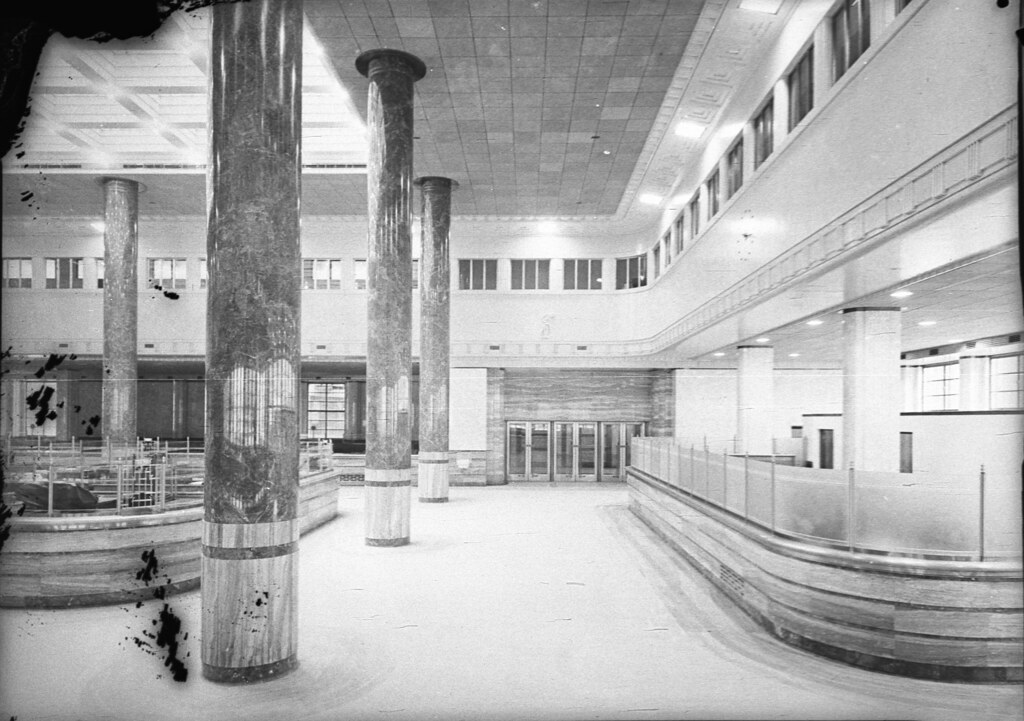
The original foyer. (State Library of NSW)
On entering, guests are met with a commanding lobby space complete with eight towering red scagliola columns. The eight metre high columns, hidden for years behind superficial fit outs, have been faithfully restored to their former majesty by world-leading Italian master craftsmen flown out especially to refurbish the scagliola. Months of painstaking work were required to colour match the new scagliola with the old due to the now-banned mercury originally used to create the unique pigment. Surrounded by the columns is a central sky-well, which had previously been covered in tar now soaks the lobby in natural light. This functionalist design work is offset with restored cream travertine marble flooring, and a central grand seating area with plush salmon pink and navy velvet sofas and brown leather armchairs. A Noce Travertine marble feature staircase is present with bronze & brass balustrade complemented by a black and white geometric art deco styled wallpaper by Kvadrat.

The grandeur of the lobby gives way to a reception area that continues the iconic Art Deco design inspiration and sense of arrival. Stylish finishings bring a contemporary twist to the old-glamour feel to the expansive space including a brass reception bench top with a stylish oval low handling optical light.

Like the grandest European and American hotels, Primus Hotel Sydney reserves some of the most refined areas for relaxation and entertaining, including the Lobby bar, which is the perfect spot for business meetings and cocktail catch ups. Custom-made, dark stained oak timber cupboards set a stately tone while the bar’s patinated brass shelving by Sydney-based master joiners, Bindi Furniture, is a reminder of the building’s ageless character. Olive green and brown leather upholstered bar banquettes provide a sumptuous way to relax in the space.

Primus Hotel Sydney delivers a collection of high-end dining and experience offerings, including ‘The Wilmot’, a 120-seated restaurant celebrating a modern expression of European and Australian classics with an Asian twist. The Wilmot restaurant’s dark stained timber flooring provides a warm, masculine feel to mimic that of the office space once located in the same area behind closed doors; away from the public face of the Sydney Water Board. Details in the room include a lustrous marble island bench, semi private banquettes as well as flecked glass tables. An open kitchen offers diners an approachable fine dining experience, surrounded by geometric patinated brass adding a contemporary twist to old-world glamour.

Guests who are staying for business will appreciate the short commute around town and the corporate offerings including a complimentary business centre, a mezzanine level with three boardrooms and versatile meeting rooms with natural light that can be converted into a variety of configurations, hosting up to 250 guests. Sophisticated, masculine tones are used on the level, with timber panelling, stained timber oak doors and Verde Alpe marble bench tops.

Each of the 172 rooms and suites across the six levels is generously proportioned featuring a superior level of inclusions. Each of the natural light-filled rooms is exquisitely furnished with royal navy and cream tones, dark timber oak joinery, velvet upholstered bedheads, polished brass trimmings, and handmade gloss wall tiles in the ensuite. Signature comforts include complimentary wifi, 24 hour in-room dining, a Nespresso coffee machine, flat screen televisions and amenities by organic Australian skin care brand, Appelles.

The Presidential and Vice Presidential Suites have a unique design direction epitomising old world charm with statuario venato marble wall slabs, bronze mirror glass doors and custom made geometric aesthetic wallpapers. Each offers combined living and dining room features, butler room, powder room and ensuite bathroom complete with bath and walk-in shower.

Exclusive to hotel guests, the New York style rooftop complete with 20 metre lap pool, lounge seating and bar, provides an inner-city oasis away from the bustle of the streets below.

From the moment you arrive in the rooftop lift lobby, whitewashed rustic driftwood wall panels hint at the Sydney beachside lifestyle while the timber decking, balustrade, planters and cladding speak to the uniquely Australian landscape. However, the building’s Art Deco roots aren’t forgotten with drinks being served over a statuario venato marble bar backed by patinated brass shelving while the mosaic of blue toned tiles, seating and sunbeds make a nod to the water reference of the building.

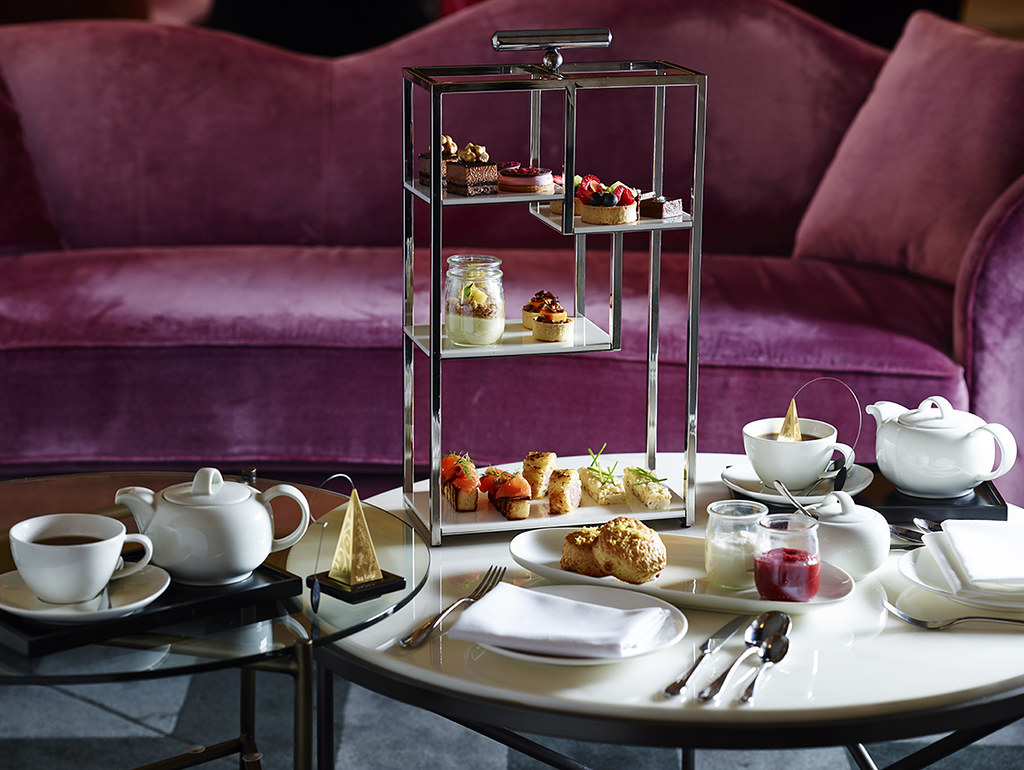
High tea at Primus Hotel Sydney
From the ground floor to the rooftop, Primus Hotel Sydney’s transformation of this Art Deco masterpiece is a true gift to the people of the city. Building on the rare architectural and interior design features of the original building, this is a balanced restoration of the highest calibre destined to redefine the notion of a contemporary design hotel.

To celebrate its launch, Primus Hotel Sydney is offering an opening rate from $290 until 30 June 2016. Offer subject to availability.


Primus Hotel Sydney
339 Pitt Street
Sydney NSW 2000
Australia

For more information visit www.primushotelsydney.com or phone (02) 8027 8000.

Tuesday, May 10, 2016

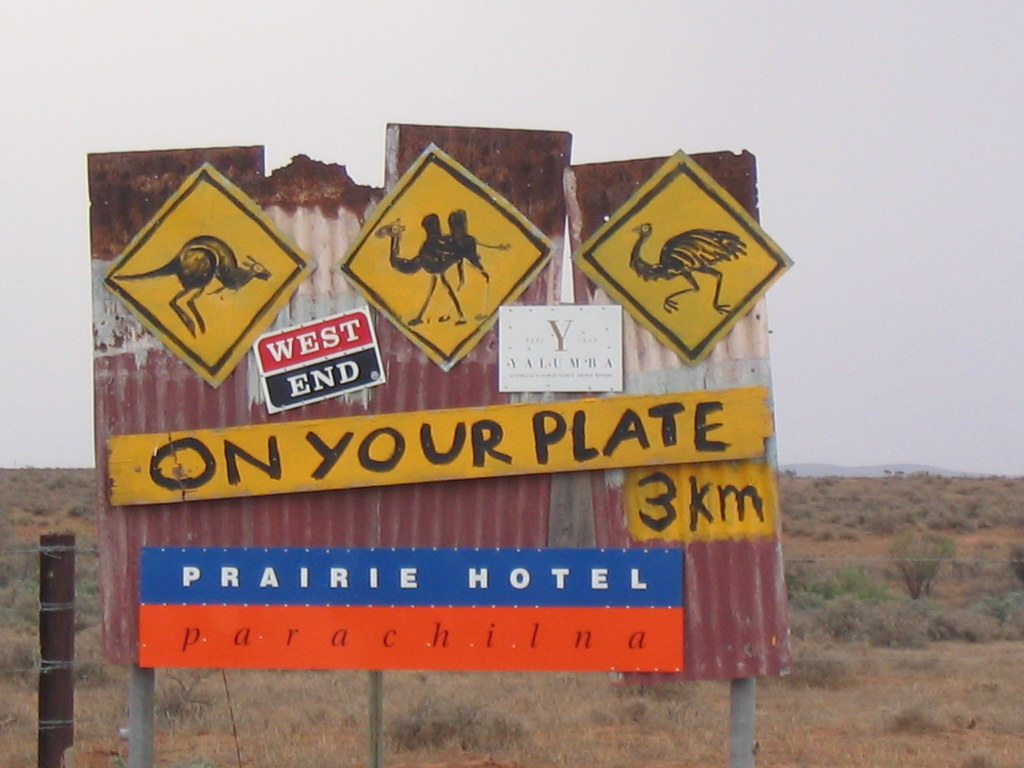
Training stops at Parachilna’s Prairie Hotel


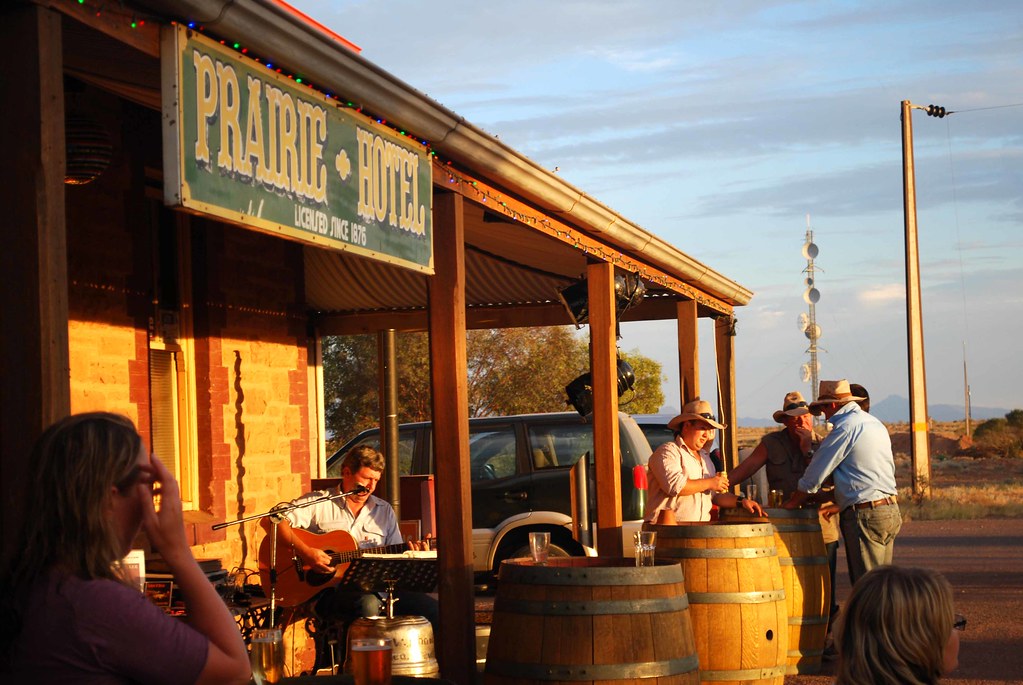
Prairie Hotel (Doug Gee / Flickr)

By Graeme Willingham, who stayed at The Prairie Hotel early April.

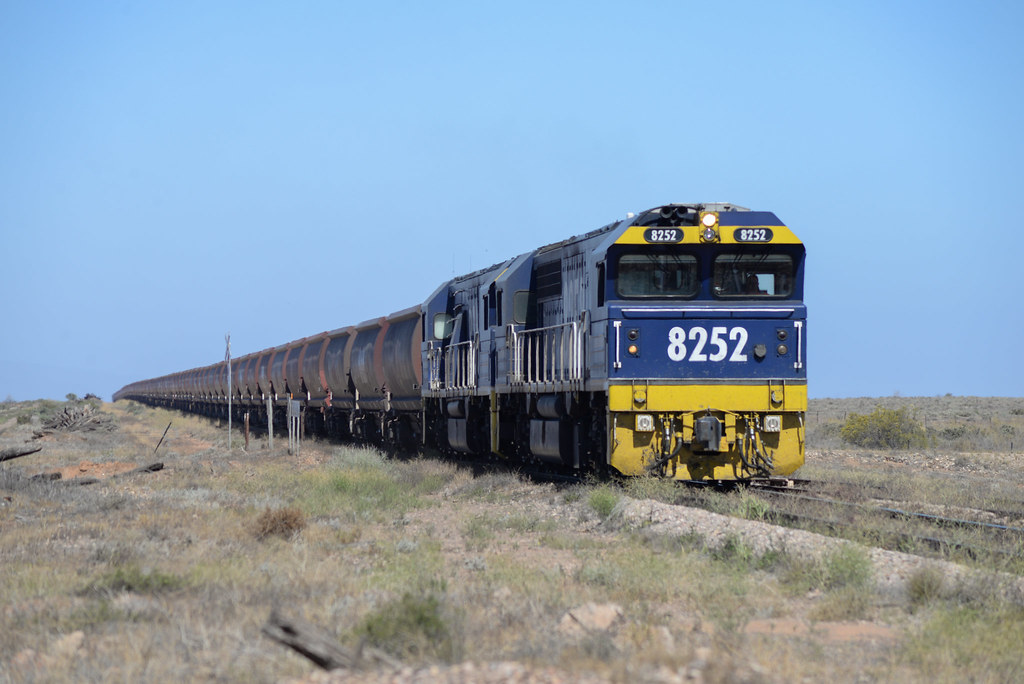
It's all over! With yesterday's (May 9) closure of Alinta's Port Augusta power station, the 2.5km-long Leigh Creek coal train rumbling by The Prairie Hotel at Flinders Ranges' outpost Parachilna is off the hotel's highlights reel.

Hotel owner, Jane Fargher said yesterday the three-locomotive 160-wagon train would empty the bar and restaurant, but she expects the hotel will survive after losing this engaging interlude, which lasted all of five minutes.

Leigh Creek coal train at Parachilna (Simon Tatt / Flickr)
When we were there, the train schedule had been pruned as the power station began its wind down to closure, so we missed the spectacle. Jane said the last train ambled by on April 27.

Train or no train, the Prairie Hotel is a must-do destination to travellers exploring The Flinders Ranges or heading north to (or returning from) Oodnadatta, Lake Eyre and Birdsville.

Just off the sealed Stirling North Road, Parachilna is a railway siding with a locked-up small square bluestone station and some out buildings now operating as budget accommodation, and for campers. A tiny disused school is earmarked for a museum.

Fifty metres from the station building is the sandstone Prairie Hotel.

That's it! That's Parachilna, population 15.

Parachilna is 489 km north of Adelaide, 196 km north of Port Augusta and 30km west of the former mining town Blinham, in the heart of The Flinders Ranges. It is just a handful of flat kilometres from the most western uprising of the Flinders Ranges. To the west, 30 kms of flat desert pastoral scrub running to Lake Torrens presents a wide stage for viewing sunsets from the hotel verandah.

The Prairie Hotel has understated charm which has, rightfully, won for it a "Hip Outback Hotel" tag: 1870s heritage; a sense of oasis-like middle-of-Aussie-nowhere isolation; smart accommodation; a small friendly well-stocked bar (includes own-brand Fargher Lager) also selling gelato; a sunset-facing verandah for a cpuple of those lagers; a restaurant acclaimed for its twist on native food; and a curated art gallery of regional and Aboriginal art.

Ross and Jane Fargher bought the hotel in 1991. Four generations of the Fargher family have run sheep and cattle in the Flinders Ranges, so Ross and Jane are knowledgeable hosts.

Smorgasbord ahead (Von Hadley / Flickr)
The hotel's restaurant is a popular luncheon spot for passing-through independent and tour travellers, of all ages. Some arrive by light aircraft.

The bar attracts those who "just need to stop for a dust-washing beer at The Prairie" and stop-watch international tourists who simply poke their head in the door for a few seconds so they can say they've been there, seen that.

The Prairie has also hosted concerts, events and film crews. For example, as soon as a "Home and Away" crew left back in 2013, the hotel staged a performance by Kasey Chambers, Shane Nicolson and Bill Chambers.

For overnighters, The Prairie has spacious ensuite-rooms in the original part of the hotel and cleverly-designed deluxe eco-suites which are partially set in the earth. (Overall, there's roomed accommodation for 60.)

With its creature comforts, some travellers use the hotel as home-base for exploring the Ranges.

The Prairie shares Flinders Ranges' smart accommodation inventory with Rawnsley Park Station's eco-villas, Wilpena Pound Resort's luxury tents, Arkaba Station homestead and Arkaroola's lodges.

That quirky "Hip Hotel" claim is supported by a broad menu of adventurous feral and non-feral dishes.

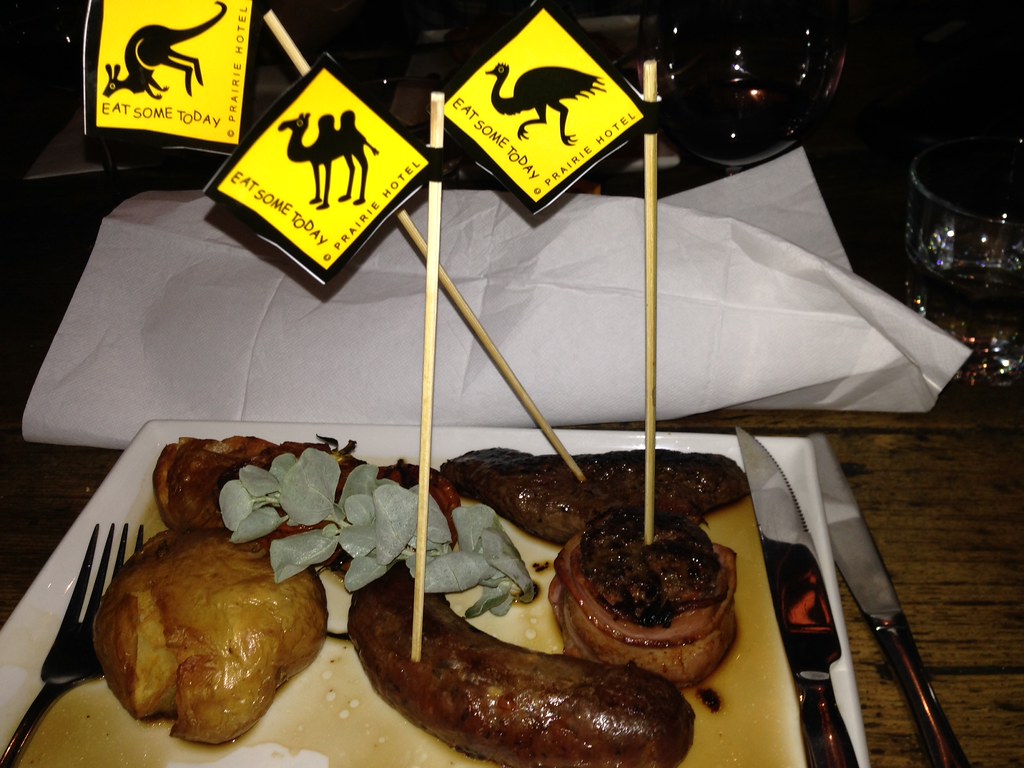
Feral Mixed Grill (Graeme Willingham)
We succumbed to the signature FMG (Feral Mixed Grill) dish of camel sausage, emu fillet mignon and kangaroo fillet, which arrived, to much amusement, with mini yellow-and-black road sign flags identifying each piece of meat. We were assured the signs did not indicate the meat was sourced from roadkill!!

We could have kicked off with the Feral Antipasto which includes emu pate, kangaroo mettwurst, goats cheese and bush tomato chilli jam, and then finished with Quandong Crumble Pie. Or, we could have ordered chicken, fish, lamb, beef, pasta, curry or vegetarian, or gluten-free.

Drove there, stayed there, drank that, ate that! But we missed our train connection.

See www.prairiehotel.com.au

(The author was a paying guest.)

Saturday, April 30, 2016

Santiago: A putsch in a punch at La Piojera


by Roderick Eime

Once the air would have been thick with a pungent fug of Cuban tobacco and seditious schemes yet today, years after the last dictator was deposed, La Piojera (the flea pit) still retains that vital air of free speech and dangerously creative thought.

Monday, March 14, 2016

Thailand: Why rivers and water are at the heart of Thai culture


Thailand's river of life

As a nation, Thailand grew along the banks of its mighty rivers. For centuries, the kingdom's waterways have provided the Thai people with their staple foods of rice and fish, fuelled by the abundant monsoon rains that have made the land fertile. So it's little wonder that so many local ceremonies and traditions are water-based – be they intimate family rituals or nationwide celebrations.

The most important festivals of the Thai calendar are celebrated with water. Best known of course, is the Thai New Year celebration of Songkran. For three days, during the hottest month of the year, the kingdom plays host to the world's biggest water festival.  Every town and village hosts a frantic three-day water fight with young and old taking part, as a way of cooling off and coming together.  Tourists love the fun and party atmosphere, but for local people, this is a family event. In homes and temples nationwide, people gather to sprinkle sacred water on images of the Buddha as a form of ritual bathing. In Thailand's mostly rural culture, this is a way of praying for ample rainfall in the growing season to come.

Songkran festival in Chiang Mai
This is also a time to pay respect to family elders. In what's considered the oldest ritual of Songkran, elders will daub the face and necks of younger participants with a white perfumed powder called dinso pong – this has long been seen as a way of warding off evil, but has also the added benefit of protecting the skin from the sun and even warding off spots – a Thai folk cure that has been passed down the generations.

Later in the year comes Loi Krathong. Held under the creamy full moon of the 12th lunar month, the celebrations are aimed at giving a little back to the water gods, to thank them for their bounty over the year. Banana stalk floats, crewed by incense and orchids are released onto the kingdom's waterways.  As these flowery floats bob out into the current, they take their owners' wishes for love, fortune and success with them.

Loi Krathong Sai in Tak

The charming festival of Loi Krathong is celebrated in varied ways. In the western province of Tak, the festival is called Krathong Sai, and the local krathongs are made of coconut shells, which are abundant in the area as well as throughout Thailand including popular beach destinations of Ko Samui, Ko Phangan, Phuket, and Ko Chang. These coconut shells are filled with wax and floated out into Tak's portion of the majestic river Ping. In the northern area of Chiang Mai, Loi Krathong is called Yi Peng and fire lanterns are released so the lights in the sky mirror the candlelit city canals below.

H2O plays its part in more personal Thai ceremonies, too. At weddings, water is sprinkled upon the wrists of the bride and the groom to bless the union. Of course, now couples come from all over the world to wed in Thailand, and they often do this by taking part in traditional Thai ceremonies. But Thailand offers a wedding to match every taste. Real water lovers can tie the knot below waves in the famous annual underwater wedding off the coast of Trang.  Other watery weddings can be enjoyed as couples float on the amazing Red Lotus Sea in the province of Udon Thani – be there from November to late February to enjoy the pink blossoms at their finest. For more memorable nuptials, how about a wedding on Thailand's highest mountain, or atop a mighty Thai elephant, the symbol of the nation? In this land of love you can do it all.

The beautiful red lotus sea in Udonthani
Of course, Thailand's waterways and rivers have long shaped the kingdom's landscape and history. And it's the mighty Chao Phraya River, which flows through Bangkok, that's the most important to the kingdom's history. Three of Thailand's capitals were built along the banks of this River of Kings – Ayutthaya (1351-1767), which was both an administrative and religious centre, Thonburi (1767-1782) and then Bangkok, which was established in 1782 and thrives to the present day.

As Thailand opened up to the world, the Chao Phraya River became the gateway to the kingdom. Traders and ambassadors followed the local example and made their homes along the river. Even today you can find embassies, five-star hotels and trading firms on the banks of the Chao Phraya River. Bangkok grew up as a network of canals or khlongs, and the local residents made their homes either on boats or stilts above the waters. In the 1840s, about 90 per cent of the city's residents lived on the canals. Theatres, shops and restaurants were run from boats and people would go between them on small rowboats. This watery lifestyle led to Bangkok being called the Venice of the East.

The Chao Phraya river in Bangkok
Now once again, the river is buzzing with new trade and industry. The most popular themed shopping venue of recent years, Asiatique, The Riverfront, built on the docks of the old East Asiatic Company, teems with local and international visitors, who come to shop, eat and to enjoy the riverside atmosphere. There is also the Yodpiman River Walk which recreates the glories of old Siam in its waterside mall created in a colonial style. It's a perfect place to get a feel for the river as a community. The Chao Phraya is opening up in other ways, too. The tranquil little park of Suan Nagaraphirom by Wat Pho is a good place to reflect and relax, and even hosts a Loi Krathong Festival from which you can watch the annual illuminated boat processions.

Above all, the Chao Phraya is a royal river, and plays host to one of the most spectacular displays in Thai culture – the Royal Barge Ceremony. More than fifty gilded barges are rowed majestically down the river by 2,200 sailors of the Royal Thai Navy. The Ceremony is to transport members of the Royal Family during special events; such as, when new robes are delivered to monks at the end of Buddhist Lent (Ok Phansa). It's a rare display these days as the delicate barges are only brought out on special occasions, but it's a very special sight if you're lucky enough to be in Bangkok when it takes place. It's worth going to see the barges at the Royal Barge Museum. They are amazing pieces of Thai craftsmanship. The original royal barges were commissioned by King Rama I the Great and the most impressive are decorated with figureheads from Thai mythology.

The Royal Barge Procession

Further afield from Bangkok, many water-based communities can be found. Thailand's famous floating markets remain popular and offer a great way to interact with local people, see how traditional foods are cooked and soak up the atmosphere. Many floating markets, like Amphawa in Samut Songkgram province, encourage local artists and artisans to come and show off their creations, which make for original souvenirs and can help fund grassroots organisations.

Thailand's waterways are vital for everyone, from kings and commoners to everyone in between – rivers flow though the nation's history and have fuelled its culture and traditions.  So tourists seeking real Thainess should take to the water – the real spirit of the nation.

This is the story of Thailand's waterways, but there are thousands of other stories to discover. So tourists and travellers from around the world are invited to come and discover the many amazing stories in Amazing Thailand.

Learn more

In 2016, the Thai New Year or Songkran will take place from 13 – 15 April, with celebrations to be held up and down the country. Meanwhile, Loi Krathong will be held on 15 November nationwide, with special celebrations held in the ancient capital of Sukhothai.


Copyright Tourism Authority of Thailand. All Rights Reserved.

Aussie Road Trip: Around Australia in Sixty Days


Words from the Streets of Australia


Eight road travellers have just completed 12,382 kilometres of the rich sights and sounds of Australia. They’ve travelled from Darwin to Cairns, the very long way round. They travelled around Australia in sixty days, as guests of Avis celebrating being 60 years young.

Last 30 Days' Most Popular Posts