|

Fun and interesting travel stories from Australia and The World

Monday, March 31, 2014
Morocco & Nagaland Tours | Ladies Only South Africa Tour | Travel Deals


Sunday, March 30, 2014
Brigadoon reappears in NSW Southern Highlands


A REEL HOOT, THAT'S BUNDANOON'S BRIGADOON
David Ellis
DRIVE into picturesque little Bundanoon about half way between Sydney and Canberra on Saturday April 5, and if not forewarned you could be excused for thinking that as you rounded that last corner, you are being somehow transported into the Highlands of Scotland, rather than the postcard-perfect Southern Highlands of NSW.
Or that again, somehow, some Scottish superpower has mystically taken over the place, time-warping you back to the Dark Ages and a time of the Saxons, the Normans and the rampaging Vikings….
For today the air will be filled with the skirl of bagpipes and the beating of drums, the streets alive with folks dressed in kilts and tartans, and on the town's oval knights in ancient armour and wielding mighty swords will have you reminiscing over days of childhood history books and a time when men fought not only over land, but chivalrously over the love of a lady…
And off-setting all this, your nostrils will be seduced with the wondrous aromas of steaming hot Scots mutton pies, drop scones, fresh-baked Highland shortbreads and Abernethy biscuits, gingerbreads and butterscotches, blood pudding and haggis.
Because this day, April 5 is when 21st century Bundanoon loses its identify for a day, and like in the Hollywood movie, as the Highlands' mist rises in the morning a transformation miraculously takes places – and Bundanoon is Brigadoon for a magical 24-hours.
Bringing the diverse tastes and experiences of Scotland to this little community of around 2,500 folk who enjoy the peace, tranquillity and lifestyle of the NSW Southern Highlands, Bundanoon is Brigadoon has become so popular that now in its 37th year it's expected to attract around 12,000 visitors, which makes it one of the largest gatherings of all things Scottish outside Scotland.
Even the railways get in on the act, replacing Bundanoon's station signboards with Brigadoon for the day.
And those 12,000 visitors will have plenty to keep them amused, including the Sydney-based Danelaw Medieval Re-enactment Group whose members use real weapons and armour in action-packed displays of how combatants fought in the era from the early Dark Ages through to the Renaissance.
As well, the always-popular Tartan Warriors will be making their 22nd annual appearance at Bundanoon is Brigadoon, the strongmen group competing to see who amongst them will be the fastest to lift the five Stones of Manhood weighing 100kg, 115kg, 125kg, 140kg and a whopping 165kg onto five wine barrels five metres apart.
The lifting of such stones dates back to earliest Scottish times when a boy was welcomed into manhood if he could lift to waist-height a "testing stone" that weighed two imperial stone, or 12.7kg.
There'll also be caber tossing using what look like scaled-down 6m power poles, a hay toss, shot putt and kilted races.
And less hernia-inducing, hurling water-filled balloons seemingly-impossible distances for partners to catch without getting a drenching if the balloon bursts in the catch (the record is 49.4 metres,) or more bizarrely tossing fresh eggs across an oval for another to equally deftly catch without suffering gooey consequences – with the longest-ever for this, an amazing 59.6 metres.
There'll also be Scottish Country and Highland Dancing demonstrations – with visitors invited to join in reels and jigs – and a Street Parade with over 20 pipe bands, colourful floats, and marching Scottish Clans and Societies
And for wee lads and lasses 5yrs and under, a Bonny Bairns Highland Dress Competition, and organised games for older children.
Plus some 100 arts and crafts stalls, Scottish and Tartan specialty stalls, and around 30 Clans and Societies will have information stalls helping visitors about possible Scottish ancestry.
And plenty of food outlets dispensing all those things wonderfully Scottish…
Then finally as the sun sets and the crowds drift off into the gloaming, or stay on for Ceilidh (dancing) in the local hall, and as Auld Lang Syne ultimately rings out, Brigadoon will slip into sleep once more for another year, Bundanoon will revert to its quiet self... and the local railway station will once again become, well, Bundanoon.
Entry $20 adults, $10 children, $18 concessions and $50 for a family of two adults and two children, with a discount if you book online: visit www.brigadoon.net.au.
For general information about Bundanoon is Brigadoon, phone (02) 4883 7471.
PHOTO CAPTIONS:
[] THE hills of the NSW Southern Highlands come alive on April 5 with music of another kind. (Jeff McGill)
[] GETTING into the reel swing of things at Bundanoon is Brigadoon. (Alaistair Saunders)
[] NOT the time to joke about what's under the kilt… (Alaistair Saunders)
[] I'LL toss you takes on a different meaning with these scaled down power poles. (Jeff McGill)
[] STALLS a-plenty with all things Scottish in souvenirs and food. (Tourism Southern Highlands)
[] EVEN Bundanoon Station morphs into Brigadoon for a day. (TrainLink)
Thursday, February 27, 2014
Yogyakarta, among NY Times recommended "52 Places to Go in 2014"


Yogyakarta, among NY Times recommended "52 Places to Go in 2014"
The city of Yogyakarta in the cultural heartland of Java was chosen at no. 20 by The New York Times among the paper's recommended "52 Places to Go in 2014".
Embellished with a large panoramic photograph of the mighty Borobudur temple, The New York Times had this to say:
"A volcano, a temple, a shrine and now a place to stay."
This central Javan sultanate draws crowds for its proximity to bewitching attractions: the monumental, wedding cake-esque Buddhist temple Borobudur, the soft-serve-ice-cream-shaped Hindu shrines of Prambanan, and pre-sunrise hikes to summit Indonesia's friskiest volcano, Mount Merapi (which most recently erupted in 2013). But finding a decent room has never been easy, until now. Thanks to tax breaks for hotel development, 20 new starred hotels, to complement the city's existing 30, will open through 2015. Among them are Zest Hotel (a Swiss-Belhotel brand) in 2014 and, according to a director of the Tourism Promotion Agency of Yogyakarta, three new properties from Accor, whose brands include Sofitel and Ibis.— SANJAY SURANA"
Located in the shadows of the active Merapi Volcano, Yogyakarta is a pleasant city, seat of the Sultan of Yogya. Imbued with Javanese cultural traditions, Yogya's royal palace carries a visitor back to a past era of refined behaviour, of deep philosophical thoughts, grace and serenity.
Today surrounding the palace, Yogya is a bustling university town and also a popular tourist destination, great for its culinary dishes and shopping for hand-drawn Batiks and fine silverwork. A few hours ride from here is the wonderful Buddhist Borobudur temple on a hill that was a site for pilgrimage. And a little further away are the elegant Hindu Prambanan temples built in the 9th century. Here, the magnificent Ramayana epic is re-enacted on a giant stage every dry season, with as background the full moon slowly rising above the slender temple structures.
Mount Merapi which erupted violently in 2010 has now also become a favorite adventure destination where tourists can witness first hand lava flows and the devastation wrought by one of nature's most awesome powers.
More info: http://indonesia.travel/en/destination/457/yogyakarta
©Photo Courtesy Justin Mott for The New York Times
Visit Indonesia Tourism Office AU | www.indonesia.travel
Monday, February 24, 2014
TripAdvisor - 150 million posts in the past year.
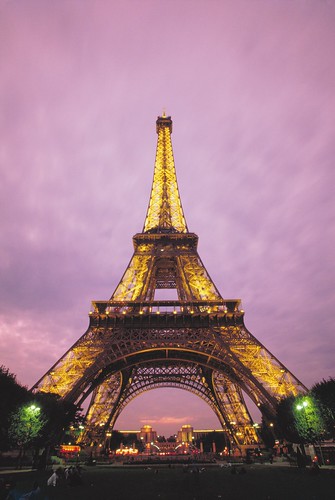 |
| The most photographed attraction by TripAdvisor reviewers is the Eiffel Tower with 9,181 photos |
More Than 500 Million People Can View TripAdvisor Content on Third Party Sites Each Month
TripAdvisor®, the world’s largest travel site*, today announced it has reached a new user-generated content milestone making it the first travel site to offer consumers 150 million reviews and opinions – a 50 percent increase year-over-year.
TripAdvisor collects more than 90 user contributions a minute that allow travellers worldwide to make informed decisions based on the personal experiences of other travellers. More than two billion unique worldwide visitors a year** visit TripAdvisor to research, plan, and book their travel at more than 3.7 million accommodation, restaurants, and attractions.
More than 500 million people worldwide are also able to find TripAdvisor ratings, reviews, and opinions on the websites of almost 1,000 brands every month. Partners include hotel groups such as Wyndham and other leading online travel suppliers.
The review celebrated as the 150 millionth piece of content posted on TripAdvisor was written by TripAdvisor member Erin S. after a Valentine’s Day weekend retreat with her husband. It's the first review she has written on TripAdvisor. The review titled “A warm and inviting retreat...you'll want to return!” is of the Cameron House Inn, a bed and breakfast in the Outer Banks of North Carolina, USA.
"Fourteen years ago, TripAdvisor saw an opportunity to help travellers help each other make informed travel decisions by sharing their first-hand experiences, reviews, and photos," said Steve Kaufer, co-founder and CEO of TripAdvisor. "Now, the internet and user-generated content have completely changed the way we plan, book, and share our trips."
The power of a review
According to a recently commissioned report conducted by PhoCusWright*** on behalf of TripAdvisor, more than half of global respondents do not want to make a booking commitment until they read reviews and find out what other travellers think about a property.
More than 80 percent say the site’s reviews help them feel more confident in their travel decisions, and help them to have a better trip.
The survey also reveals some interesting findings about why travellers write reviews and how they use them when planning a trip.

Why do travellers write reviews?
The majority of respondents write reviews for positive reasons, with 74 percent of travellers stating that they ‘feel good about sharing useful information with other travellers’ and 70 percent of respondents stating that they wanted to share a good experience with others.
How to use reviews
When researching places to stay on TripAdvisor, 80 percent of respondents read at least 6-12 reviews before making their decision, and they are most interested in recent reviews that will give them the freshest feedback.
“Travellers keep coming back to TripAdvisor because they find the user-generated content useful,” said Kaufer. “It’s so helpful that hundreds of other travel and lifestyle brands see the value in integrating our content onto their sites. We thank our passionate community for sharing their travel experiences on TripAdvisor and helping other travellers plan their perfect trip.”
FUN FACTS
· 24,710 TripAdvisor members have contributed more than 100 reviews.
· For a hotel in the top 500 most searched destinations on TripAdvisor, the average number of reviews is 174.
· The most reviewed hotel is the Luxor Las Vegas with 13,677 reviews.
· The most photographed hotel is the Majestic Colonial Punta Cana with 16,274 photos.
· The most reviewed restaurant is Mon Ami Gabi in Las Vegas with 4,729 reviews.
· The most photographed restaurant is Mama's Fish House in Hawaii with 1,196 photos.
· The most reviewed attraction on TripAdvisor is the Eiffel Tower with 24,413 reviews.
· The most photographed attraction is the Eiffel Tower with 9,181 photos.
Friday, January 3, 2014
Savannah - the atomic cruise ship
 |
| SAVANNAH – beautiful lines for a cargo-passenger ship, but dysfunctional. |
 |
| STATEROOMS were luxurious for the time and included full-size baths |
 |
| THE dining room inexplicably had seating for 100, even though Savannah carried just sixty guests. |
 |
| THE pool verandah was another innovation. |
 |
| PLAQUE honouring Savannah as a National Historic Landmark where she is tied up at Baltimore still awaiting her ultimate future. |
SAVANNAH – THE FUTURE SHIP LOST IN TIME
David Ellis
A SHIP that's seemed lost in the passage of time is America's NS Savannah, the world's first and only nuclear-powered vessel designed to revolutionise shipping by carrying both cruise passengers and freight world-wide, but in fact doing neither with much success.
While the Russians were already taking passengers on their converted nuclear-powered ice-breaker Lenin to the North Pole as the world's first nuclear-powered "cruise ship," and there were three atomic cargo vessels operating around the same time, Savannah was conceived in the late 1950s by US President Eisenhower as a combination of both cruise and passenger vessel to showcase his so-called "Atoms for Peace" program.
Eisenhower trumpeted his concept as "a platform for sharing the nuclear knowledge-bank." His opponents labelled it Cold War propaganda.
Whatever, Savannah had her admirers to whom she was "a beautifully-lined luxury cruise ship," and her detractors who wrote her off as "a pretty and highly dysfunctional cargo ship."
Marrying her two roles did not come with the success Eisenhower and Savannah's designers had hoped. For starters, she wasn't really a cruise ship because she could carry just sixty passengers in thirty staterooms. And then she wasn't a conventional cargo ship either, because her streamlined design meant she could carry a mere 8,500 tonnes of freight, and required much manual labour at a time when ports were dumping workers and automising.
But from a technical point of view she was brilliantly innovative, her 20,000 hp nuclear engine fed by low-enriched uranium giving her a top speed of 23 knots, and a capability to circle the earth an extraordinary 14 times without refuelling.
Costing nearly US$50m which came from the US Atomic Energy Commission, the Maritime Administration and the Department of Commerce, Savannah quickly ran into trouble over the size of her crew – and their pay.
To begin, she needed 33% more technical and engineering crew than conventional ships of her size, and as these crew had to be specially trained to handle their nuclear responsibilities, they demanded and received higher than normal wages.
But this irked Savannah's deck officers who cited a tradition that ensured they received higher pay than engineering officers, and after an arbitrator ruled in their favour, the three government departments cancelled their agreement with Savannah's contracted operating company and appointed another. This meant Savannah was laid-up for a whole year while a complete new crew was trained – and a new pay scale sorted out that meant it would cost US$2m a year more to run Savannah that a similar-sized oil-fired ship.
But despite all this, there were no complaints from the few passengers that Savannah carried: their luxury facilities included air-conditioned staterooms with private facilities (including full-size bathtubs,) the dining-room could seat 100-guests (for some strange reason, forty more than the number of passengers she could carry,) there was a swimming pool, library, and lounge that converted into a cinema.
But her passenger carrying days came to an abrupt end after just three years when it was decided that to cut costs, Savannah would become a purely cargo vessel. Yet even this proved economically disastrous, with one shipping industry newspaper at the time summing up: "She required $2m a year in government subsidies, she had vast unused passenger spaces, and by contrast her cargo capacity was insufficient…"
Finally in 1970, just eight years and 725,000km from her first sailing, Savannah was pulled out of service and laid-up.
Ironically bunker fuel for conventionally-powered ships was just $20/ton at the time – but within a few months this had spiralled 400% to $80 with the world Energy Crisis.
Had somebody had a crystal ball, maybe it could have been a different story for Savannah – and indeed the future of nuclear shipping.
For 40-odd years its been proposed that Savannah become a museum ship for the inquisitive to explore what was another world of luxury for passengers in the 1950s and '60s, and to peer into her-once nuclear heart.
With this in mind she was declared a National Historic Landmark in 1991, and her nuclear fuel removed at a cost of over US$1m. She now sits at the Canton Marine Terminal in Baltimore waiting for someone to adopt and convert her into that museum ship.
Visit her at www.nssavannah.net or see www.adventurecruiseguide.com
(Photos: Courtesy N/S Savannah Association and US Historical Naval Ships Association.)
Shongololo train through Africa - a moving safari


TRAIN YOURSELF INTO TAKING ON BIG GAME
David Ellis
WHEN we told mates we were off to Africa for game viewing and a safari-like adventure, and that we were going to do it over a near-fortnight by train, our announcement was met with much mirth and hilarity by those supposedly in the know.
"Send us pictures of the blurred fur you flash by," one chuckled. "Hope you've a long lens, a LONG lens," chortled another, while a third wished us well – and expressed the hope that "all the animals are deaf as you sneak up on them in your 500 tonne train…"
It was great fun at our expense, but it was we who in fact had the laugh on them. Because they'd not taken into account that our train was the Shongololo Express, a cosy re-vamp of yesteryear rail indulgence that has been carrying adventurers and animal-spotters for a near-20 years across a vast sprawl from Cape Town in South Africa's south to Durban in its east, Tanzania's Dar es Salaam in the north, and Swakopmund in Namibia in southern Africa's far west.
And that rather than our train trying to sneak up on unsuspecting animals in the wild, it actually parked at stations or sidings, with guests taken daily by a fleet of air-conditioned Mercedes-Benz mini-vans carried in flat-cars hooked on the back, for totally up-close animal-spotting in the wild, city and village sightseeing, and visits to museums and other highlights.
And with these mini-vans driven by the train's own on-board professional guides, and who were often joined along the way by game reserve and national park Rangers, or other professional local guides.
Better still, the Shongololo was our travelling hotel, with the need to unpack and re-pack just once in 12-nights as we indulged a reminisce back to a time when train travel was leisurely, unhurried and genteel, and amid restored yesteryear Rhodesian (now Zimbabwe) Railways' polished teak-wood carriages offering dining, lounge, bar and sleeping accommodation that was all somehow cleverly shoe-horned into the confines of narrow-gauge rail.
Also the train travelled mostly at night, making every day available for organised touring in those mini-vans – with a choice of at least two options daily that were included in the train's price, and which began after a hearty Continental and full-cooked English breakfast, and which ended with us being brought back late afternoon to find the bar open and dinner about to be served.
What surprises awaited in lounge/bar and dining cars too: local South African beers cost as little as 16 rand (AU$1.70) a can, and excellent local South African wines from just 95 rand a bottle (AU$10)… great accompaniments to nightly 4-course dinners that ranged from European to Cape Dutch, Malay, Indian and traditional African dishes embracing soup, entrée, main courses, and desserts or biscuits and cheese.
Amongst his many delights Chef offered-up roast lamb one night with a bevvy of baked vegetables, a tangy curry with numerous side-dishes another, a traditional African bobotie (baked mince with raisins and an egg-based topping) yet another, and on others pork fillet with caramelised pear sauce, chicken breast with a honey-mustard sauce, a beef pinotage, and one night good ol' English-style fish and chips… with menus never repeated during our 12-nights.
Shongololo offers four itineraries, with our Good Hope Tour taking us from Cape Town through the famed Winelands and Overberg, Kimberley and Bloemfontein, the Midlands, Southern Drakensberg, Durban, Zululand, Swaziland, Hluhluwe-Umfolozi and Kruger National Parks, Pretoria and Johannesburg where we were also given a guided tour of Soweto.
This gave us the opportunity with the train's own mini-vans to sightsee Cape Town and surrounds, taste local wines, visit the Big Hole former diamond mine and museum, tour Anglo-Boer War battlefields, go into tribal villages, communities and markets, game drive to within an almost couple of arm's length of wild animals including The Big Five (lion, leopard, rhino, elephant and Cape buffalo,) take-in Durban's picturesque beaches, parks and gardens, visit museums, and see tribal dances and other performances.
And at night retreat to our own ensuited and air-conditioned cabin – nodding-off to the haunting clicketty-clack of Shongololo heading off to its next day's destinations.
We booked air, Shongololo and necessary hotels through Bench International that's specialised in Africa holidays for almost 45 years. Phone them toll-free 1300AFRICA or see www.benchinternational.com.au
………………….
PHOTO CAPTIONS:
1.A MEDICINE man welcomes Shongololo Express's passengers to his Zulu village. (David Ellis)
2. THE train's owner, Leon Plutsick with one of the mini-vans carried aboard for daily sightseeing. (David Ellis)
3. THIS lion not the least concerned as we trail and photograph him at Sabi Sabi Game Reserve. (David Ellis)
4. SHONGOLOLO's guests are invited to visit Soweto township in Johannesburg. (David Ellis)
5. DINING car aboard Shongololo Express: Chef doesn't repeat any dishes in 12-nights of travel. (Shongololo Express)
6. BABOONS (centre and right) hitch a lift on the Shongololo Express. (Shongolo Express)
Tuesday, December 17, 2013
Strategic and smart – that’s Brisbane

The bi-annual ranking of economic, business and financial strengths is produced by fDi Magazine, a publication of the Financial Times. It grades cities on their economic potential, infrastructure, business-friendliness and education expenditure.
Lord Mayor Graham Quirk said the accolade was another ringing endorsement of Brisbane’s growing appeal to foreign businesses and investors.
In the past year, Brisbane Marketing has aggressively pursued campaigns to strengthen economic growth by targeting key decision-makers across the world through the Choose Brisbane campaign.
The strategy is paying dividends, with Brisbane attracting important investment in key industry sectors such as mining and resources, food and agribusiness, tourism infrastructure and civil infrastructure.
Brisbane Marketing’s hotel investment strategy has contributed to the 572 new hotel rooms currently under construction in Brisbane, including the conversion of the former Chifley Hotel into a 300-room NEXT Hotel by Singapore-based SilverNeedle Hospitality.
fDi’s Asia-Pacific Cities of the Future 2013/14 rankings assess a range of data to classify the cities which make business expansion, economic development and inward investment a priority.
The fDi labour environment category methodology assessed Brisbane on education expenditure, literacy rate, number of tertiary education centres and the percentage of the population identifying as students.
A panel of influential experts from the FDI industry assess cities based on their growth potential and opportunities for investment, initiatives taken to promote FDI as well as high growth industry sectors and the growth in large infrastructure and urban planning projects that create a city for the future.
Subscribe to:
Posts (Atom)
Last 30 Days' Most Popular Posts
-
It was as a child in the Albury district that cartoonist Ken Maynard came to love the Ettamogah countryside, and he later immortalised ...
-
 Center Hill Lake may be less well known than other outdoor escapes in Tennessee, but this gorgeous lake on the state’s Highland Rim is ou...
 -
ABOUT DUBBO NSW Dubbo is a city located in the central-west region of New South Wales, Australia. It is the largest city in the Orana regio...
-
 Australia's oldest surviving gold town Tucked away in the picturesque Turon River valley, Sofala is a tiny town with a big history. This...
 -
The Qatar Airways Al Mourjan Business Lounge at Hamad International Airport (DOH) in Doha is one of the most luxurious airport lounges in t...
-
 Explorers; Hume and Hovell, passed through the region around Gundagai, ancient home of the Wiradjuri people , in November 1824 and by t...


