Sunday, September 20, 2015
Responsible tourism. The way of the future.
Tourism is the world’s largest industry, growing larger every year. In 2012, for the first time in history, aggregate international tourist arrivals around the world surpassed one billion. In 2011, international tourism receipts exceeded $1 trillion.
Sunday, August 23, 2015
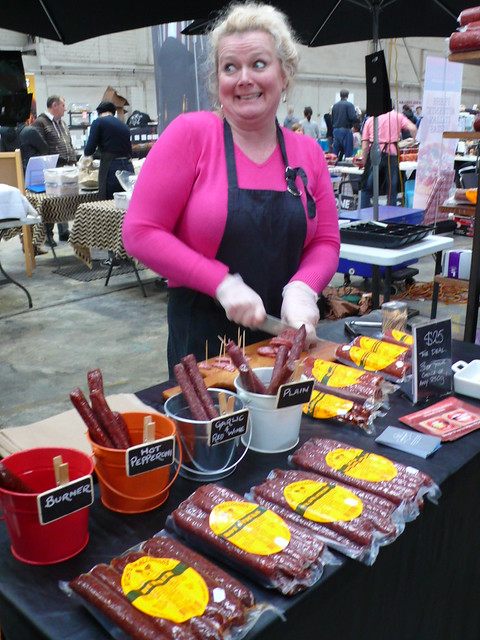
The people you meet: Old Bus Depot Markets, Canberra
![]() |
| Annie Storey - Ornamental Coppersmith |
![]() |
| Matthew Judd - 213 Art |
![]() |
| Dawn Hayter - Urban Providore |
![]() |
| John Wall - La Pizza Cucina |
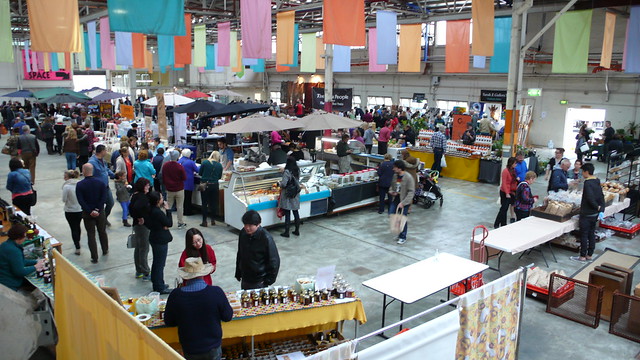
The Old Bus Depot Markets in Canberra is a kaleidoscope of foodie flavours and colour. A great way to spend a Sunday - rain or shine.
![]() |
| The Old Bus Depot Markets in Canberra |
Norfolk Island's Big Family Secret
Can you keep a secret? Norfolk Island has managed to keep a big one for a long time now - however your kids will be the ones to spill the beans within hours of arriving on the Island. And if you want a big hint (or the answer really!), it’s that Norfolk Island is a brilliant family holiday destination! It has all the elements to keep everyone entertained and at the same time able to kick back, re-connect and enjoy being a family on holiday together.
Perhaps one of the best times for a family visit is January, especially after the chaos of Christmas and New Year when everyone is in need of having their batteries re-charged. The crystal clear waters of Emily Bay become the hub of the island during these warm summer days. From an early morning swim on a near deserted beach; through energetic mid-morning leaps off the raft (conveniently moored mid-Bay); snorkelling past multi-coloured fish and coral in the afternoon; and finally grabbing a tasty burger from Se Moosa Bus (a takeaway van translated from the local Norf’k language as “I’ve eaten enough to bust”), and eaten with a picture-perfect-sunset as the evening’s feature film.
In truth for parents, Norfolk Island is just plain easy. On your journey down to Emily Bay (or anywhere on the island) you won’t find traffic (or even traffic lights!), nor queue’s, nor parking problems. Here, you pull up across the road from the beach and can even pass on locking the car; such is the safe nature of the island. Often visiting kids end up playing with the local, friendly kids. The choice of non-beach activities are excellent including kids sheets at the museums, mini-golf, fishing (off the pier or boat fishing charter), kayak tours, horse & carriage rides, rainforest walks in the National Park’s, glass bottom boat rides, guided reef walks, and, for the more adventurous a tour to nearby Philip Island. Playing with the ducks and chooks that wander freely in many areas and exploring the green, green valleys of the island’s interior may also make you think you’re on a rural escape.
Norfolk Island has a pristine environment including the freshest of fresh clean air that at night becomes totally star-filled. Most city kids won’t have seen anything quite like it and will get a quiet buzz from learning how to pick out the constellations and spot the dot of satellites moving evenly across the sky. With all produce locally grown the idea of food miles is converted into food meters and tired taste buds literally come to life eating fresh, tasty produce. Buy your fish right off the jetty as the boats come in or from Saturday’s market where most of the fruit and veg were picked that morning. There is something deeply pleasing about feeding your family genuinely fresh seasonal produce that tastes like food used to taste before cold-storage was invented! Norfolk cafés and restaurants creatively use seasonal produce to make delicious meals for everyday and also special dinner occasions. All clubs and many restaurants have kid’s menus.
The chance for a family to wind-down and re-connect seems to come naturally on Norfolk Island. This is a friendly, laid-back place where the cows have right of way on the roads and drivers wave to each other as they pass. Norfolk’s magic inevitably weaves its spell on all, from pre-schoolers to sceptical teens and weary mums and dads. It offers the chance to do a lot, or not much at all - but especially to just enjoy being on holiday together.
The secret of Norfolk Island is out - kids love this place – just as much as their parents!
Take advantage of a special Kids Stay Free Deal! From 10 December 2015 to 16 January 2016 January a great family special is available for 2 adults and 2 children where the kid’s accommodation is free. This special is for accommodation at Aloha Apartments, featuring self-contained apartments and a pool. Packages start at $1189 per adult and $560 per child. Prices include: Return ‘seat and bag’ airfare to Norfolk Island, pre-paid airline taxes & meet and greet at Norfolk Island Airport, 7 nights quad share accommodation, 7 days car hire including surcharge (petrol is extra and payable whilst on the island), half day Island tour, discount shopping car with free gift, complimentary mini-golf and Walk in The Wild’. Prices current at time of printing, subject to availability & change without notice. Conditions apply. Travel insurance is strongly recommended.
For details on this special and all holiday packages contact karen@travelcentre.nf free call us on 1800 1400 66 or visit our website at www.norfolkislandtravelcentre.
Sunday, August 16, 2015
Africa's Great Migration - One of the world's natural wonders

The Masai Mara and Serengeti are two of the most famous national parks in Africa, best known for offering up ringside seats to the Great Migration – which makes them both extremely popular destinations for luxury safaris.
The Great Migration is undoubtedly one of Nature's most unforgettable spectacles: 1.5 million wildebeest accompanied by 200,000 or so zebras are engaged in a never-ending journey, following the rains in a circular 1,200-mile route, through a wilderness that takes in the Serengeti National Park and Kenya's Masai Mara Game Reserve.
The annual migration actually begins deep in the south of Tanzania's Serengeti National Park, where an estimated half a million wildebeest are born between January and March each year. But when the rains trickle to a halt in May the land dries out, forcing the grazing animals to move on and head for their dry season habitat – the Masai Mara region in neighbouring Kenya.
With the beginning of the short rains in late October, the migration makes its way back into the Serengeti – which makes it the perfect time of year to be anywhere in the northern part of the National Park. By December, having emerged from the northern woodlands, the herds then return to their calving grounds in the south once again and the circle is complete.

Best time to go?
Of course, rain is the greatest motivator underpinning the annual migration and largely dictates where the herds can be found at any given time. For example from July to October is generally the optimal time to catch it in Kenya, although unusually dry conditions in the southern Serengeti have encouraged the animals to head north far earlier than usual this year, with hundreds of thousands of wildebeest arriving in the central areas of the Serengeti from as early as March.
The rainy season runs from October to May and typically begins with the short rains – a period of gloriously hot sunny days punctuated by brief torrential thunderstorms, before peaking with the long rains of April – a month to avoid when most camps close and the plains become quagmires.
When the rains end in May wildebeest normally head for the Masai Mara, navigating their way past hungry Serengeti lions, leopards, cheetahs, hyenas and crocodiles.
This year was a little different, the significant lack of rain having forced herds to leave their breeding grounds much earlier than usual. Lying in wait for them – the notorious Grumeti River crocodiles, which exacted a high toll as wildebeest traversed the river's still high waters.
Zebras are often the first animals to arrive in Kenya, grazing on the tall grasses, with wildebeest not far behind them. Here they remain from July to October – the main tourist season –when visitors flock to watch dramatic river crossings.
But as soon as the rains return the wildebeest head back to the Serengeti, drawn towards their calving grounds in the south of the Park. In the dry season there are few animals to be found here, but between January and March during calving season, surely nowhere in Africa feels so alive.
Sunday, August 9, 2015
Britain Calling newsletter - August 2015
|
Tuesday, July 28, 2015
Isan province of Loei: discover a land before time
Thailand is an ancient land and wherever you wander you’ll discover customs and traditions that are centuries-old yet thrive to this day. In Loei, a prime example of antiquity, is the colourful Phi Tha Khon Festival, where the locals dress in colourful masks, and carry symbols of fertility. The province’s landscape itself is more ancient still formed over millions of years before humans; Thais, tourists or otherwise walked the earth. Here, you can travel back in time and explore the geological wonders.
Loei’s Nong Hin region is rich with limestone formations, which were once below Palaeozoic oceans some 540 to 250 million years ago. Over the millennia, these sea-beds were thrust skyward and the result is today’s topsy-turvy landscape. There are huge trees, greenery and vines growing on top of huge barren boulders and cliff faces, as if they’d been planted by garden-loving giants. It’s a landscape so primaeval that you almost expect a toothsome Tyrannosaurus Rex to burst from the undergrowth at any moment.
These hills are often compared with the amazing rock formations of Kunming in China where the thrusting crags have inspired local artists and craftsmen for centuries, making the region a tourist magnet. But here in Loei, you often have the limestone’s peaks and caves all to yourself, and this tranquility makes it feel like an untouched Eden.
The best place to start exploring is Nong Hin Village, which has a visitor centre at Suan Hin Pha Ngam, a garden area surrounded by an amphitheatre of stone. It’s a popular spot for photos, but if you want to explore the area more deeply, climb aboard one of the nearby e-taen tractor trucks that take you right into the limestone crags. There are jungle trails to follow, but first take the metal steps up to a sturdy metal platform, this is the park’s best viewpoint and you are rewarded for your climb with a 360-degree view of the limestone crags. The locals have named the peaks after the creatures they evoke; a rather flattened turtle is the most memorable but there are also elephant and dinosaur shapes to discover as you descend and continue further along the trail.
Down the road there’s another Pha Ngam walking trail, and you can actually enter into the limestone itself and explore the caves, hollowed out by dripping water over millions of years. Impressive displays of Mother Nature’s artistry lie deep within. And just like the peaks above, the cave’s ancient stone formations are named after the shapes they take on. In the torchlight you’ll see an impressive mermaid, a shark, two dogs kissing, and various dinosaur body parts. If often takes a little imagination to make the figures out, but there are genuine fossils of ancient sea creatures to be found too, and the guides can show you the best ones.
You do need to go with a guide, many of whom are young local students who really know their stuff and the best routes to take; without them you could easily get lost in this Loei labyrinth.
At places where the sunlight pierces through the rock, greenery and vines crowd into this underworld and large bats, unaccustomed to visitors flap away over your head, resentful at the disturbance. It’s not unknown to come across the occasional snake either, so watch your step.
After ducking through crevices and caves the 800-metre trail eventually leads through hidden orchards and then to the top of the limestone crags where you traverse precarious paths, scale steep metal staircases and feel dizzy at the alarming drops to either side, but the views and greenery make it worth the effort. The difficulty of the terrain means that Suan Hin Pha Ngam is an undisturbed nature reserve; the area is home to a wide array of birdlife and some stunning plants.
It can be tough going so you need good footwear and do take water. There are plans to make this trail more user-friendly in the next few months, so to experience the Pha Ngam trail in the raw, it’s worth making a visit now.
But whenever you go, this lovely area of Loei is worth seeing and not just because it emulates China’s Kunming. The region is unique in itself and offers walks, waterfalls treks, views, and experiences that few places can match. So come explore this timeless and untamed land – adventure awaits.
Information
- Nong Hin is around 50 km from Loei town and there are local buses. If you have your own transport, take Highway 201 and follow the signposts.
- The Suan Hin Pha Ngam part and trails are open from 8 a.m. to 6 p.m. and a guide should be hired. The tractors from the visitors’ centre to the viewpoint are around 20 Baht per person.
- If you want to walk the trails, strong shoes are essential and a torch would be useful. Take sun screen and plenty of water.
Thursday, July 23, 2015
Australian Stories - 23 July 2015
| | 48 hours exploring The Great Eastern Drive Tasmania | |
| Spend 48 hours exploring The Great Eastern Drive Tasmania on a scenic road trip that takes in some of the state’s iconic natural wonders. Easily accessible from both Hobart and Launceston via a short drive, the Great Eastern Drive is where you will discover some of Tasmania’s most beautiful spots including the picturesque Bay of Fires and the famous Wineglass Bay. You’ll also find charming coastal towns along the way and a number of great places to taste some of the delicious produce and wine that Tasmania is renowned for. Find out more on Australia.com. | ||
| | Queen’s Wharf Brisbane announcement | |
| Echo Entertainment Group has partnered with Chow Tai Fook Enterprises Limited (CTF) and Far East Consortium (Australia) Pty Limited to form a joint venture for the Queen’s Wharf Brisbane Project. The project will include an iconic world-class integrated resort and new entertainment precinct which are connected to South Bank and adjacent to the CBD and riverfront. It will feature more than 1,100 premium hotel rooms, a spectacular feature Sky Deck, 50 restaurants and bars, world class gaming facilities and three major event spaces with capacity for up to 60,000 people. The project will commence construction in 2017. | ||
| | Indigenous Wildlife Journey at Healesville Sanctuary | |
| Healesville Sanctuary has launched a tour that connects Indigenous culture with Australia’s wildlife. Visitors are welcomed onto Wurundjeri Country by a passionate, knowledgeable Indigenous Ranger and then explore the Sanctuary together on a guided walking tour. Guests will discover and taste bush tucker plants and hear Dreaming Stories, handed down through generations, of how people and animals were created. Most of all, they will feel spiritually enriched by stories of a people, place and culture more than 40,000 years old. | ||
| | Tastings on Hastings | |
| Port Macquarie’s Tastings on Hastings will take place from 6 to 8 November 2015 with celebrity chef Matt Moran joining the celebrations. Themed 'Fire, Water, Harvest', the food festival will include the inaugural Fire Water Festival, celebrity chef dinners, cooking demonstrations and master classes. The festival's feature event will be held on Sunday 8 November and will provide visitors with the opportunity to sample new products, meet producers, share tasting plates, shop for local produce and enjoy the entertainment on the Town Green. | ||
| | Coral Expeditions in Tasmania | |
| Coral Expeditions will expand its expedition cruise program to Tasmania from this summer. The first of 16 departures embarks on 16 November 2015 and the season will run until February 2016. A highlight of the seven-night itinerary from Hobart will be two days exploring the pristine Tasmanian Wilderness World Heritage Area at Port Davey and Bathurst Harbour with Coral Expeditions’ Parks and Wildlife Ranger. Passengers can look forward to an active adventure, with kayaking opportunities and expert-guided bushwalks in five national parks and two World Heritages Areas. | ||
| | Discover Haggerstone Island | |
| On Australia.com, find out more about a one-of-a-kind island experience located 600 kilometres north of Cairns. Haggerstone Island is a unique hideaway based in one of the world’s greatest marine wonders, the Great Barrier Reef. The all-inclusive island resort is self-described as ‘rustic luxury’ and is accessible only by chartered aircraft and a boat ride or by seaplane. Haggerstone Island is self-sustainable and offers aquatic adventures on their very own vessels. | ||
Subscribe to:
Posts (Atom)
Last 30 Days' Most Popular Posts
-
ABOUT DUBBO NSW Dubbo is a city located in the central-west region of New South Wales, Australia. It is the largest city in the Orana regio...
-
Australia's oldest surviving gold town Tucked away in the picturesque Turon River valley, Sofala is a tiny town with a big history. This...
-
The Qatar Airways Al Mourjan Business Lounge at Hamad International Airport (DOH) in Doha is one of the most luxurious airport lounges in t...
-
Travel the World, general sales agent for Holland America Line, announces 2010 Australian season early bird cruise sale ms Volendam, the bea...
-
World traveller Len Rutledge offer his predictions The travel and tourism industry is booming as more and more people take advantage of low ...
-
A Visitor’s Guide to the Old Walls of Istanbul : Following the Breach That Changed History Few cities reward curiosity like Istanbul, and fe...