Showing posts with label South Australia. Show all posts

Tuesday, July 14, 2026

Farina: The Ghost Town That Rises With the Bread

Deep in the Flinders Ranges, about 660 kilometres north of Adelaide, Farina sits where ambition met the hard facts of outback South Australia. For most of the year it is a place of stone walls, empty streets and windblown silence. Then, for eight weeks each winter, someone lights the old underground oven and the ghost town comes briefly, wonderfully, back to life.

Friday, January 2, 2026

Victor Harbor's iconic Horse-Drawn Tram Rolls On


The Victor Harbor Horse Drawn Tram, a beloved South Australian icon, has been delighting visitors since 1894. This majestic tramway, one of the few remaining horse-drawn tram routes in the world, connects the coastal town of Victor Harbor to Granite Island, offering breathtaking views of the surrounding waters.

Wednesday, October 15, 2025

The Heritage of the Barossa Valley || Colin Thiele


The Barossa is not just a place. For over a hundred years, it has been more than that – a way of life, an attitude of mind, a quality of spirit. It has been labour and music, church festival and vintage, worship, and the ringing of bells. 

Nobody born within earshot of that deep-toned tolling can ever forget the sound; it wrings the air, a sweet-sad note of joy and sorrow, a pain-joy, birth-marriage-death note as mellow as autumn sunlight. Out of the past, out of Silesian history, out of Lutheran conviction, it wells and flows over the Sunday valley.

Sunday, October 5, 2025

Historic Echunga in the Adelaide Hills

Echunga - State Library of South Australia B1509 taken 1881

Jacob Hagen, a "wealthy Quaker merchant and landed proprietor" who came to South Australia in 1839, was first to own the land which was to become Echunga. Soon after his arrival, he divided his Special Survey into township blocks, so even if he was not the first settler at Echunga, it is fair enough that the first inn there, built beside what was to become the main road, should be called the "Hagen Arms." He may even have built it, though the first official licensee was A. Adamson in 1853-59-preceded, in local tradition, by one Joe Fry.

Friday, March 7, 2025

Kangaroo Creek Reservoir in Adelaide, South Australia

The widened spillway and new embankment completed in 2019 (Supplied: SA Water)

Construction commenced in 1966, a pivotal moment for South Australia’s water infrastructure. The dam, built by damming the River Torrens west of Cudlee Creek near its junction with Kangaroo Creek, was completed in 1969. 

Visiting Lyndoch in South Australia's Barossa Valley

Lyndoch. Source: Expedia

 The town’s history is deeply rooted in its Indigenous heritage, with the Peramangk people originally inhabiting the area. Their lifestyle, based on local flora and fauna, was disrupted by European settlement following the arrival of colonists in July 1836. By December 1837, Colonel William Light, a key figure in South Australia’s early exploration, named the valley Lyndoch after his esteemed friend Thomas Graham, Lord Lynedoch, commemorating their shared military history at the Battle of Barrosa in 1811. This naming, potentially a misspelling, reflects the town’s historical ties to British military figures.

The Birthplace of the Barossa Valley

Land sales began in 1839, and by the early 1840s, figures like Edward Rowan took up land, leading to the establishment of nearby Rowland Flat. Lyndoch is often credited as one of the first areas in the Barossa Valley to grow grapes, with plantings by 1847 at Pewsey Vale by Mr. Gilbert and at Jacob’s Creek by Johann Gramp, who produced wine by 1850. This early viticultural activity set the stage for Lyndoch’s enduring association with wine production.

Further historical notes include its connection to the Barossa Valley railway, with a station operational from 1911 to 1968 for passengers and fully closed in 2014, also used for goods and timber transport. The town’s historical significance is also marked by its sister city relationship with Georgetown, Texas, established in 1986 during sesquicentennial celebrations, highlighting international ties.

Geographically, Lyndoch is positioned 58 km northeast of Adelaide, along the Barossa Valley Highway, between Gawler and Tanunda. Its elevation stands at 175 meters, with an average annual rainfall of 560.5 mm, contributing to its suitability for viticulture and lavender farming. The town’s location, an hour’s drive from Adelaide with multiple access routes, enhances its appeal as a getaway destination, with options like the eastern approach through ranges or via Gomersal Road.

Attractions and Activities

Historic pub, the Lyndoch Hotel (Expedia)

Lyndoch's attractions cater to both tourists and locals. The Lyndoch Lavender Farm, located at 407 Tweedies Gully Road, is South Australia’s largest, offering tours, a cafe open from 10 am to 4 pm (weekends January to August, daily September to December, excluding public holidays), and an online store for lavender products (Lyndoch Lavender Farm). It’s a multi-award-winning site, family-owned for over 30 years, providing a unique rural experience.

Historical sites include the Hoffnungstahl memorial, 3 km southeast of Lyndoch. This memorial commemorates a German pioneer settlement founded in 1847 that was abandoned after flooding in 1853 despite warnings from local Peramangk people. This site, detailed at Monument Australia, adds a layer of historical intrigue.

Lyndoch Lavender Farm (Tourism SA)

Wine enthusiasts can explore numerous cellars, such as God’s Hill Wines and 1837 Barossa, with tasting rooms offering premium wines and scenic views. The town also features the Lyndoch Hotel, a family-owned pub in Gilbert Street, known for its bistro, gaming, and accommodation, with midweek lunch specials and seafood days (Lyndoch Hotel). 

Feature Accommodation:


Lyndoch Grand is the new name for the former hotel and inn built in 1855 and now features seven tastefully restored bedrooms and ample open spaces for relaxation and enjoyment.

MORE: www.lyndochgrandaccommodation.com.au


MORE: Lyndoch at Aussie Towns

Friday, February 7, 2025

Visiting historic Strathalbyn in South Australia


THE plains around the Angas River, at the foot of the eastern side of the South Mt Lofty Ranges, were settled soon after the colony of South Australia was established. Dr John Rankine was the first to take up land there, one of 105 Scottish immigrants who arrived at Holdfast Bay, near Adelaide, on the Fairfield in May 1839. Within a few months, he went to look for farming and grazing land, and he, his wife, five children, and his brothers William and James settled in the Strathalbyn district.

Sunday, December 29, 2024

Visiting Martindale Hall in South Australia's Clare Valley


Martindale Hall is a stunning 19th-century mansion located in Mintaro, South Australia, near the famous Clare Valley wine region. Here's what makes it special:

Wednesday, December 20, 2023

Time Gentlemen Please by Max Fatchen | A short history of Adelaide's Hotels


And for some pubs it may be the last time

Story by Max Fatchen from Saturday Magazine 30 May 1970
Photos added from various sources as cited

The bar of the doomed 116-year-old Supreme Court Hotel was quiet. A couple of legal men drank peacefully. A man wanted to argue about the election.

Monday, December 4, 2023

Adelaide's Historic Hotels and Public Houses

The bar at the Rob Roy Hotel, Halifax St

Like so many Australian cities and towns, the South Australian capital of Adelaide has its fair share of ornate and historic hotels, inns and pubs in that inimitable colonial style we've made our own.

Monday, November 13, 2023

Captain Harry Butler: Minlaton's own First World War Flying Ace


The peaceful rural landscape of South Australia's Yorke Peninsula was a long way from the battlefields of the First World War, but legendary Minlaton pilot and daredevil Captain Harry Butler experienced both during his distinguished but tragically short flying career.

Tuesday, August 29, 2023

Visiting Hahndorf in the Adelaide Hills


In December 1838, Captain Dirk Hahn, Master of the Zebra', arrived at Port Adelaide with a party of 187 German immigrants. He not only successfully negotiated a parcel of land for his passengers but led them up through the Tiers', as the Adelaide Hillls were then known, reaching their destination in March 1839.

Sunday, December 11, 2022

Elder House


The Currie street building, begun in 1937, replaced a much smaller Elder Smith and Co. Ltd office built in 1888. The architect for the new building was Walter Hervey Bagot and its façade echoed that of a Renaissance palazzo. [more]

Saturday, December 10, 2022

Urrbrae House - Adelaide


Figures prominent in the business and pastoral life of South Australia are linked with Urrbrae situated at the base of the foothills overlooking Adelaide. Nowadays, its associations are with education and research. As the Waite Agricultural Research Institute, it is an integral part of the Faculty of Agricultural Science at the University of Adelaide. On adjoining land is the Urrbrae Agricultural High School.

Friday, September 30, 2022

A Brief History of Woomera, South Australia

Woomera Test Site - Dept of Defence

In the late 1940s following World War II, Britain's long-range weapons program required a large area to serve as a test range. Areas in Canada and Wales were considered, but eventually, the vast central Australian desert was chosen as the most suitable site as it was virtually unpopulated. As a result, the Long-Range Weapons Establishment (Woomera Rocket Range) was established on April 1, 1947. The name "Woomera" was chosen because it is the Aboriginal word for spear-launcher on April 24, 1947.

Wednesday, January 19, 2022

The historic Norwood Institute, Adelaide

Norwood Institute, Norwood Parade | Flickr User denisbin
 

A Norwood and Stepney Institute was formed in 1855 by a group that met in a schoolroom in Beulah Road, Norwood. Lectures were soon advertised and a library of 200 books organised.

The following year a different group met in Mr Barrow's old chapel in Kensington for a similar purpose and proposed an amalgamation with the other group.

Tuesday, December 14, 2021

Rediscovering Swan Reach SA

#SouthAustralia


Prior to the arrival of Europeans in 1836, the custodians of the region were approximately 1200 Ngalawang tribal members. The aborigines lived with nature, while the white man tried to tame it. Living along the river on a semi-permanent basis, they used the skins from their catches to ward off the cold during winter, made an arrangement of baskets from the reeds, built low stone walls across the river to trap fish, in all, surviving a healthy lifestyle.

Friday, September 10, 2021

Hahndorf: The Studio of Nora Heysen

#AdelaideHills


Nora Heysen is recognised as one of Australia's most significant 20th-century female artists, being the first woman to win the Archibald Prize (1938), and the first woman appointed as an Australian War Artist (1943-46). Her art is in the collections of the Australian War Museum, the National Gallery, National Portrait Gallery and the National Library, together with state and regional art galleries, and numerous private collections.

Sunday, August 29, 2021

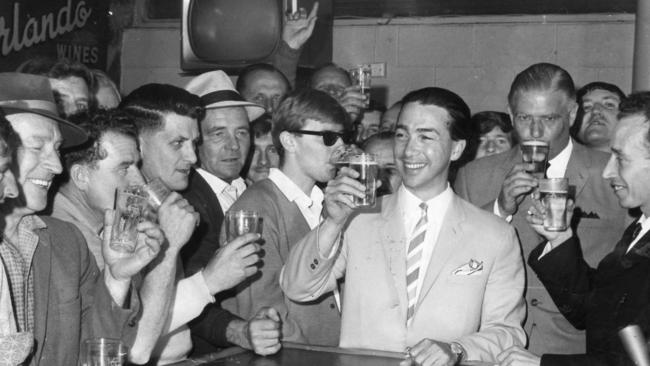
Don Dunstan ends Adelaide's Six O'Clock Swill

A volunteer at the Magill RSL was in the crosshairs of prosecutors in 1947 for an offence that, these days, we would see as innocuous on a Friday night. 

Last 30 Days' Most Popular Posts