Saturday, May 16, 2020

Visiting Fighter World Aircraft Museum at Williamtown, #NewSouthWales


WELCOME TO FIGHTER WORLD

FIGHTER WORLD aims to raise awareness of the past and present role played by the Royal Australian Air Force (RAAF) Tactical Fighter Force through a unique "hands on experience. Unlike other static aircraft displays you may touch the exhibits and experience the fighter pilot's complex work environment by sitting in the cockpit of a. Macchi Jet Trainer and a Mirage Fighter. PLEASE DO NOT ENTER ANY OTHER COCKPIT ON DISPLAY.

SAFETY is important at Fighter World. Please supervise children at all times. NO RUNNING IS PERMITTED

DON'T FORGET TO VISIT FIGHTER WORLD CAFE for sandwiches, snacks, hot meals and drinks.

No food or drinks, other than water, are permitted in the display hangar to avoid attracting vermin.

WHAT IS ON DISPLAY ?

Vampire A79-1 is a 'first generation' single seat fighter built in Australia by the De Havilland Company. Vampire tail number A79-1 was the Royal Australian Air Force's first jet fighter, entering service in 1949. A two seat trainer version is located between the hangars undergoing restoration by Fighter World's volunteers.


Gloster Meteor A77-385 is painted to represent a combat veteran of the Korean War. RAAF No 77 Squadron whic operates the F/A-18 Hornet at Willimtown today, flew the Meteor in Korea from June 1950 until October 1954. The Meteor was no match in aerial combat for Chinese MIG 15s with 44 Meteors being lost. You are invited to view the Honour Board on the rear wall behind the Meteor with names of the No 77 Squadron members killed in Korea.

CAC Avon Sabre A94-951 was built in Australia by the Commonwealth Aircraft Corporation and was the RAAF's mainstay fighter of the late 1950s and early 1960s. The Australian CAC Sabre was an American design re-engineerec to fit a more powerful British Rolls-Royce Avon engine and twin 30 mm Aden Canons. Australian Sabres were later modified to carry sidewinder heat seeking air-to-air missiles as fitted to the Sabre on display.

Mirage A3-3 is a 1960s generation interceptor capable of twice the speed of sound (Mach 2). Mirage tail number A3-3 on display was the first of 98 single seat Mirages built in Australia by the Government Aircraft Factory at Avalon in Victoria. The Mirage was replaced by the Royal Australian Air Forces current front line fighter, the F/A-18 Hornet in 1984.

Mirage A3-102 is the second of ten dual control Mirage trainers built in Australia by the Government Aircraft Factory and used to train pilots to fly the high speed Mirage which had a landing speed of 165 knots.

The Bloodhound Missile and Launcher displayed is a large surface to air missile was used to defend RAAF airfields from aerial attack during the 1950s and early 1960s. Modern, greatly more accurate surface to air missiles may be fired by one man ‘off the shoulder'.

The Macchi MB 326H displayed is a tandem two seat jet trainer that served with No 76 Squadron at RAAF Williamtown untit replaced by the current lead-in fighter trainer, the British Aerospace Hawk. The Hawk has been used since 2000 to train pilots in basic fighter combat maneuvers and for initial weapons training before moving on 1 the much more complex F/A-18 Hornet. You will notice that the Macchi is loaded with eight practice bombs which is a typical configuration for a bombing training mission on the nearby Salt Ash Air Weapons Range.

The Hawker Hunter displayed first entered service with Britain's Royal Air Force in 1956 before being transferred to the Royal Singapore Air Force (RSAF) in 1973. This Hunter was imported into Australia in 1995 and kindly donated to Fighter World by Sydney businessman Mr Greg Ackman of Mobile One Communications. Der Service in the RSAF it flew at WILLIAMTOWN on joint exercises and training attachments with the RAAF. Dedicated Fighter World volunteers assembled and restored the aircraft for display.

The Mikoyan Gurevich (MIG) 21 on display was built in Russia in 1969 and is painted in the colours of the Indian Air Force Aerobatic Team. It performed at air shows in Australia during the late 1990s. The MIG-21 was the main fighter of Warsaw Pact countries during the cold war period and became the most extensively used fighter aircraft in the world with over 6, 000 being built up to 1981. Many are still in service.

Aircraft Model Collections Along the left-hand wall of the display hangar are 350 1/72 scale model aircraft donate by Mr Norman Forrester of Nelson Bay. This collection took Norm over 40 years to create and is entirely hand carved from wood, plastic and resin. Each model is hand-painted. Further along are diorama models of wartime German and British fighter airfields. Still further along is a collection of model aircraft from the Second World War, Korean War and the Vietnam Conflict built from plastic kits and donated by Mr Ian Sprent. Hanging above you on the opposite wall are outstanding painted metal outline models of famous aircraft donated by the wife of the late Bert O'Hara of Newcastle.


Boeing Stearman Replica ‘Flying' overhead in the main hangar is a half scale model of Boeing Stearman open cockpit trainer used to train Australian pilots in Canada during World War Two

DVDs Showing Continuously Take a seat, have a rest and view DVD documentaries of RAAF Operations and fainous fighter aircraft in the right hand corner of the display hangar.

The Observation Deck The stairs in the far left hand corner of the display hangar lead to the Observation Deck froi which aircraft movements may be viewed on Williamtowns Runway 30/12 and taxiways. Newcastle Airport Termin: Buildings and airliner tarmacs may be observed to the left of the runway. Air traffic is controlled by Air Force Air Traffic Controllers who you can hear on speakers throughout the display hangar and on the observation deck.

WHAT IS ON DISPLAY IN THE RESTORATION HANGAR NEXT DOOR ?

The Spitfire MK V111 Replica on display is a fibre glass, timber and metal full size replica of a RAAF No 79 Squadron Spitfire which operated in defence of Darwin and New Guinea during World War Two. The replica has been constructed using some authentic Spitfire components in its structure. Can you identify them?

The Messerschmitt BF 109F Replica displayed is a full size fibre glass and timber replica of Germany's most famous fighter of World War Two. The Spitfire and Messerschmitt BF 109 were arch enemies in the famous Battle of Britain. Fighter World's replica is painted to represent the regular aircraft of Oberleutnant Carl Hans Roders who was killed when his Messerschmitt was shot down by a Spitfire over the English Channel on 23 June 1941.

Fokker DR-1 Triplane Replica displayed is a 2/3rds scale replica of one of the most famous German fighters of World War One. Fighter World's black aircraft depicts the personal aircraft of teenage fighter ace Leutnant Josef Jacobs who claimed 48 victories when in command of Jagdstaffel 7 during 1918 at the age of only 19 years.

Commonwalth Aircraft Corporation Winjeel The Winjeel is a piston radial engined side by side two seat traine designed and built in Australia for the RAAF. Winjeels flew at Williamtown as Forward Air Controllers on Army Support missions guiding artillery and other weapons onto targets.

Jindavik The Jindavik was a Australian designed and built jet powered aircraft remotely piloted from the ground by radio control. It was used as a target aircraft and for aerial weapons research.

Thank you for visiting Fighter World. Please tell your friends about us. Perhaps your club or school may wish to organize a bus tour. A tour of RAAF WILLIAMTOWN with a Fighter World guide by groups of 10 persons or more using your own bus may be arranged at no cost with a prior booking.

DONATIONS Fighter World is funded entirely by admission fees and souvenier shop sales. There are currently Do government grants or sponsors to enable Fighter World to acquire or restore new exhibits. Any financial donations by individuals or organizations would be used to further develop our display of Australia's fighter aircraft heritage.

Thursday, May 14, 2020

Western Australia: The beauty of Bell Gorge

In the scorched heart of Australia’s vast Kimberley region, the refreshing waters of Bell Gorge have soothed the parched bones of many a weary traveller.

Bell Gorge, Kimberley.

You’ve been following the rough, dust-filled corrugations of the Kimberley’s infamous Gibb River Road for days and the jarring bumps, insane heat and relentless flies are taking their toll. Relax, paradise is at hand! Deep in the Wilinggin Country of the Ngarinyin people, the natural
amphitheatre and swimming hole of Bell Gorge is the perfect spot to cool off and break up that epic road trip.

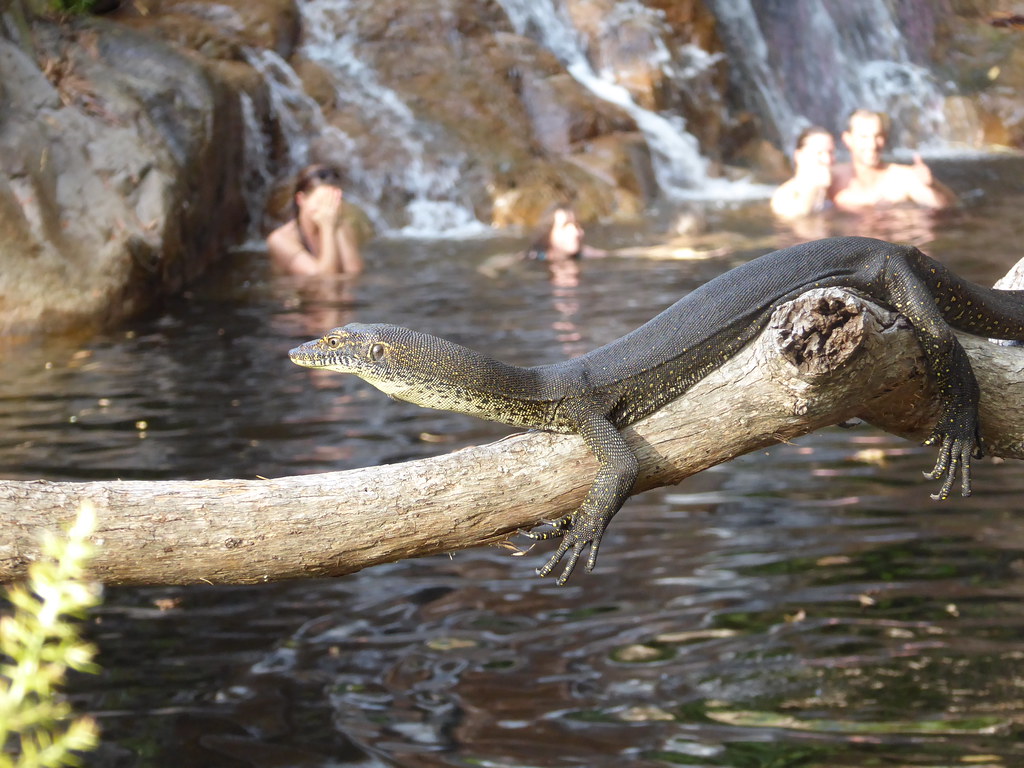
A pleasant, partially shaded walk leads from the car park along a pandanus- and paperbark-fringed creek alive with birdsong. Breathtaking views from the top of the waterfall only hasten your pace to reach the cool, crystal waters below. Before long you’re floating on your back (possibly still fully clothed) as you soak away the kilometres, staring up at the blue, cloudless sky and the sheer orange walls of the gorge. Yep, flat out, like that goanna on the rock to your right.

What’s best about swimming here?

Getting up under the bottom of the falls and letting them pummel your back, best massage ever!

What’s that stripey lizard over there?


Mertens Water monitor (Roderick Eime)

That fella’s a Mertens’ water monitor, a type of goanna. Don’t worry, they’re harmless, as long as you leave them alone.

Near the cliffs above the falls, what was that pigeon that made a funny sound as it flew?

Big brown one? Yeah, that’s the white-quilled rock pigeon, they look just like the sandstone cliffs where they hide.

And that cute little purple-headed bird in the pandanus by the creek?

Oh, you’re lucky to see him. Purple-crowned fairy wren. Only the males get that purple colour when they’re ready to breed; they’re normally hiding in that pandanus.

Wow, I thought I just saw something jump along that cliff ledge?

Ha, you just saw a rock wallaby (like a little kangaroo), they hang out in the gorges and aren’t afraid of heights!


Country Australia • Region Western Australia • Type • natural pool • Cost A$13 per car national park entry fee • Activities swimming, bushwalking • Family-friendly: yes

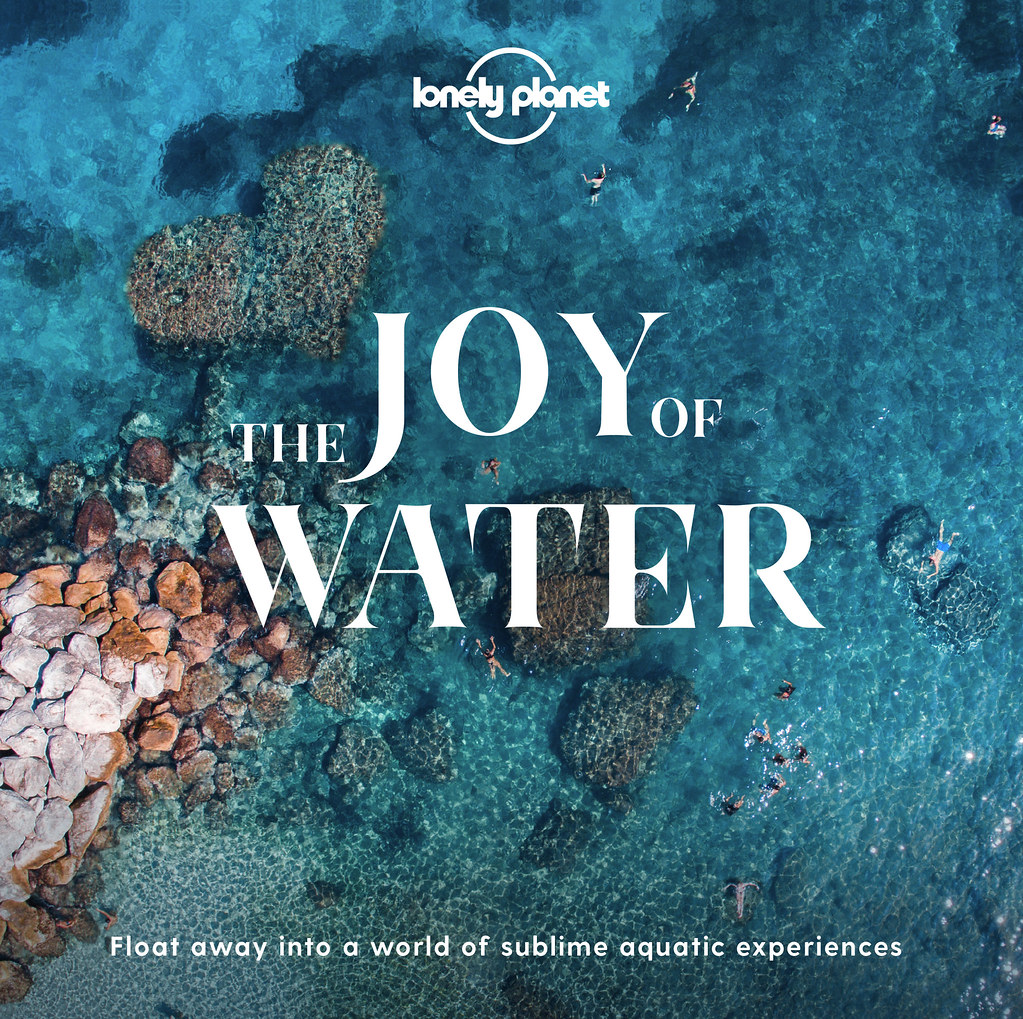
Reproduced with permission from Lonely Planet's Joy of Water

The Joy of Water
May 2020 |$29.99 AUD
200mm x 200mm | 272 pages Hardback | ISBN: 9781838690465


Tuesday, April 28, 2020

The Strand Hotel, Yangon: A Sense of History.


What a hotel! What a history! The Strand opened in 1901, on Strand Road, Rangoon, at the time one of British India's largest and most prized cities. It was built by British Entrepreneur John Darwood and acquired by the Sarkies brothers, who collected more than a few of Southeast Asia's grand colonial hotels including Raffles Hotel in Singapore, "Eastern and Oriental Hotel in Penang, Malaysia and Hotel Majapahit in Surabaya, Indonesia. From the beginning, The Strand was regarded as 'the finest hostelry east of Suez', and Murray's Handbook for Travellers in India, Burma and Ceylon, 1911 edition, says the hotel was 'patronized by royalty, nobility and distinguished personages'.

The distinguished and less so, have continued to patronize the three-storey hotel in the decades since. There have been, of course, a few interludes over the years. A major renovation took place in 1937 for instance. During World War II, the occupying Japanese used part of the hotel, as stables for military horses. Then there was the war tine bomb that plunged through The Strand roof to land, unexplodec, in what was known as Princess Hall and is now the hotel manager's office. There it remained for a few days, drawing curious crowds, before it was finally carted away


The Strand has long been recognised as a national landmark, arriedel of auspicicus, colonial repose. The hotel's Victorian influence is visible even from the colonnaded entranceway. Inside speils the same story; the marble floor inlaid with teak wood, the rattari furniture and potted palms, the chandeliers and black-lacquered ceiling fans - all of its imbues The Strand with a personality as welcome as it is inimitable.

With the renovation of the early 1990s, the room inventory was reduced from 50 to 32 spacious, elegantly appointed suites. All suites are located on the two upper floors and all suites are serviced 24 hours a day by a team of butlers - the men in sporting Buimese dress jackets or tighpone, the women in Steri-style blouses, and both wearing sandals and the local wraps known as 'longyis?

Friday, April 17, 2020

The Massacre on the Abrolhos


It was the middle of a moonlit night on 4 June 1629 when the brand new Dutch East Indiaman, Batavia, struck Morning Reef in the Abrolhus Islands. This event was the beginning of one of the most horrific tales of human savagery ever.

About half of the 268 survivors, including women and children, were systematically slaughtered by the mutinous and psychopathic Jeronimus Cornelisz who was plotting a career in piracy with the corrupt captain, Ariaen Jacobsz.

Relics of this spine chilling chapter of Australia’s maritime history can still be found on the Abrolhos Islands. Several graves were excavated on Beacon Island and their mutilated remain examined. A cannon still lies in shallow waters were treasure hunters tried in vain to get the heavy souvenir ashore. The hero of the Batavia, Wiebbe Hayes ‘fort’ still stands on Wallabi Island: Australia’s oldest known European structures.

In 1963 the wreck was located and the fable reignited. Many recovered items are on display in the Maritime Museum in Fremantle and replicas of both the ship and its famous lifeboat have since been built.

Located just off Beacon Island in about five metres of water, what remains of the wreck is a popular dive site.

Website: https://museum.wa.gov.au/museums/shipwrecks/batavia-gallery

Wednesday, April 15, 2020

Tourism Keeping Peruvian Islands Afloat


For centuries, the reclusive Uros tribe of Peru have lived in a real-life waterworld on Lake Titicaca in the Peruvian Andes.

Building huge floating pontoons from the buoyant totora reeds, the Uros Indians' waterborne communities of Islas Flotantes (floating islands) have afforded them protection from rival tribes, the Inca and Collas.

Now, despite hundreds of years of isolation, the Urosway of life is threatened by the encroaching land-based population in nearby Puno, Perus major port town on the 8300 square kilometre lake.

The plight of the Uros was highlighted in a feature story on National Geographic Channel recently.

Saturday, April 11, 2020

The True Colours of Shanghai

Photo by Manuel Joseph from Pexels


When it comes to the true color of Shanghai, the answers that spring to mind are bright neon lights, the magnificent skyline of Lu Jia Zui, the green and red of Yanzhong Greenbelt and the grey wall and red bricks of Shikumen, or Stone Gate. To bring out the very best of Shanghai during the 2010 Expo, it is essential to paint new structures in the color that best represents the city's unique character. It is difficult to represent Shanghai in one specific color because of its colorful history, extensive international engagement and the general pluralism of the city. Defects in the coloring of modern structures have aroused vast attention from all angles.

Text: Zhu Xiali
Reproduced with kind permission of China Eastern Airlines

A glance at Shanghai's architectural coloring 

A deep impression of the “mix of Chinese and foreign" styles

The elegant and historical walls, dark brown in color, of the hundredyear-old Peace Hotel; the grey walls and red bricks of the old lanes of Xuhui District being repainted from time to time; and the new Stone Gate buildings in Xintiandi, of uniform coloring and style, are a striking vision for all. When traveling on the elevated road, rows of eye-catching houses have attracted numerous new residents because of their pleasant, neat and bright color schemes. Heritage architectures account for a large portion of these impressive constructions.

Photo by Hanny Naibaho on Unsplash
Nanjing Road
"Lu Jia Zui, Xintiandi and the Yu Gardens all leave a deep and lasting impression on tourists from both home and abroad. Despite their own individual characteristics, some constructions or residential quarters wear a dull color and are drowned in a sea of advertisements and store signage,” an official from the China Fashion and Color Association argued when addressing Shanghai's colors.

From the traditional residences pre-liberation to the gallery of world architectures on the bund; from diversified buildings erected after liberation to the high-rises, every new building has been a showcase of evolution in local construction by drawing inspiration from overseas. It's on record that grey and white was the color of Shanghai's old lanes before the 19th century, then came the use of exotic red bricks, and from the beginning of the 50s and 60s of the last century, color-fast autumn took over as a popular color option. Most of the modern high-rises in Shanghai are coated either by face tiles or glass curtain walls, leaving a broader range of color options that is in tune with the speed and height of the city.

Shanghai has never been short of colors in its constructions; however, the co-existence of western, local and various regional architectural characteristics add to the difficulty in planning and coordinating the color of the city. Shanghai should apply different color choices to different areas, but not too different noted Prof. Xu Mingde of the Shanghai Theater Academy, who has studied art in Europe a number of times. The "Disorder" of Shanghai's construction colors is the top priority for resolution.

Experts on color selection for Shanghai's buildings

 "Next-door color” for harmony

Shanghai's constructions are shaped in multiple forms, and the harmonizing of constructions and their surroundings is the key to setting the ideal color scheme. The Jin Mao Tower stands as a fine example, said Gu Enhong from ARR International, a Shanghai-based architectural design consultancy. Designers studied carefully and introduced the age-old pagoda approach into the scheme before it was completed. As a result, the work regarding profile, coloration and location of the building was artfully executed, making the Jin Mao Tower one of the latest and most recognized landmarks in Shanghai.

In addition to borrowing foreign concepts, many architectural designers have begun to give more thought to the harmony between constructions and their surroundings, in an attempt to keep the coloration from being overly prominent. If a building under design is flanked by a steel structure on one side and a concrete structure on the other, the coloration scheme would create a new color element by combining the grey of concrete with the original tint of the steel.

Multi-color system for environmental harmony

It takes in-depth research to determine whether Shanghai's constructions should have light or dark coloration, but the key is to introduce a multi-color system. The basic tone of the building facade shall be determined in accordance with blocks, road sections and districts and then harmony will be achieved through the matching of different color mixes. Take McDonald's and Xi'nianlai for instance: some additional color elements are suggested to be added to the former's bright red and yellow logo, and the latter's bright red logo, to fit better into their surroundings. It is known that professional consultancies have been set up in Western countries that specialize in urban coloration. Innovation proves to be the first task as China starts its research in this area.

After talks with architectural experts, it was revealed that brand new color matching concepts, fit for Shanghai, have been included in design drawings of new housing and commercial buildings now under construction. However, quite a few developers and investors would finally pick the general option or those about to be discarded because of their lack of innovative awareness. Some housing designers say they would go to lengths to promote any form or color of architecture as long as it is beneficial to urban development and fits harmoniously into its surroundings.

Accentuate cultural characteristics with different colors for different regions

Warm colors are preferred by northern cities, whereas cold colors are popular in the south; blue is the color of choice for cities on the grasslands and cold color series such as azure, cyan and green are ideal for cities in desert regions. Officials from Shanghai Urban Planning Authority and Shanghai Administration on City Appearance and Environmental Sanitation said that because of the varying ages of local constructions and their co-existence with modern buildings, the application of a single main tone will not be considered for the time being and pilot experiments are encouraged in all parts of the city. Choice of color is now given high priority in the approval processes of various construction projects.

Experts advise that from a cultural perspective, black and white should be preserved for Qingpu and Zhu Jia Jiao, featuring the serenity of south China, to impress with the elegance of Chinese painting; dark tones comprising beige and wine red should be applied in Xuhui district, known for its veritable plethora of oldstyle residences. To present a comfortable and tranquil look, bright colors such as all white and off-white are the option for the rapidly-developing Pudong New Area, to create a lively visual impact for the modern era.

We wait in anticipation of how Shanghai will dress to hail the 2010 Expo with its unique charms.

Tuesday, April 7, 2020

The best of Aussie culture and arts from your #Covid19 couch


Here are the top 10 films to help satisfy your wanderlust and keep you entertained

Not only are these films entertaining, but they also capture Australia's iconic vistas and landscapes which are guaranteed to have you dreaming and planning your next holiday. It’s not just about the show stopping landscapes either, each capture the larrikin spirit that Australians are known and loved for, leaving you feeling as though you’ve just caught up with your Aussie mates.

Last 30 Days' Most Popular Posts